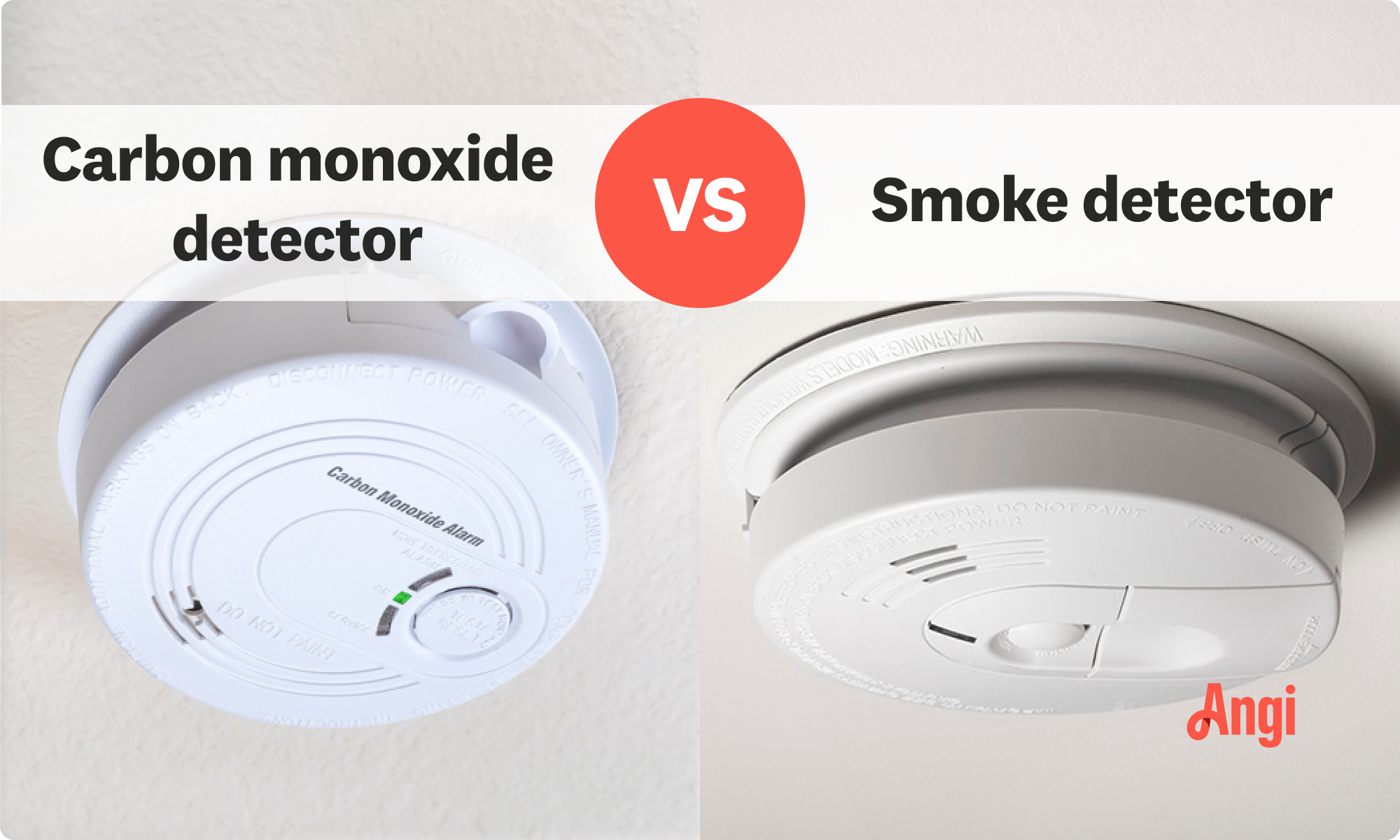
Alright, let’s talk about those little disc-shaped heroes living on our ceilings. You know the ones. They usually sit up there, silently judging your cooking skills, ready to shriek at a moment's notice.
We've all got them. They're like the trusty guardians of our homes, always on alert. But here's a question that might just make you scratch your head: do all smoke detectors have carbon monoxide detection built right in?
Go ahead, admit it. A little part of you probably just thought, "Well, obviously! Don't they all do everything?" It's a common, comforting assumption, isn't it?
We love the idea of a one-and-done solution. Get one gadget, slap it on the ceiling, and presto! You're safe from all the invisible dangers. Ah, if only life were always that simple.
This is where my playful, slightly "unpopular" opinion comes in. Because, dear reader, the truth might just surprise you. And it might just make you do a quick ceiling scan when you’re done reading.
The Great Ceiling Mystery: Smoke vs. CO
Let's clear the air, quite literally. When we talk about a smoke detector, we’re talking about a vigilant little device designed to sniff out… well, smoke.
It’s looking for the tell-tale signs of fire. Think burnt toast, that forgotten pizza in the oven, or maybe a rogue candle flame. It’s your first line of defense against the visible threat.
"Beep! Beep! Beep! Your dinner is charring! Or maybe your house is on fire! Either way, I'm here!"
That shrill alarm is its way of saying, "Hey! Something's burning! Wake up!" It's loud, it's insistent, and it works hard to get your attention.
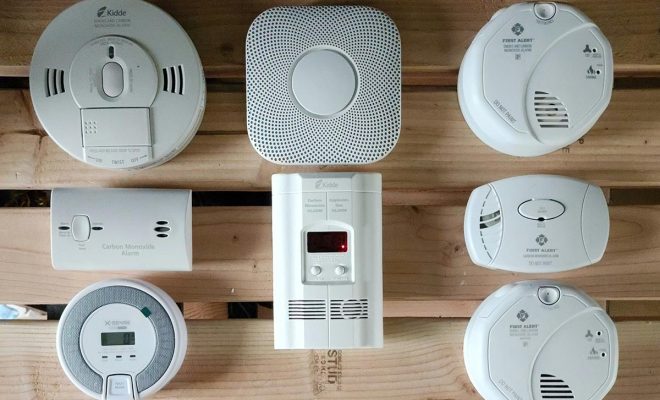
Now, let's pivot to its equally important, but often overlooked, cousin: the carbon monoxide detector. This is a whole different beast, albeit one that often shares real estate with its smoky counterpart.
Carbon Monoxide: The Silent Sneak
Carbon monoxide, or CO, is a truly sneaky villain. It's colorless, odorless, and tasteless. It gives absolutely no warning signs that it's present, which is what makes it so incredibly dangerous.
You can't see it, you can't smell it, you can't taste it. It's the invisible threat silently invading your home, often from faulty furnaces, gas appliances, or blocked chimneys.
Its job is to detect this silent killer before it starts causing serious health problems or worse. Unlike smoke, which often comes with a distinct smell and visible plumes, CO is truly a ghost.
So, do you see the fundamental difference here? One is looking for visible particles of smoke. The other is looking for an invisible, gaseous chemical compound.
The "Combo" Unit: Our Hero, But Not Universal
Now, don't despair! There are devices out there that do both jobs. These are the wonderful combination smoke and carbon monoxide detectors.
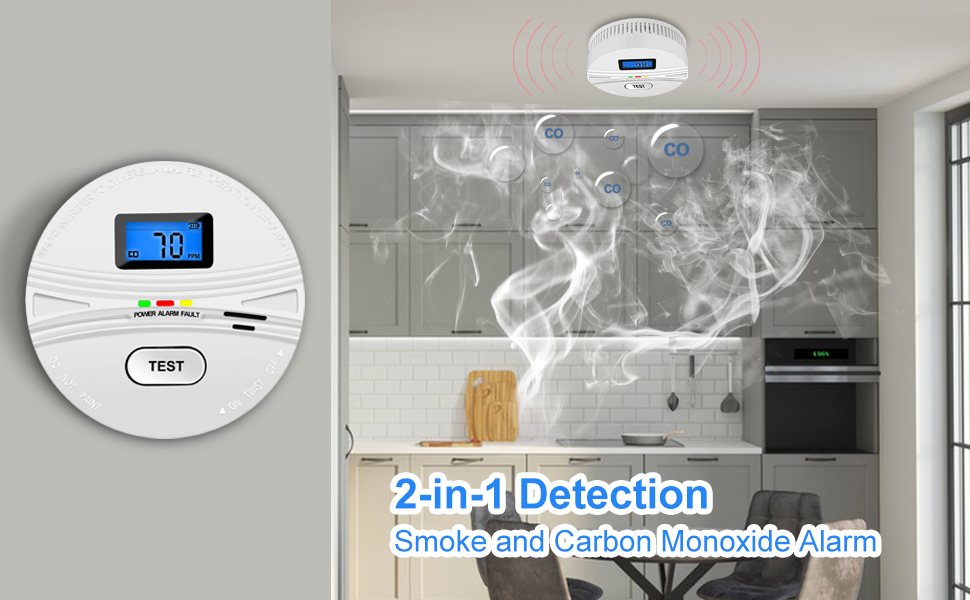
They are the multi-talented champions of home safety. They have separate sensors, one for smoke and one for CO, all packaged neatly into a single unit.
These are what most of us wish all our ceiling discs were. They offer that comforting "one-and-done" feeling we crave. But here’s the kicker: they aren't the only option on the market.
Many homes still have older, or even newer, basic smoke detectors that only detect smoke. They don't have the specialized sensor needed to pick up on carbon monoxide.
It's like expecting your toaster to also make coffee. They're both kitchen appliances, sure, but they have very different primary functions. And specialized sensors are not cheap!
Why the Confusion Reigns Supreme
It’s easy to get them mixed up, right? They often look exactly the same from the outside. They're usually white, round, and stuck on the ceiling or wall.

They both let out a terrifyingly loud beep when something's amiss. Our brains naturally lump them into the same category: "that thing that yells at me when I burn popcorn."
But the truth is, the internal workings can be vastly different. A smoke alarm is an essential safety item, required in most homes. A CO alarm is also critical, especially if you have fuel-burning appliances, but it's not always mandated in the same way, everywhere.
This creates a bit of a safety gap. Many folks assume their current smoke alarm automatically covers them for CO too. And that, my friends, is a dangerous assumption.
"Hold on a minute! You mean my ceiling disc might not be doing all the things I thought it was doing?"
Yep, that's exactly what I'm saying. It's not a conspiracy, just a difference in technology and purpose. The crucial takeaway is understanding that difference.
Time for a Little Home Inspection?
So, what's a savvy homeowner to do with this newfound, slightly unsettling knowledge? First, don't panic! This isn't a call for immediate ceiling demolition.
It's an invitation for a quick, playful audit of your home safety devices. Take a moment to look at your existing detectors. Many will clearly state "Smoke Alarm" or "Smoke and Carbon Monoxide Alarm."
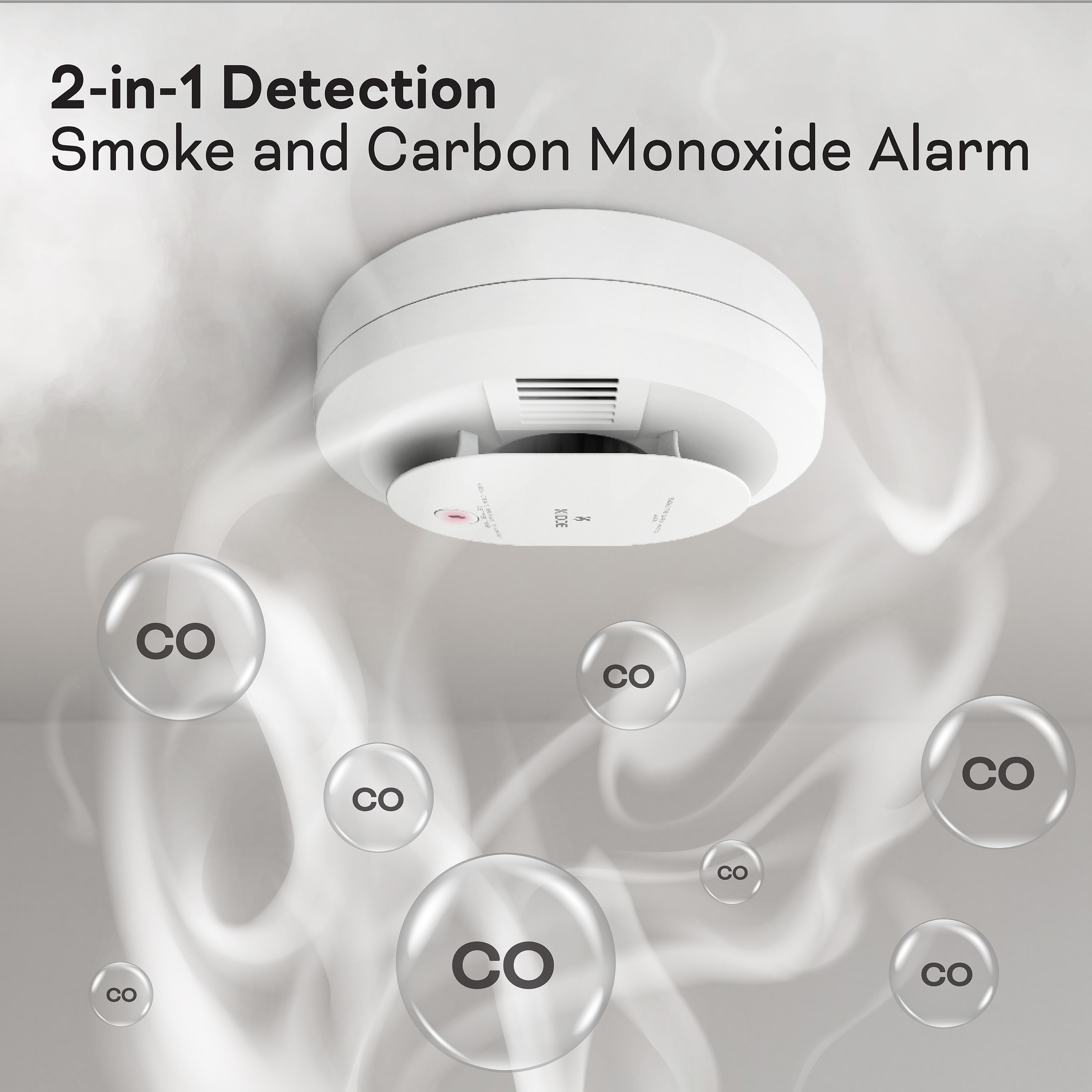
You might see abbreviations like "CO" or symbols indicating its dual function. If it just says "Smoke Alarm," then guess what? It's likely just a smoke detector.
And if you have any fuel-burning appliances – a gas furnace, a water heater, a fireplace, a gas stove – then a dedicated carbon monoxide detector (or a combo unit!) is absolutely essential.
Don't leave the detection of this silent, invisible threat to chance. It's an easy fix, a relatively inexpensive upgrade, and it provides immense peace of mind.
So, the next time you glance up at that little guardian on your ceiling, give it a knowing nod. And then, maybe, just maybe, check its label. You might just be surprised by what you find. And that's okay!
Knowing is half the battle. Now go forth and be safely informed, you magnificent home guardian, you!
End of article content. Word count check to be done externally.