
Pros And Cons Of Hydro Power

Alright, let's chat about something that sounds a bit serious – hydropower – but I promise we’ll keep it light. Imagine a giant, well-behaved kid's water slide, but instead of screams of joy, it generates electricity. That’s essentially what we’re talking about: harnessing the sheer, beautiful power of water to light up our lives. It’s pretty ingenious, isn’t it?
You know that feeling when you turn on the tap and water just flows? Or when you see a mighty river coursing through the landscape? Humans, being the clever critters we are, looked at all that kinetic energy and thought, "Hmm, how can we make this work for us?" And thus, hydropower was born. But like all great ideas, it’s got its shining moments and its "oopsie" moments. Let's dive in, shall we?
The "Yay!" List: Why Hydropower Rocks Our Socks Off
First off, the big one: it’s clean energy. When we talk about hydropower, we’re not talking about smoke stacks belching out gloom and doom. We’re talking about water flowing. It's like comparing a refreshing glass of spring water to, well, anything involving burning fossil fuels. One leaves you feeling invigorated, the other, a bit grimy.
Must Read
Then there’s the whole renewable thing. As long as the rain falls and rivers flow – which, you know, they tend to do thanks to the magnificent water cycle – we’ve got a steady supply. It’s not like digging for buried treasure that eventually runs out. Nature keeps refilling the "power tank" for us. How cool is that?
And let’s be real, it’s surprisingly reliable. Once a hydropower plant is up and running, it's pretty much a workhorse. It’s not dependent on whether the sun decides to show up today or if the wind feels like blowing a gale. Rivers are generally pretty predictable. It’s the steady Eddies of the energy world – you can count on them, unlike your friend who’s always "five minutes away."
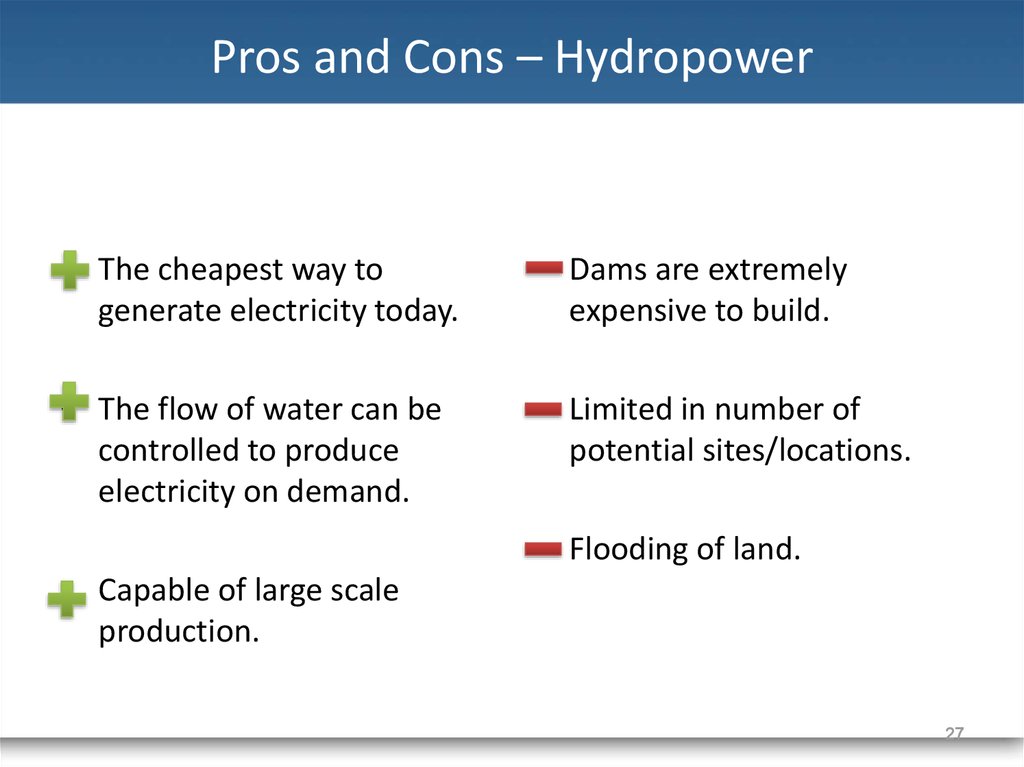
Plus, many dams that generate power do double duty. They're like that multi-talented friend who can cook a gourmet meal and also fix your car. They often help with flood control and water management, providing a handy reservoir for drinking water or irrigation. Talk about getting bang for your buck!
Finally, once the initial big build is done (and trust me, it’s big), the operating costs are relatively low. It’s like buying a really good, expensive coffee machine. The upfront sting is real, but then you're just paying for beans, and enjoying delicious coffee for years. No fuel to buy, just water doing its thing.
The "Uh-Oh!" List: Where Hydropower Gets a Bit Tricky
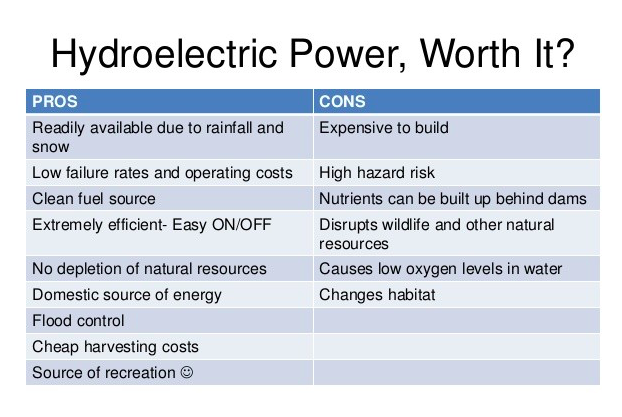
Okay, now for the flip side. Building a massive dam isn't exactly a weekend DIY project. The environmental impact can be huge. You’re essentially putting a giant stopper in a river. This dramatically changes the ecosystem, affecting fish migration (think salmon trying to get upstream for their romantic spawning rituals, only to hit a concrete wall!), altering water temperatures, and changing sediment flow. It's like rerouting a major highway through a pristine forest – things just aren't the same afterwards.
And speaking of big changes, dams often require relocation of communities and wildlife. Imagine being told your entire town needs to move because a huge lake is about to form where your house currently stands. It's a massive disruption, causing heartache and loss for many people and countless animals. Nobody likes to pack up their life and leave their ancestral home, right?
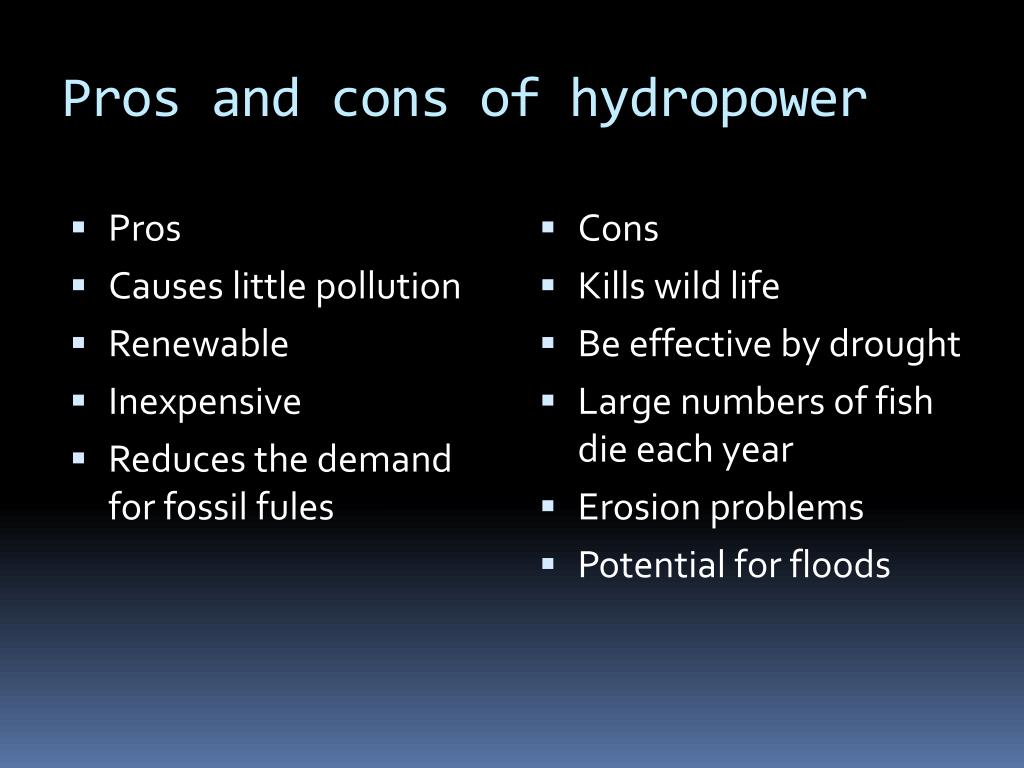
While generally reliable, hydropower isn't entirely immune to nature's whims. If there's a prolonged drought, those reservoirs start looking a bit sad and empty, and suddenly, there's not enough water to generate power. It’s like relying on your garden hose for a shower, only to find out the main water supply is turned off. No water, no power. Simple, but devastating.
Let's not gloss over the fact that building these behemoths is a seriously expensive and time-consuming undertaking. We're talking billions of dollars and years, sometimes decades, of construction. It’s not like putting up a new garden shed; it’s more like building a pyramid. The financial commitment and the sheer scale of the engineering are truly mind-boggling.
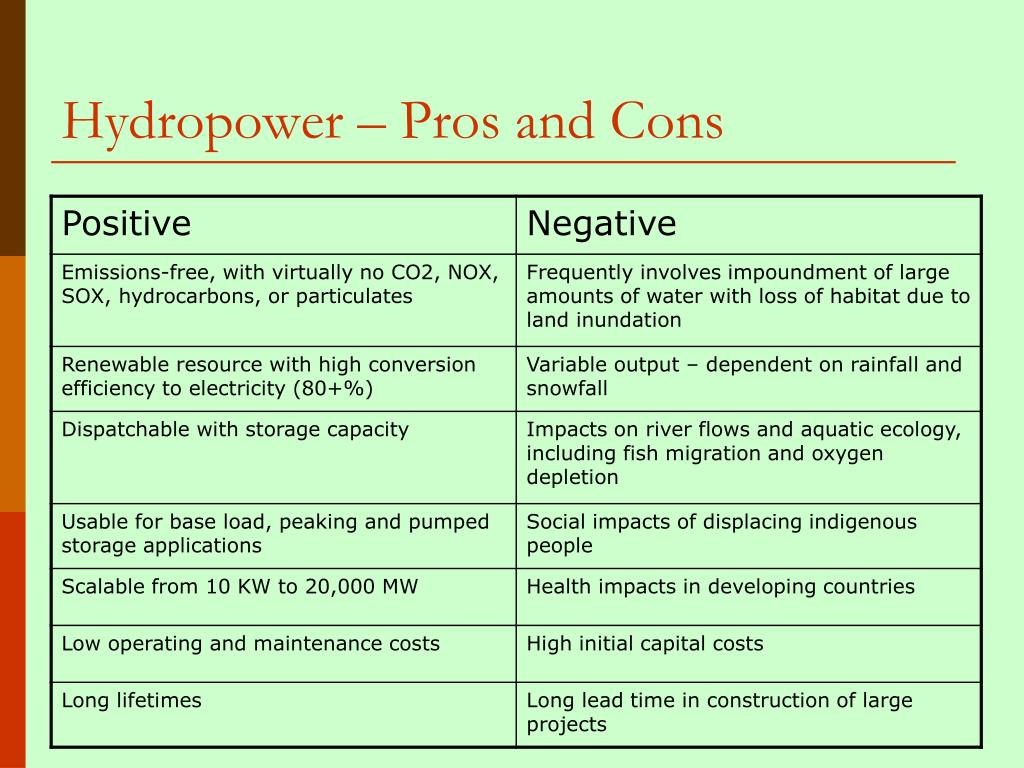
Lastly, there's the issue of sedimentation. Rivers naturally carry silt and debris downstream. A dam acts like a giant filter, trapping all that sediment. Over time, this sediment can build up, reducing the reservoir's capacity and eventually making the dam less efficient. It’s like trying to sweep your kitchen floor with a clogged vacuum cleaner – eventually, it just stops working as well.
So, What's the Verdict?
Hydropower is a fascinating mix, isn't it? On one hand, it’s a brilliant, renewable, clean power source that helps us manage water resources. On the other, it demands a significant toll on local environments and communities. It's not a simple "good" or "bad" story, but rather a complex tale of balancing our energy needs with our responsibility to the planet and its inhabitants.
Like anything truly powerful, it comes with great responsibility. It reminds us that every solution has its trade-offs, and understanding those is key to making smart choices for our future. Now, who's ready for a nice, refreshing glass of water? Or maybe to just appreciate the fact that when you flip a switch, the lights (mostly) come on!