Properties Of Metals Nonmetals And Metalloids
Ever wonder why your phone feels cool to the touch, while your oven mitts protect you from burning your hands? Or why some things shine and others look dull? The answers lie in the fascinating world of metals, nonmetals, and metalloids – the building blocks that make up, well, pretty much everything around us! Understanding their properties isn't just for scientists; it's about understanding the world we live in, from the circuits in your gadgets to the pots and pans in your kitchen.
So, what's the big deal? Knowing about these elements and their properties allows us to predict how materials will behave. This is incredibly useful in countless applications. Think about it: engineers need to know which metal is strong enough to build a bridge, chefs need to know which pots will conduct heat evenly, and doctors need to know which materials are safe to use in medical implants. Basically, a basic understanding of these properties helps us to make informed choices and appreciate the technology that shapes our lives. It's about moving from just using things to understanding how they work.
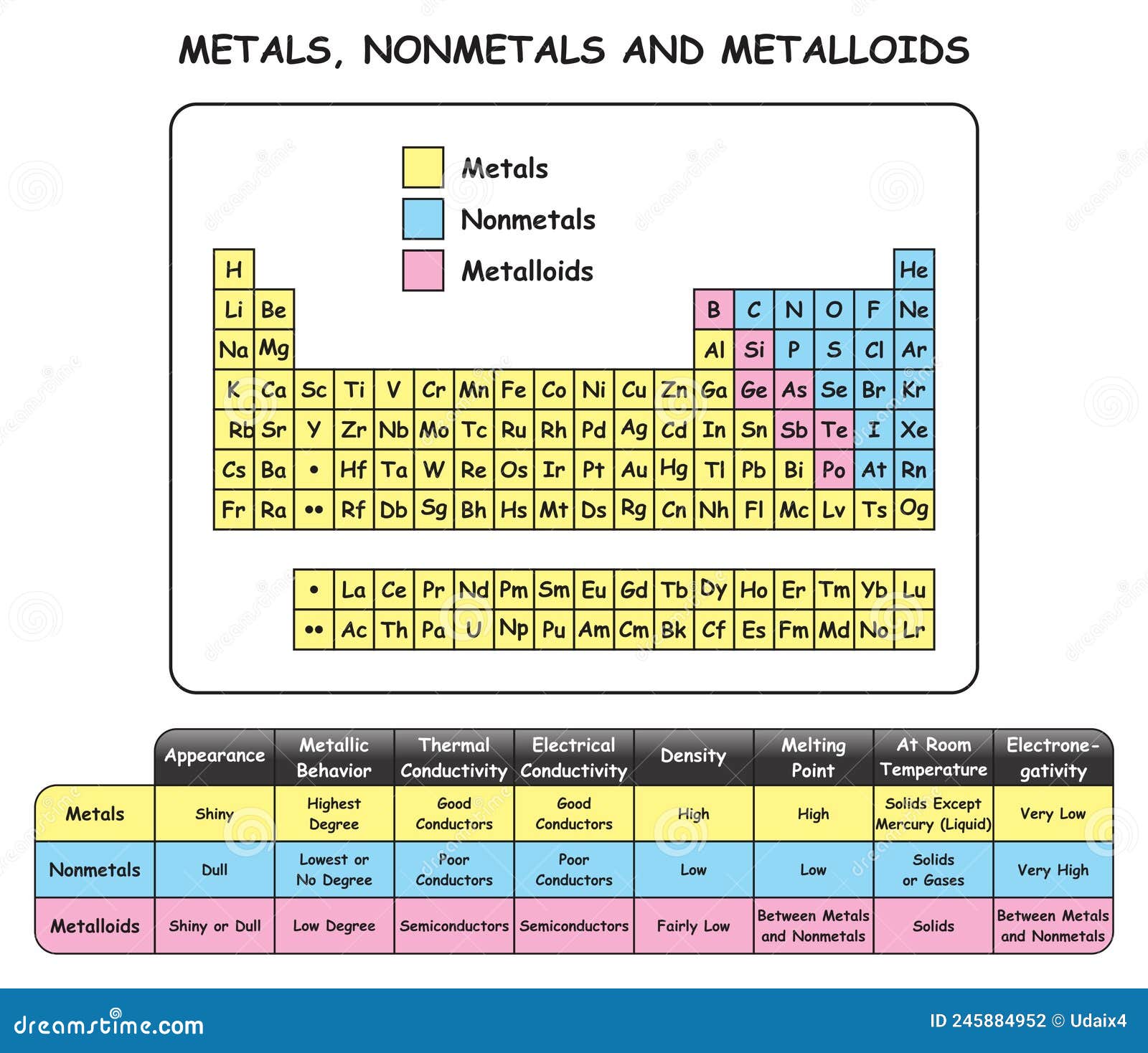
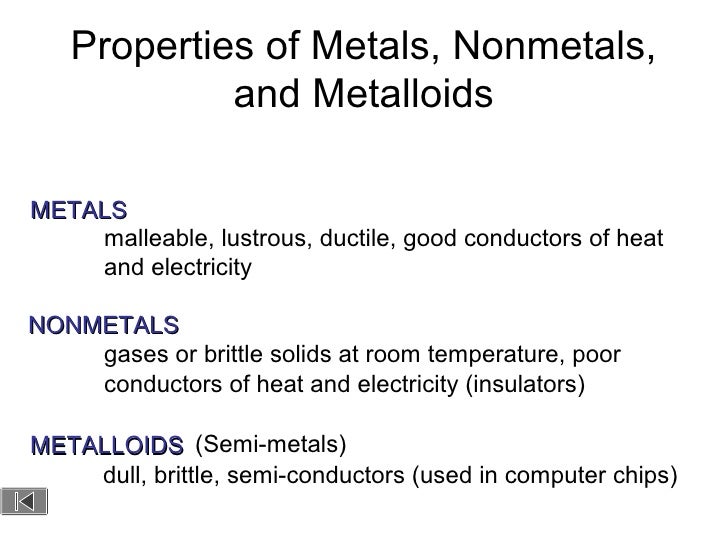
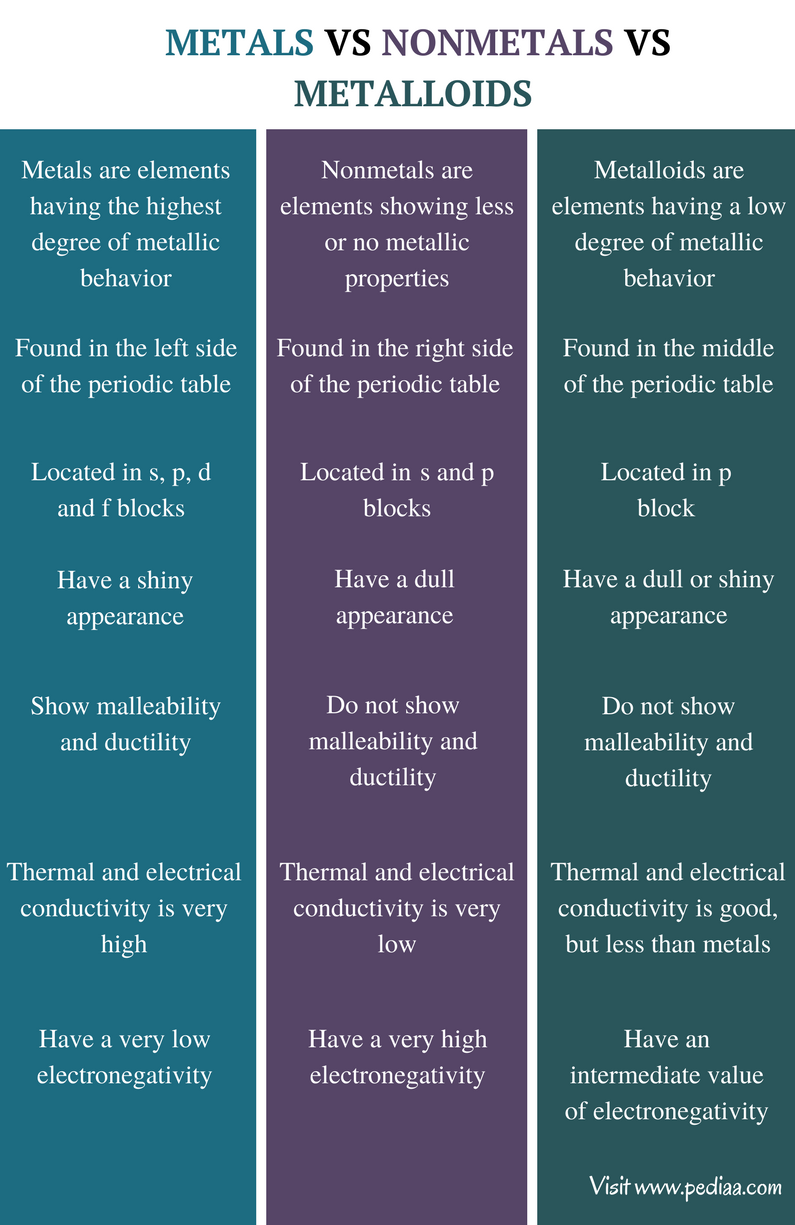
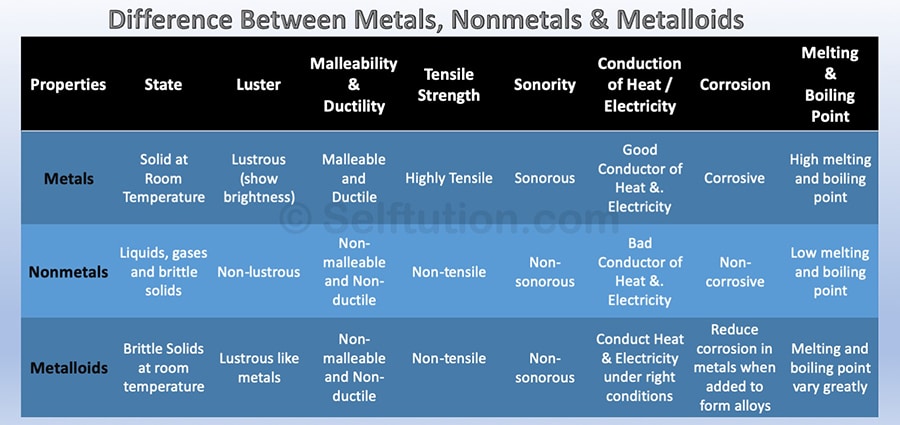
Let's dive into the specifics. Metals are generally shiny, good conductors of heat and electricity, and malleable (meaning they can be hammered into shapes) and ductile (meaning they can be drawn into wires). Think of gold jewelry, copper wiring, or the steel beams in a skyscraper. Nonmetals, on the other hand, are usually dull, poor conductors, and brittle (meaning they break easily). Examples include sulfur, found in gunpowder, or carbon, which is the backbone of all living things (and diamonds!).
Must Read
Then we have the mysterious metalloids (also called semi-metals). These are the chameleons of the element world. They possess properties of both metals and nonmetals, making them incredibly useful in electronics. Silicon, for example, is a metalloid that is essential for computer chips. Its ability to sometimes conduct electricity and sometimes not is what allows us to create transistors, the tiny switches that power our digital world.
How can you explore these concepts at home or in the classroom? A simple experiment is to test different objects (a metal spoon, a plastic ruler, a piece of wood) to see how well they conduct heat. Place them in a bowl of hot water and see which one heats up the fastest. You can also explore conductivity using a simple circuit with a battery, a bulb, and some wires. Test different materials to see which ones allow the electricity to flow and light up the bulb. Even observing the different properties of everyday objects – like the malleability of aluminum foil or the brittleness of a piece of chalk – can be a fun and educational exercise.
In education, understanding these concepts forms a foundation for further studies in chemistry, physics, and engineering. From designing new materials with specific properties to developing sustainable technologies, knowledge of metals, nonmetals, and metalloids is crucial for innovation. And in daily life, it empowers us to be more curious and informed consumers, understanding the materials that make up our world and making better decisions about the products we use.
So, next time you pick up a metal utensil, admire a sparkling gemstone, or use your smartphone, take a moment to appreciate the unique properties of the elements that make it all possible. It's a fascinating world, just waiting to be explored!