Properties Of Metals And Nonmetals And Metalloids
Okay, people, let's talk elements. Not the kind that annoy you at Thanksgiving, but the kind on the Periodic Table. Specifically, metals, nonmetals, and those weirdos in between: the metalloids.
Metals: The Show-Offs
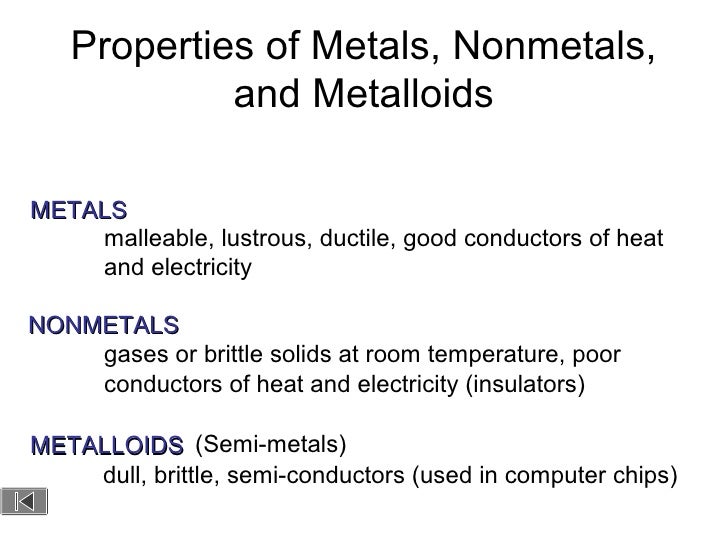
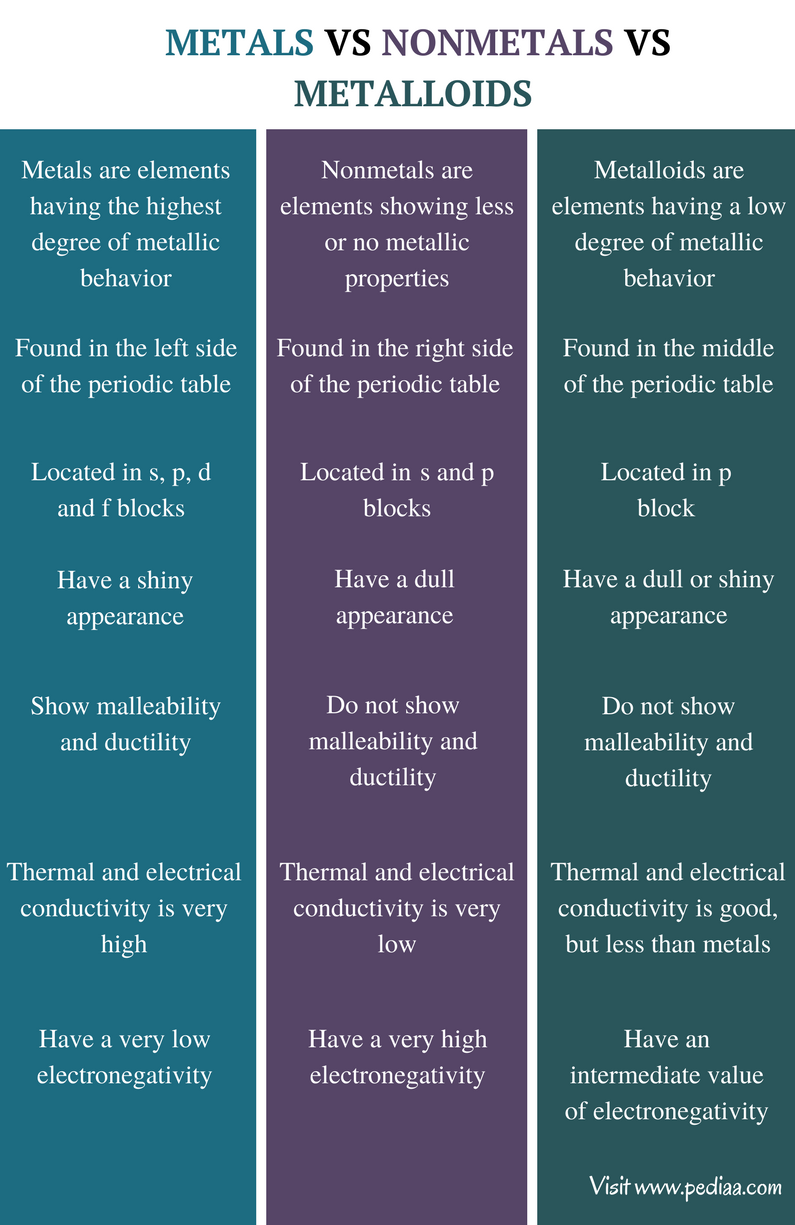
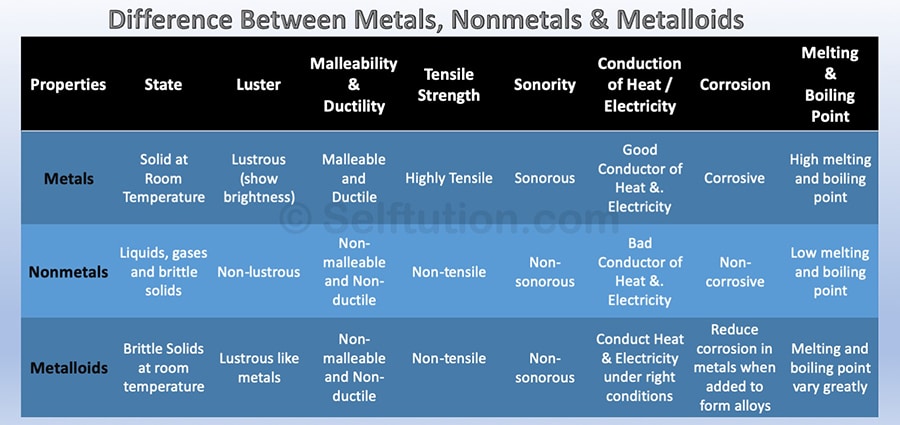
First up, metals. You know 'em. Shiny, clangy, always trying to steal the spotlight. I'm convinced they're all secretly aspiring rock stars. Think about it. They're lustrous – basically, they love the limelight. They're malleable – meaning you can bash them into different shapes. Talk about adaptable! And they conduct electricity like nobody's business. Basically, they're just showing off.
Gold, silver, copper – the usual suspects. Always there, always gleaming. They're the popular kids in the element world. They make up most of the Periodic Table, which, let's be honest, feels a little unfair. But hey, who am I to judge? (Unpopular opinion: Gold is overrated. Give me a good piece of aluminum foil any day. It's far more versatile.)
Must Read
And don't even get me started on their obsession with giving away electrons. They're so eager to lose those negative charges, it's like they're trying to ditch bad karma. "Take my electrons! I don't need 'em! I'm positive I'll be better off without them!" (Okay, maybe I'm projecting a little.)
Nonmetals: The Introverts
Now, let's move on to the nonmetals. The quiet ones. The ones who prefer a good book to a raging party. They're the opposite of metals in almost every way. Dull? Check. Brittle? Check. Poor conductors of electricity? Double check. They're basically the wallflowers of the element world.

Oxygen, nitrogen, carbon – you need them to, you know, live. So, they're pretty important. They're also great at taking electrons from metals. They're like the energy vampires of the Periodic Table. (Unpopular opinion: Nonmetals are secretly way more powerful than metals. They just play it cool.)
And honestly, I kind of admire their anti-establishment vibe. While metals are all about conformity (shiny, clangy, conductive), nonmetals are all about being different. They're the rebels of the element world. They're like, "So what if I don't conduct electricity? I'm perfectly happy being a gas!"
Metalloids: The Identity Crisis Crew
And then there are the metalloids. Oh, the metalloids. The ones who can't quite make up their minds. Are they metals? Are they nonmetals? Nobody knows! They're like the awkward teenagers of the element world, stuck between two extremes and not quite fitting in anywhere.
Silicon, germanium, arsenic – these guys are the masters of "it depends." Sometimes they act like metals, sometimes they act like nonmetals. It all depends on the situation. They're the chameleons of the element world, adapting to whatever environment they find themselves in.
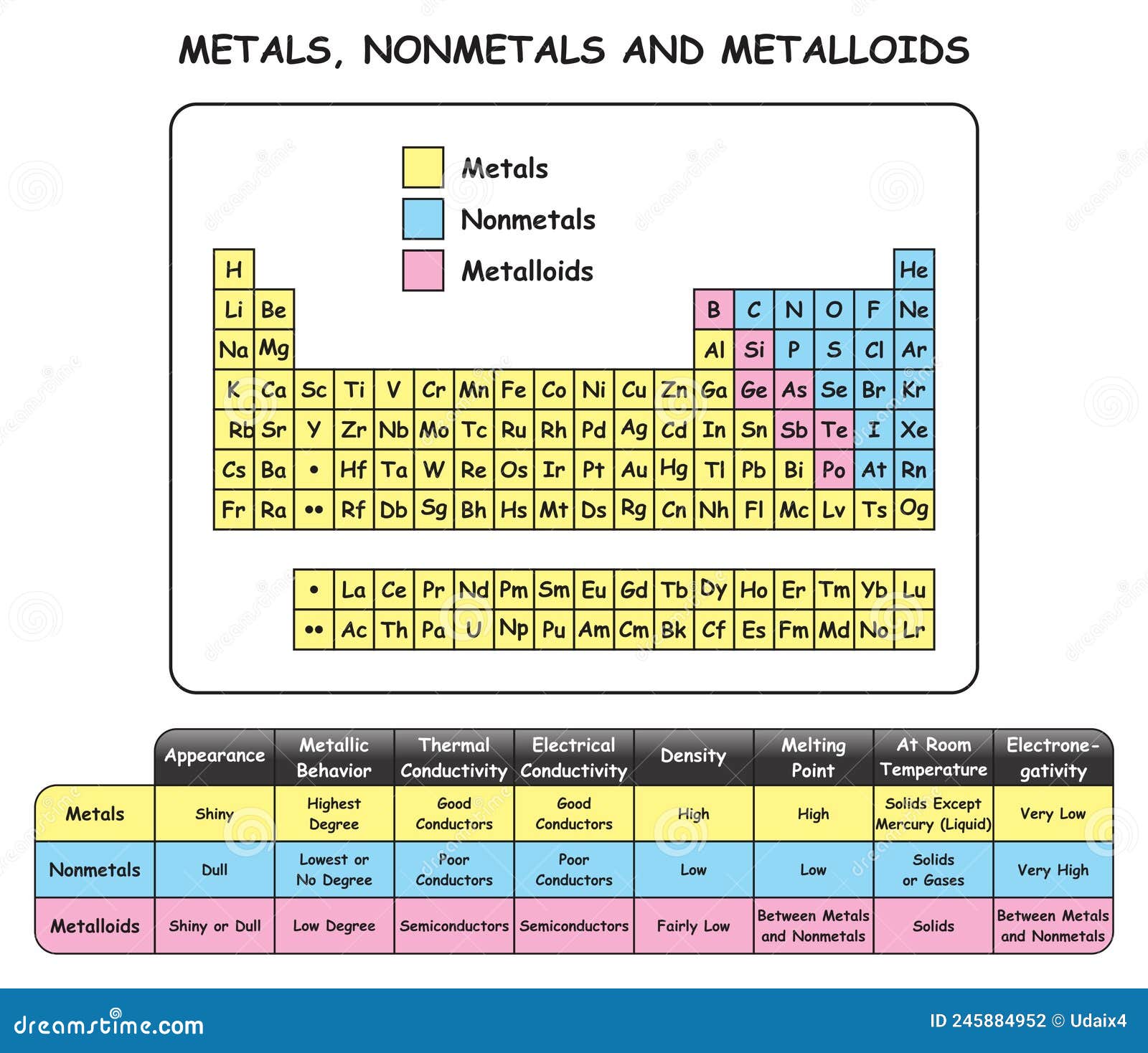
But here's the thing: that "it depends" quality is what makes them so incredibly useful. Silicon, for example, is a semiconductor. That means it can conduct electricity under certain conditions, but not others. This makes it perfect for computer chips. So, basically, your smartphone is powered by a bunch of indecisive elements. (Unpopular opinion: Metalloids are the smartest of the bunch. They understand the value of being flexible.)
So, there you have it. Metals, nonmetals, and metalloids. The good, the bad, and the confusing. But hey, at least they're all elements... literally. Now if you excuse me, I'm going to go ponder the existential angst of being a metalloid.
Just kidding... maybe.