
Product Life Cycle Theory Of International Trade

Okay, let's talk shopping. We all love a good deal, right? And sometimes, that "deal" involves buying something made halfway across the world.
Ever wonder why certain things are made where they are? It's not just because some countries have cheaper labor. There's actually a theory about this, a fancy-pants term called the Product Life Cycle Theory of International Trade.
Now, that sounds super boring. But stick with me! I promise to make it less snooze-worthy.
Must Read
The Baby Phase: Born in the USA (or Somewhere Fancy)
Imagine a brilliant inventor, let's call him Bob. Bob invents the self-stirring coffee mug. Genius!
Where's Bob going to manufacture these mugs? Probably near his garage. He needs to tinker, improve, and basically babysit his invention. So, initially, it's all local, local, local.
He likely sells them nearby too. The market is small, but eager. People are willing to pay a premium for this novel contraption.
Teenage Angst: Exporting Our Feelings (and Mugs)
Bob's mugs are a hit! Everyone wants one. He's got orders coming in from neighboring states. Time to scale up!
He's still making them in his (slightly larger) factory. But now he's exporting. America (or whatever fancy country Bob's in) is the place to be for self-stirring mug technology.
Other countries might try to make their own versions. But Bob's got a head start. His mugs are the gold standard.
The Grungy Twenties: Competition Arrives
Uh oh. Other companies are catching on. Cheap knock-offs start appearing in foreign markets. This is where things get interesting.

Bob's still selling mugs. But he's facing competition. Prices are starting to fall. Profits are getting squeezed.
He starts thinking about efficiency. Maybe those cheaper labor markets aren't so bad after all...
The Midlife Crisis: Moving Abroad for Cheaper Therapy (and Labor)
This is the big one. Bob decides to move production overseas. Where labor costs are lower. Where materials are cheaper.
He's not abandoning his invention. He's just trying to survive. Now, he's importing mugs back into his home country.
This is the part where everyone gets mad. "He's taking our jobs!" they cry. But Bob's just trying to stay afloat in the self-stirring mug game.
The Golden Years: Everyone's Making It
The mug technology is now commonplace. Everyone knows how to make a self-stirring mug. The market is saturated.
Production has moved to the countries with the absolute lowest costs. Quality might not be as high. But hey, they're cheap!
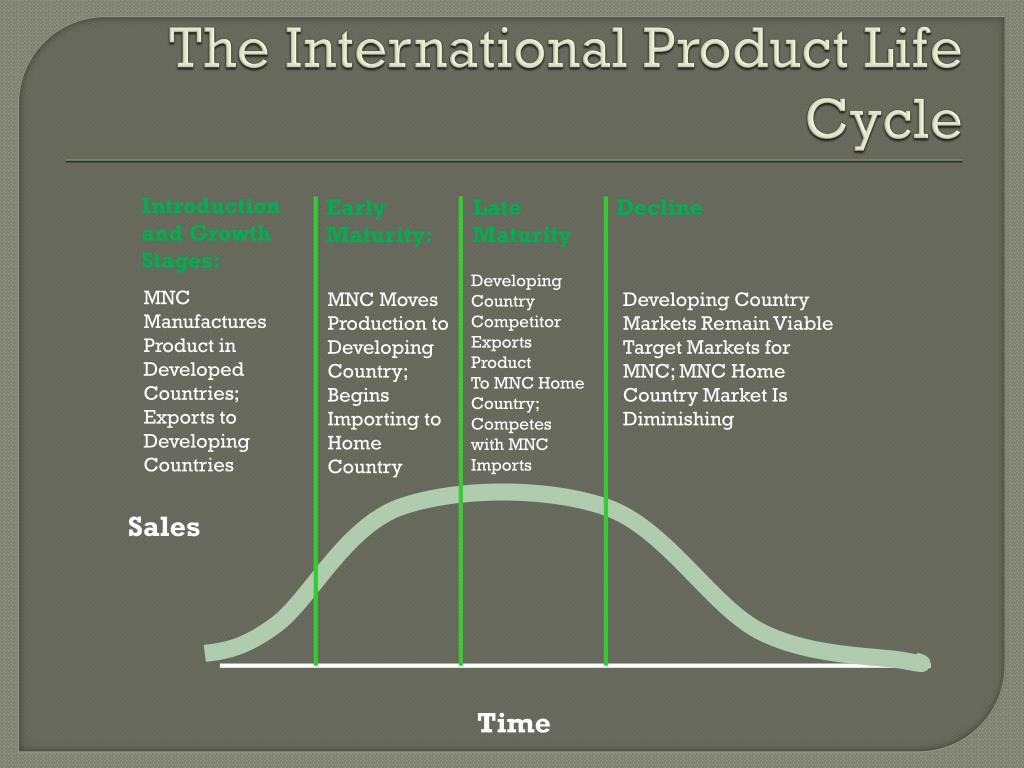
Bob is probably onto his next invention. Maybe a self-cleaning cat litter box? The cycle begins anew!
My Unpopular Opinion: It's Not Always About Greed
Here's where I might ruffle some feathers. Everyone loves to hate on companies that move production overseas.
They accuse them of greed, of exploiting workers. And sometimes, that's true. But not always.
Sometimes, companies are just trying to survive. They're facing intense competition. They need to cut costs to stay in business.
Is it ideal? No. But is it always evil? I don't think so. The Product Life Cycle kind of forces their hand.
Think about it. If Bob didn't move production, he might go bankrupt. Then no one would have a job. Including the workers in his original factory.
The Exceptions That Prove The Rule (Kind Of)
Of course, this theory isn't perfect. Some products stay "Made in the USA" (or wherever) for a long time. Luxury goods, for example.

People are willing to pay a premium for that "Made in" label. Think Swiss watches. Or Italian leather.
And some industries are heavily regulated. So moving production is too much of a hassle. Or too expensive.
But, in general, the Product Life Cycle Theory explains a lot about why things are made where they are. It's not just about cheap labor. It's about the stage of the product's life.
So, What's the Point?
Why should you care about all this? Well, next time you're buying something, think about where it came from.
Ask yourself why it's made there. Is it a brand new invention? Or a mature product that's been around for decades?
Understanding the Product Life Cycle can help you make more informed purchasing decisions. And maybe, just maybe, it can help you be a little less judgmental about companies that move production overseas. (Okay, maybe not completely less judgmental.)
Let's Get Practical
Consider smartphones. Early smartphones were expensive status symbols. Innovation was rapid and production was largely in developed nations.

As technology matured, design and manufacturing became more standardized. Today, significant smartphone production is in countries with lower labor costs. The components are often globally sourced.
How about clothing? A designer dress might originate in Paris or Milan, handcrafted for a discerning clientele. Mass-market clothes, however, are likely manufactured in Asia.
The Future of the Cycle
Globalization continues to evolve. Automation is changing the game, potentially bringing some manufacturing back to developed countries.
3D printing and localized production could disrupt established supply chains. Products could once again be made closer to where they are consumed.
The Product Life Cycle Theory offers a framework to understand these shifts. It underscores that international trade is constantly changing.
Concluding Thoughts: Be an Informed Consumer
The next time you see a "Made in..." label, remember Bob and his self-stirring mug. Consider the theory, but also understand the complexity.
International trade is a dynamic process. The Product Life Cycle Theory provides a useful lens, yet it's not the entire picture.
Now, if you'll excuse me, I need to go buy a new self-stirring mug. I wonder where it was made?