
Product Life Cycle Theory International Trade

Okay, so picture this: you're at a café, right? And I'm about to drop some serious economics knowledge on you, but don't worry, it's not gonna be boring. We're talking about the Product Life Cycle Theory and how it messes around with international trade. Trust me, it’s way more exciting than it sounds. It's basically a soap opera for products, with drama, betrayal, and triumphant comebacks!
The Birth of an Idea (and a Product!)
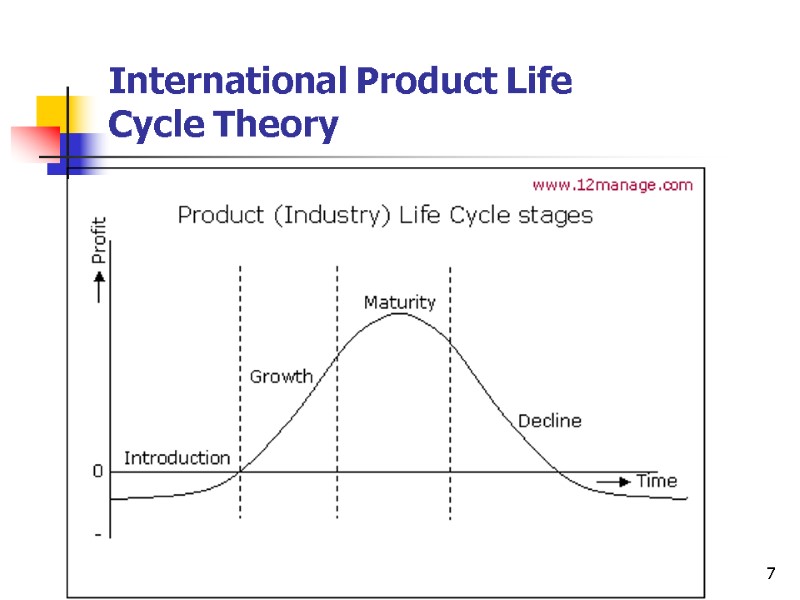
First, imagine someone has a brilliant idea, like, say, a self-stirring coffee mug. GENIUS! But where does this genius strike first? Usually, it’s in a developed country. Why? Because that’s where you find all the cool stuff: tons of smarty-pants engineers, venture capitalists throwing money around like confetti, and people who are willing to pay a premium for the latest gadget. This is the Introduction Stage – the product's awkward teenage years.
Think of it like a band starting out. They're playing small gigs, trying to find their sound, and hoping someone, anyone, buys their demo tape. Early adopters are like the band's super-fans; they're willing to put up with glitches and high prices just to be the first on the block with the new thing.
Must Read
Growth Spurt (and Export Boom!)
If our self-stirring mug is a hit (and let's face it, it’s a GAME CHANGER), sales start going through the roof! Everyone wants one! This is the Growth Stage. Our domestic company is churning them out as fast as they can. Production ramps up, profits soar, and the company starts thinking, “Hey, maybe we should sell these things overseas!”
So, they start exporting. Think of exporting like this: you baked a cake, and it's so good you decide to share it with the neighbors. The company is selling its mugs to other countries, making money hand over fist. Life is good. They're basically swimming in coffee (and maybe a few stray coffee grounds).

Maturity: When Everyone Has One (or Two)
But then… the inevitable happens. Everyone who wants a self-stirring mug, has a self-stirring mug. Sales start to plateau. This is the Maturity Stage. The market is saturated. It's like when everyone suddenly has Crocs – the initial excitement fades, and you start seeing them everywhere, even at weddings (shudder!).
Competition starts heating up too. Other companies, seeing the success of our original mug, decide to jump on the bandwagon. They start making their own self-stirring mugs, sometimes even cheaper and better ones! Oh, the horror!
The Plot Twist: Moving Production Overseas
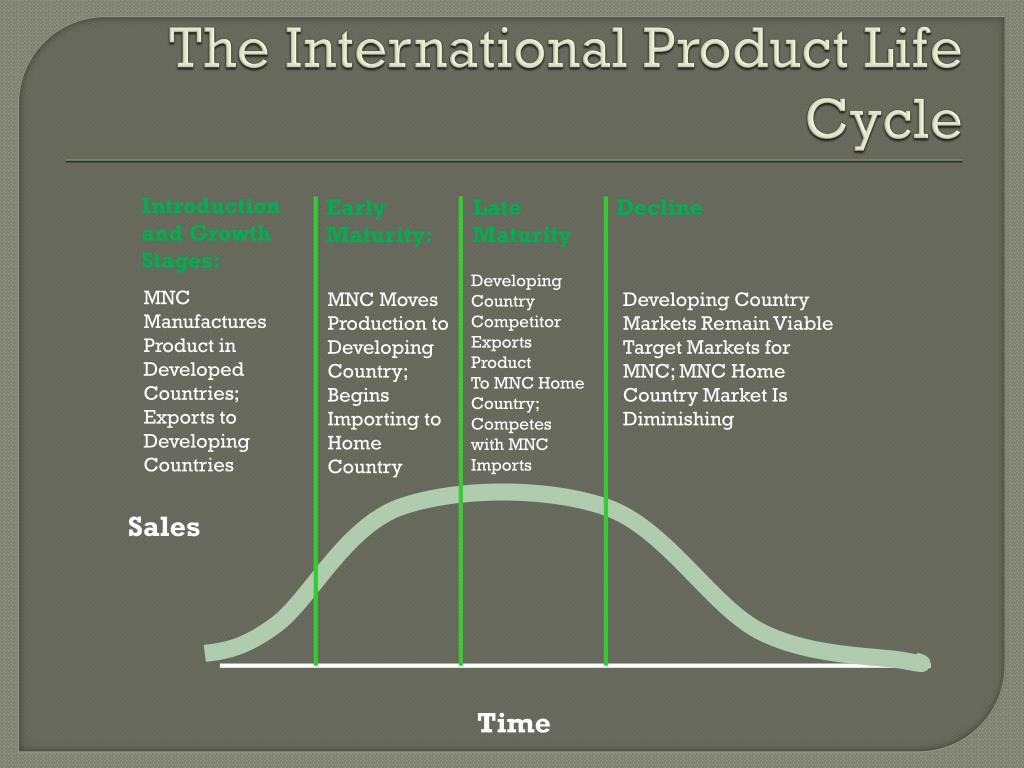
Here's where things get interesting. To stay competitive, our original company starts looking for ways to cut costs. One of the most common ways to do that? Move production to a country with lower labor costs. Think of countries like China, Vietnam, or Bangladesh. This is called Foreign Direct Investment (FDI).
So, instead of exporting from the developed country, the company starts producing in a developing country, and potentially even exporting back to the developed country! It's like a boomerang of mugs! This is the Standardization Stage or sometimes referred to as the Decline Stage for the original country's production.
The developing country gains new jobs, technology, and economic growth. It's a win-win… mostly. Our original country loses some jobs, but hopefully, they're busy inventing the next self-stirring, self-cleaning, self-ordering coffee machine (because, you know, laziness is the mother of invention!).

The Decline (or Rebirth?)
Eventually, even those cheaper mugs start to lose their appeal. Maybe a new, even cooler gadget comes along. Maybe people just get tired of stirring their coffee. Sales decline. This is the Decline Stage.
But wait! There's a twist! Sometimes, a company can revive a product by adding new features, targeting a new market, or even just a clever marketing campaign. Our self-stirring mug could make a comeback as a "retro" item, or maybe they add Bluetooth connectivity so it can play your favorite tunes while you sip. The possibilities are endless! It’s like when a washed-up actor gets a role playing a washed-up version of themselves and suddenly they're cool again.
International Trade: The Puppet Master
So, how does all this relate to international trade? Well, the Product Life Cycle Theory basically dictates the flow of goods and investments between countries. It explains why developed countries initially export innovative products, and why developing countries eventually become major exporters of those same products. It's a dance of innovation, competition, and cost-cutting that shapes the global economy.
It’s important to remember that the Product Life Cycle Theory isn't a perfect predictor. Some products have surprisingly long lifecycles, while others flame out faster than a shooting star. But it's a useful framework for understanding how products evolve and how international trade patterns change over time.
So, next time you're sipping your self-stirred coffee (or any other product, for that matter), take a moment to appreciate the wild and wacky journey it took to get to your mug. It's a global adventure, filled with economic drama and the relentless pursuit of… well, caffeination! Now, who's buying the next round?