
Power Consumption Of Small Refrigerator

Hey there, energy-conscious friend! Ever found yourself staring lovingly at your tiny fridge – maybe it’s chilling drinks in your office, keeping your lunch fresh in your dorm, or holding all the important snacks in your "man cave" (or "person cave," we don't discriminate!) – and wondered, "How much electricity is this little guy actually guzzling?"
It's a valid question! We all want to be smart about our utility bills, and those cute mini-fridges sometimes feel like a mysterious black box of chilling power. So, let's pull back the curtain and chat about the power consumption of small refrigerators, no physics degree required. Promise!
The Appeal of the Pint-Sized Powerhouse
Small fridges, often called mini-fridges, compact fridges, or even "beverage centers," are incredibly handy. They fit where full-sized fridges dare not tread, offering a convenient cold spot for anything from soda and beer to breast milk and emergency chocolate. They’re the unsung heroes of convenience!
Must Read
But convenience often comes with a question mark: what's the cost? Are they secretly plotting to drain your bank account with their insatiable appetite for electricity? (Spoiler alert: probably not, but let's dive deeper!)
Cracking the Code: Watts, Kilowatts, and Your Wallet
When we talk about electricity, we usually mention Watts (W). Think of Watts as the fridge's "thirst" for power at any given moment. A small fridge typically uses anywhere from 50 to 100 Watts when its compressor is actively running.
However, fridges don't run constantly. They cycle on and off to maintain a set temperature. This is where Kilowatt-hours (kWh) come in. A kWh is how utility companies measure your electricity usage – it's 1,000 Watts used for one hour. It's like measuring how much fuel your car uses over a certain distance, not just how much it sips at one second.
So, on average, a small refrigerator might consume anywhere from 0.5 kWh to 1.5 kWh per day. That's right, per DAY! To put that into perspective, a single 100-watt incandescent light bulb left on for 10 hours would use 1 kWh. Your little fridge isn't exactly a power hog!
![Mini Fridge Wattage [1,494+ Units | Most Efficient Revealed]](https://ecocostsavings.com/wp-content/uploads/2023/04/mini-fridge-wattage-examples.jpg)
Factors That Play a Role (It's Not Always Just the Fridge)
While those numbers are a good starting point, several things can influence your mini-fridge's actual power usage:
-
Age and Efficiency: An older, less efficient model will naturally use more power than a shiny new Energy Star certified one. Technology improves, folks!
-
Size Matters: A slightly larger "small" fridge will use more energy than a truly tiny one. Logical, right?
-
Ambient Temperature: If your fridge is sitting in a super hot garage, it has to work much harder to stay cool than if it's in a temperate room. It's like trying to run a marathon in a sauna!

Refrigerator power consumption and electricity cost -
Door Openings: Every time you open the door to ponder your snack choices, warm air rushes in, making the compressor kick on more often. Decision paralysis has an energy cost!
-
Fullness Factor: A relatively full fridge (not overstuffed!) is more energy-efficient than an empty one. The cold items help retain the chill, acting as thermal mass.
-
Thermostat Setting: If you crank it down to "polar bear plunge" temperatures, it will use more electricity than if it's set to a reasonable "just chilly enough" level.
-
Gasket Condition: A worn-out, leaky door seal lets cold air escape. Do the dollar bill test: close the door on a dollar bill. If you can pull it out easily, your seal might need some love.

Fridge Wattage Explained: Understanding Power Consumption for Samsung
Becoming an Energy-Saving Mini-Fridge Master!
Want to be an eco-warrior without even trying too hard? Here are some super simple tips:
-
Placement is Key: Don't cram it against a wall or in direct sunlight. Give it some breathing room for air circulation.
-
Check the Seals: A good seal keeps the cold in and the warm out. Easy peasy!
-
Clean the Coils: Every now and then, dust off the coils on the back or underneath. Dusty coils make the fridge work harder.
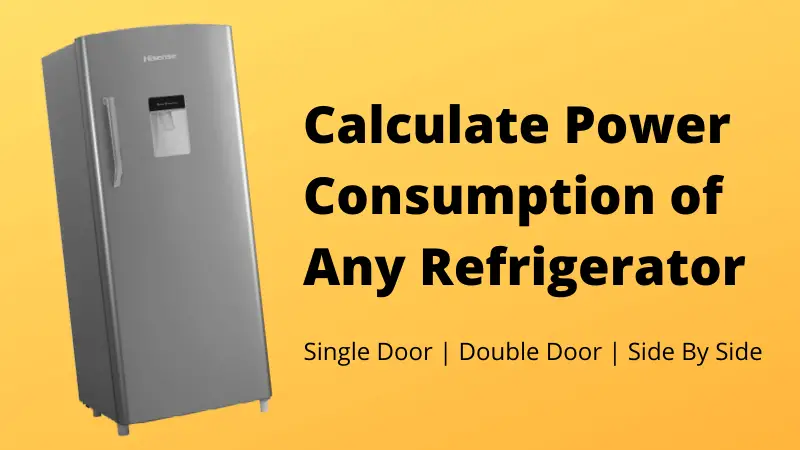
Refrigerator Power Consumption Calculator - Lets Save Electricity -
Don't Be a Door-Gawker: Know what you want before you open the door. Be decisive! Your snacks (and your wallet) will thank you.
-
Defrost Regularly: If your mini-fridge isn't frost-free, excessive ice buildup acts as insulation, making the compressor overwork. Give it a proper defrost!
The Uplifting Conclusion: Chill Out and Enjoy!
So, the big takeaway? Your small refrigerator is highly unlikely to be the villain in your electricity bill story. While every appliance uses power, these compact chillers are generally pretty efficient given their job.
They offer immense convenience, keep your favorite beverages perfectly frosty, and ensure your snacks are always at the ready. With a few simple habits, you can keep their power consumption in check and continue enjoying their delightful presence.
Go forth, my friend, and enjoy that perfectly chilled drink or snack! Your mini-fridge is doing a fantastic job, and now you know it's not secretly plotting against your power bill. Wink!