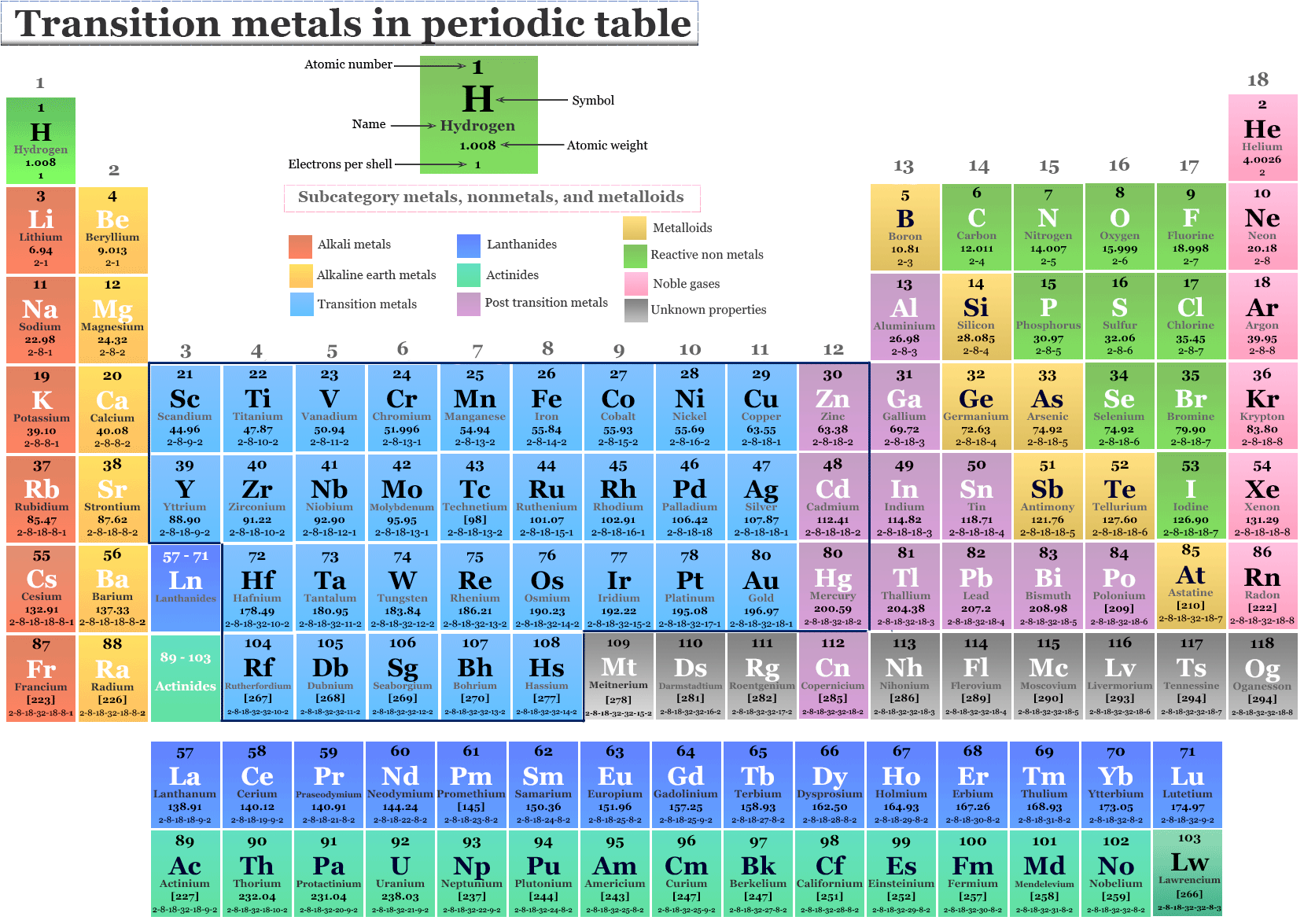
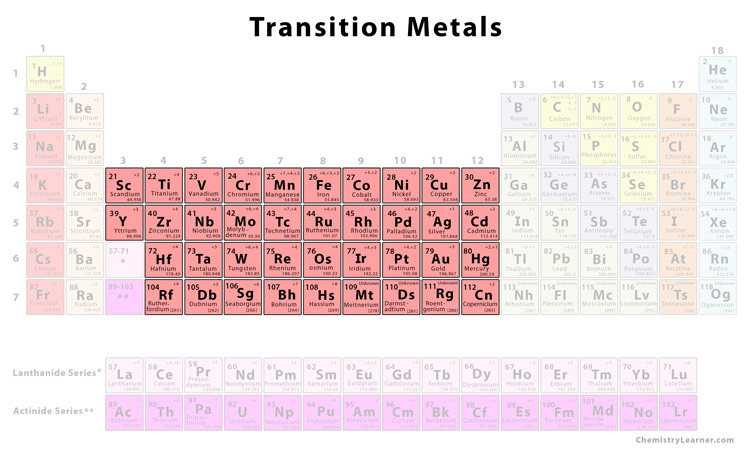
Periodic Table Of Elements Transition Metals
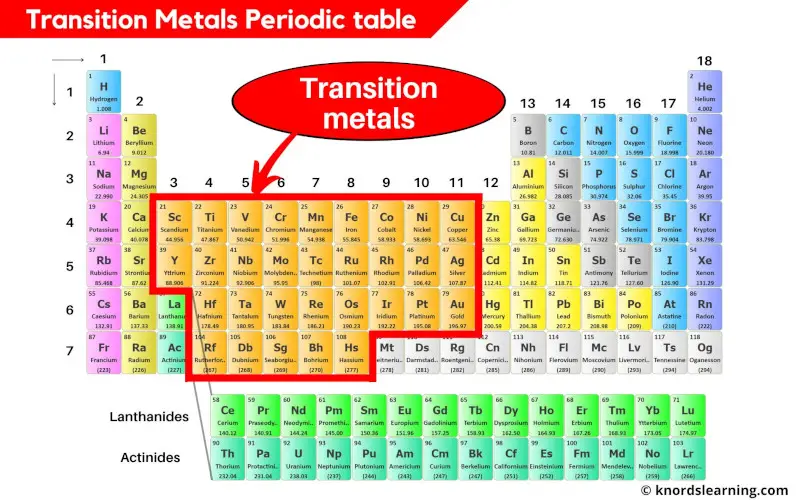
Ever wonder what gives fireworks their dazzling colors, or what makes your phone buzz? The answer lies, in part, with a fascinating group of elements on the periodic table: the transition metals. They might sound intimidating, but trust me, they're way more interesting than they seem! Think of them as the chameleons of the element world, constantly changing their colors and personalities depending on who they're hanging out with. Understanding them is like unlocking a secret code to the everyday world around you.
So, why should you, specifically, care about transition metals? For beginners, just knowing they exist is a great start! It helps you appreciate the complexity of the world. They are the bridge connecting the reactive metals and the less reactive non-metals. For families, learning about transition metals can be a fun way to introduce chemistry concepts. You can explore how copper pipes carry water in your home or how iron is essential for healthy blood. For hobbyists, like aspiring jewelers or gardeners, transition metals are key. Jewelers work with gold, silver, and platinum, while gardeners might use fertilizers containing manganese or iron.
What makes these elements so special? The key lies in their electrons. Unlike other elements that readily give away or grab electrons to form stable bonds, transition metals are more flexible. They can form multiple types of bonds, leading to a wide range of compounds with different properties. Think about iron (Fe). It can rust (iron oxide), be used to make strong steel, or form the core of important proteins in your body. Or consider copper (Cu), used in electrical wiring because of its excellent conductivity, but also known for its beautiful blue-green patina when exposed to the elements.
Must Read
There's also titanium (Ti), incredibly strong and lightweight, used in everything from airplanes to bike frames. Chromium (Cr) is what makes stainless steel "stainless" by forming a protective layer that prevents corrosion. And let's not forget zinc (Zn), a key component of sunscreens and also vital for our immune systems. Even gold (Au) and silver (Ag), prized for their beauty, are transition metals!
Getting started with exploring transition metals is easy. First, grab a periodic table – you can find one online or in any science textbook. Locate the block of elements in the middle; those are your transition metals! Next, choose an element that interests you – maybe the one that’s used in your favorite piece of jewelry. Research its properties, uses, and where you might encounter it in daily life. A great place to start is by searching "[element name] uses" online. You could even look up compounds that element forms and how they're used!
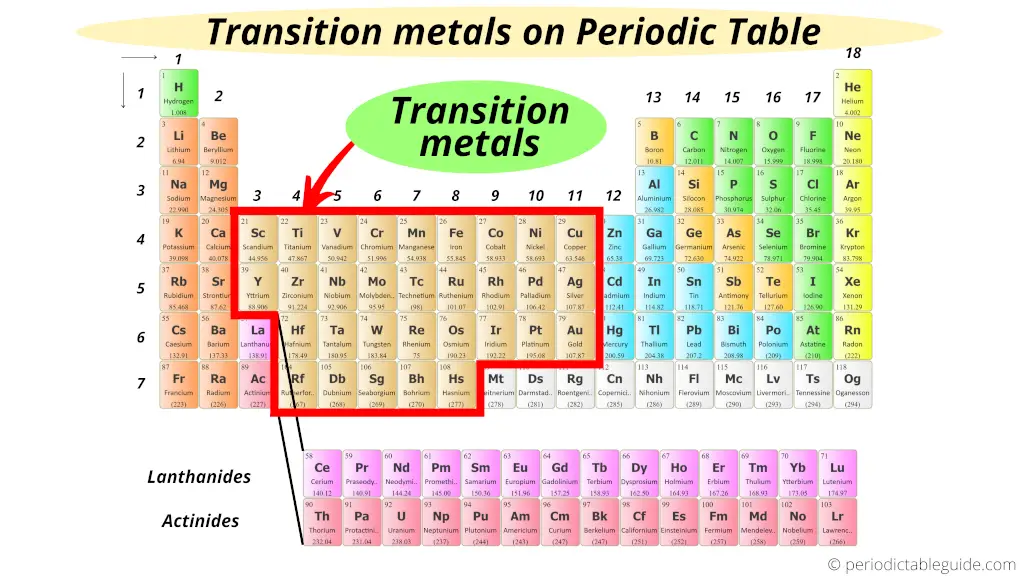
You can also conduct simple experiments (with adult supervision, of course!). Try soaking a penny (mostly copper) in vinegar and salt to see how the copper reacts and cleans up. Or observe the color changes when different metal salts are dissolved in water (you can often find these at garden centers). The possibilities are endless!
Exploring the world of transition metals is like embarking on a scientific treasure hunt. It’s a chance to connect abstract concepts to the tangible world around you and gain a new appreciation for the amazing chemistry that makes our lives possible. So, dive in, explore, and have fun discovering the wonders of these fascinating elements!