
Nuclear Fission Reactors Is What Type Of Energy
Okay, so you're asking about nuclear fission reactors, huh? Awesome! Let's dive into what kind of energy we're talking about. Spoiler alert: it's kinda mind-blowing.
It Starts with the Atom, Baby!
Think tiny. Like, REALLY tiny. We're talking about atoms. Inside an atom is the nucleus, and inside that is where the magic happens. This is where we find protons and neutrons all hanging out together. It's a packed party in there!
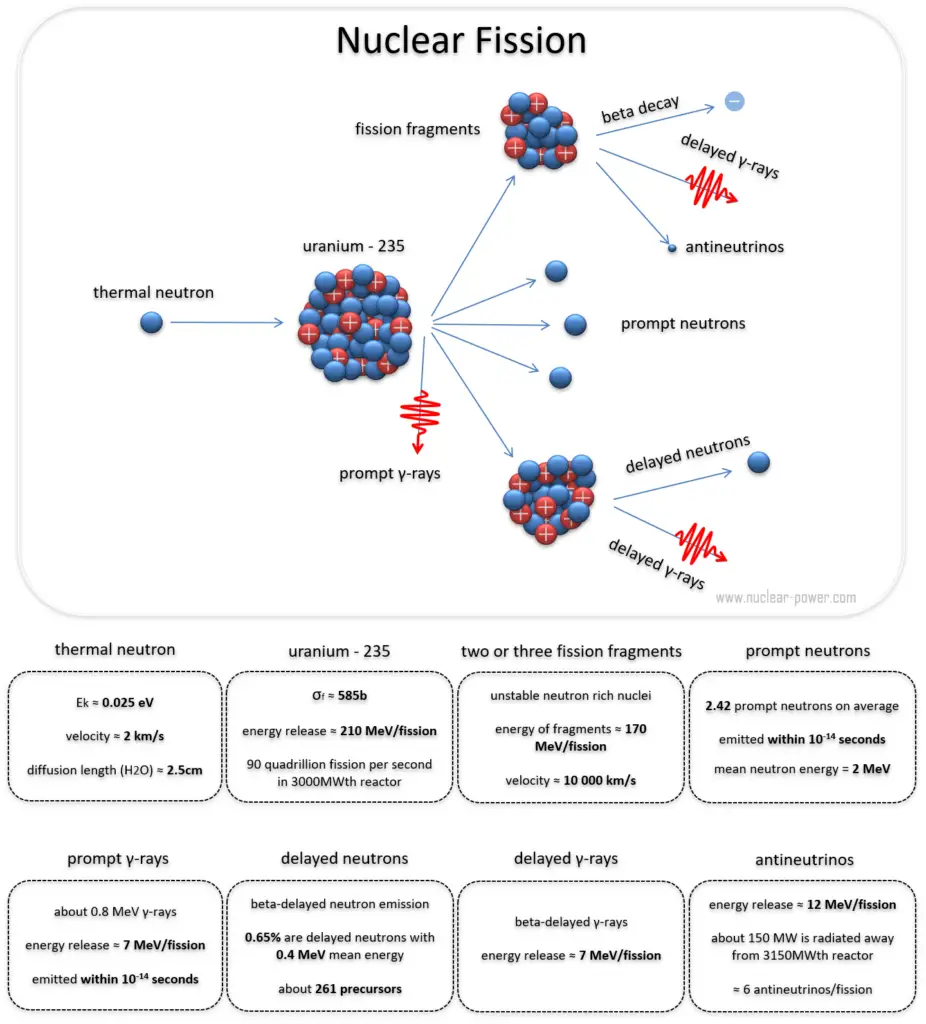
Nuclear fission is basically splitting the atom's nucleus. Imagine taking a hammer to a super tightly wound ball of string. Things are gonna go flying! And that “flying” stuff? That’s energy.
Must Read
Specifically, we're unleashing nuclear energy! Ta-da!
So, What Does Splitting Atoms Have to Do with My Lights?
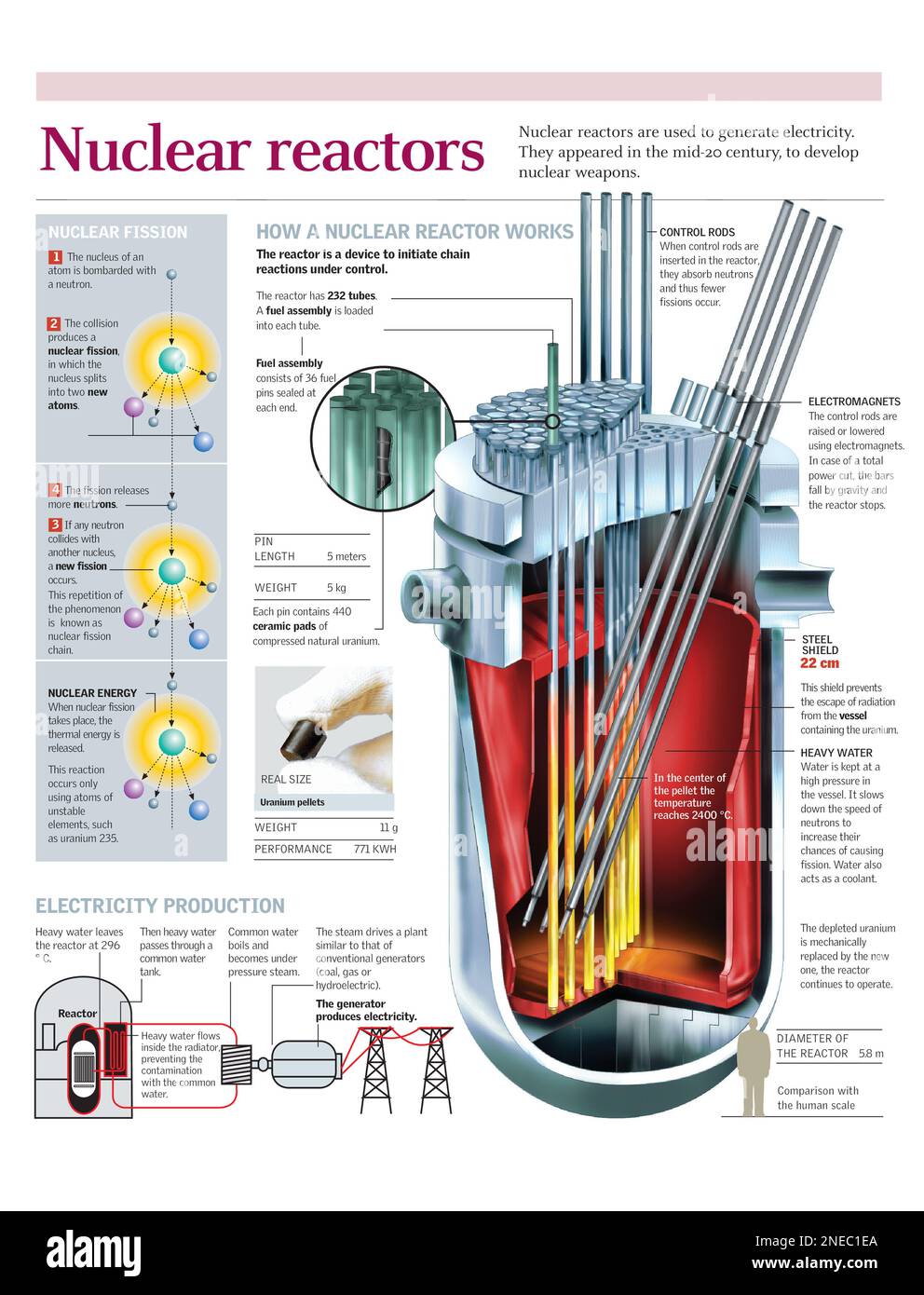
Good question! Nuclear fission reactors are basically super-controlled atomic demolition derbies. They carefully split atoms, releasing a ton of energy in the form of heat.
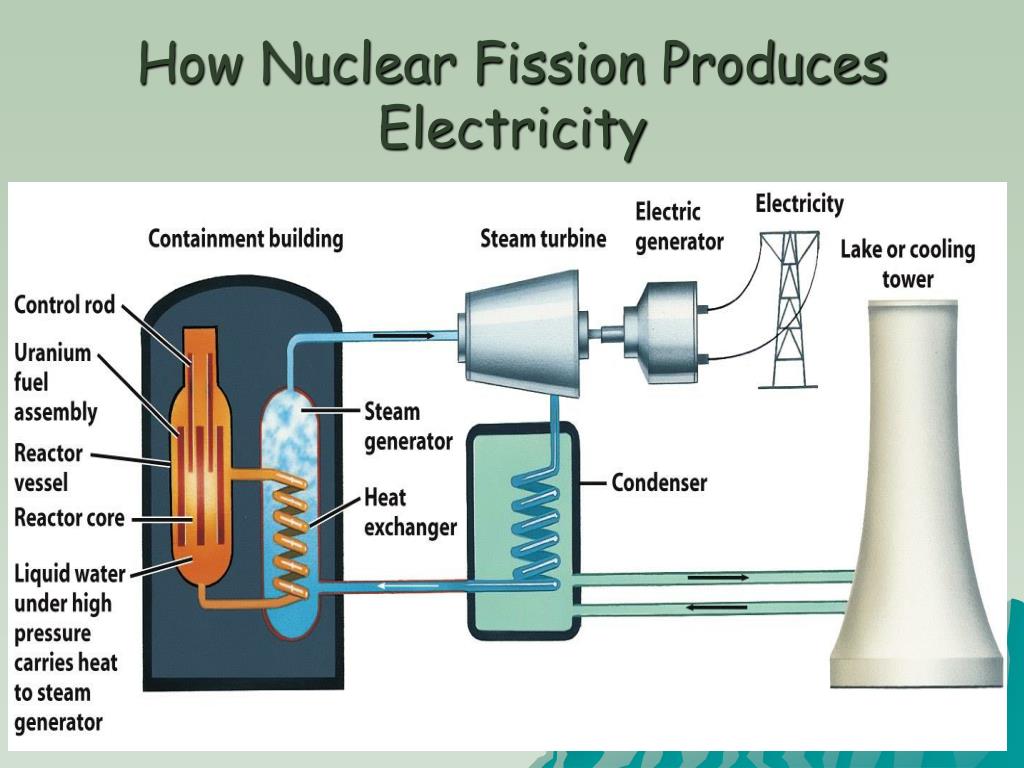
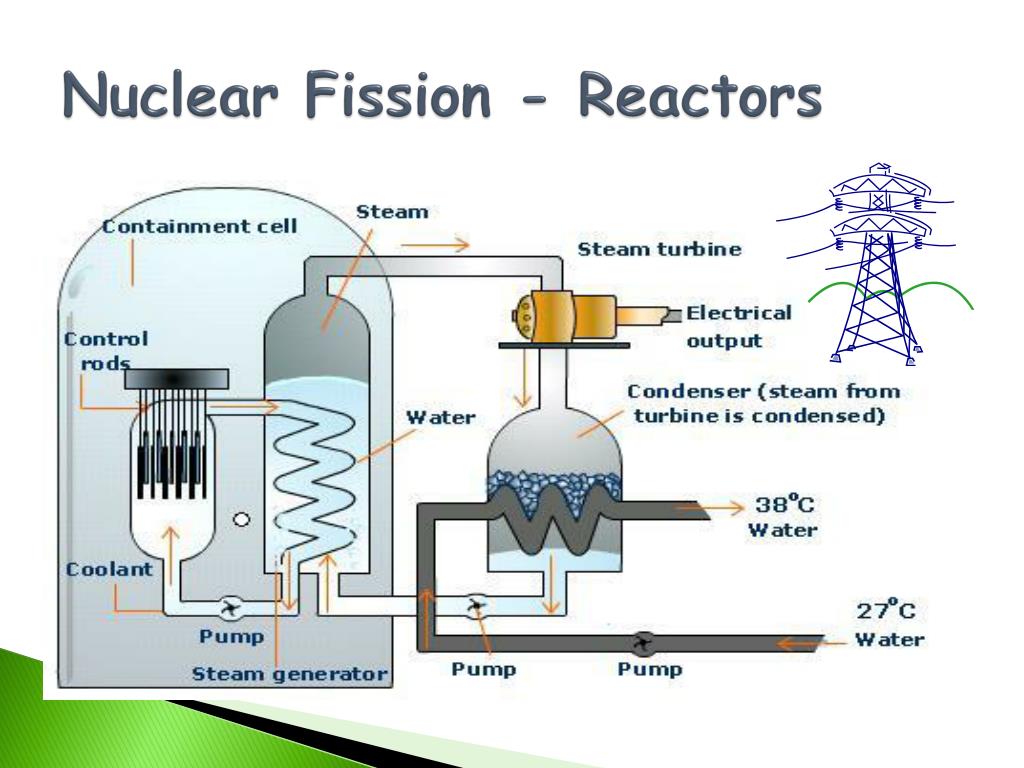
This heat boils water. Simple, right? Nope! This super-heated water creates steam. This steam then spins a turbine. And guess what that turbine is connected to? You guessed it: a generator! The generator then makes electricity.

So, to recap: We split atoms, which heats water, which makes steam, which spins a turbine, which powers a generator, which lights up your living room. It's a pretty wild ride!
Uranium: The Rock Star of Fission
Most nuclear reactors use uranium as their fuel. Why uranium? Because it's relatively easy to split! Think of it as the "low-hanging fruit" of the atomic world.
Uranium is found in the Earth's crust. It's mined, processed, and then formed into fuel rods that are loaded into the reactor. These rods basically feed the atomic fire.
Here's a quirky fact: Scientists once thought uranium could be used to color glass yellow! It does, but uh, maybe not the safest application considering, you know, radiation.
Chain Reactions: Not Just for Emails Anymore
When a uranium atom splits, it releases neutrons. These neutrons can then go on to split other uranium atoms. This creates a chain reaction! It's like a bunch of atomic dominoes falling.
Reactors are designed to control this chain reaction. Too much, and things get… hot. REALLY hot. Not enough, and you're not generating any power. It's a delicate balancing act.
Think of it like driving a car. You need to press the gas pedal (start the chain reaction), but you also need to use the brakes (control the chain reaction) to avoid crashing. Nuclear engineers are the ultimate drivers!
Is It Clean Energy? The Million-Dollar Question
This is where things get interesting. Nuclear fission doesn't produce greenhouse gases like carbon dioxide. So, in that sense, it’s considered a low-carbon energy source. That's a big win for the planet!
However, there's the issue of nuclear waste. Used fuel rods are radioactive and need to be stored safely for a very, very long time. Finding a permanent solution for nuclear waste disposal is a major challenge.
It’s a complex issue with passionate opinions on both sides. Ultimately, it’s a question of weighing the benefits against the risks.
The Future is Fission (Maybe!)
Nuclear energy is constantly evolving. Scientists are working on new reactor designs that are safer, more efficient, and produce less waste. They're even exploring the possibility of using thorium as a fuel, which is more abundant than uranium!
One of the most promising future technologies is nuclear fusion (not fission). Fusion is what powers the sun! It involves smashing atoms together instead of splitting them apart. If we can figure out how to make fusion work on Earth, it could provide a virtually limitless supply of clean energy.
So, is nuclear fission the answer to all our energy problems? Probably not. But it's a fascinating piece of the puzzle, and it's definitely worth learning about. Plus, you can impress your friends at parties with your newfound knowledge of atomic physics!
Keep asking questions, keep exploring, and keep being curious! The world of energy is constantly changing, and it's up to us to understand it.