:max_bytes(150000):strip_icc()/ceiling-fan-rotate-direction-1907533-v4-5ba94e6346e0fb002576cebf.png)
Okay, let's talk ceiling fans. We all have them, right? Those majestic, often slightly dusty, spinning contraptions hanging above our heads. But have you ever stopped and wondered, like really wondered, which way that thing should be turning? I mean, besides wondering if it’s about to fall on your head (we've all been there).
It’s one of those things that’s easy to ignore, like remembering to floss or actually matching your socks. But trust me, getting your ceiling fan direction right can be a total game-changer. Think of it as the unsung hero of your home comfort, quietly battling heat and humidity while you binge-watch your favorite shows.
Summer Lovin': Counter-Clockwise is Your Bestie
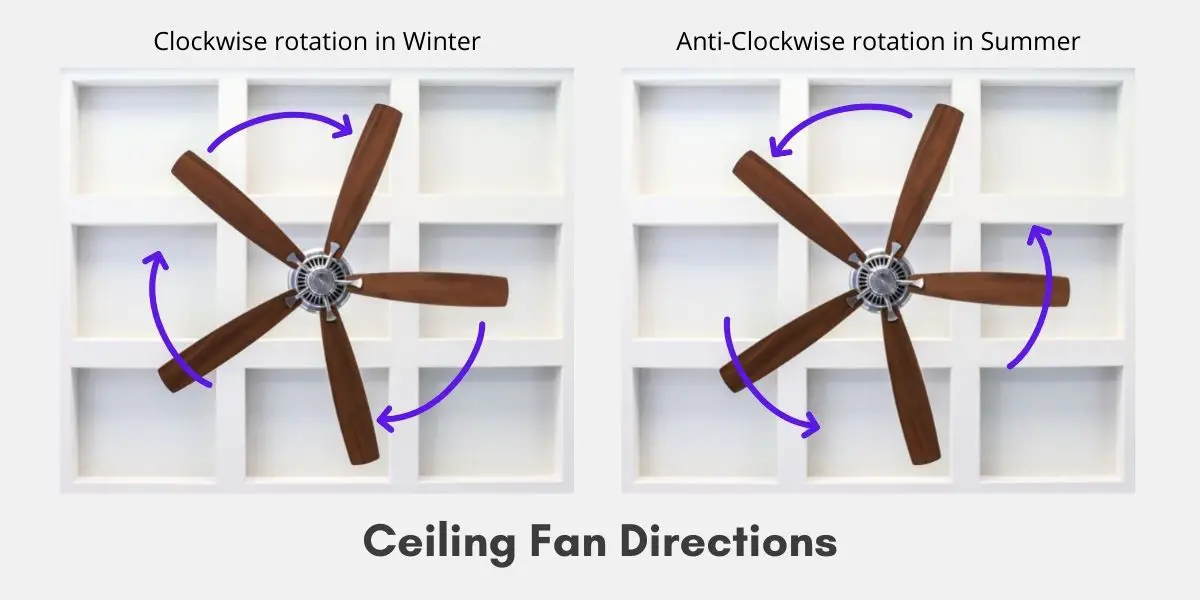
When the sun is blazing and you feel like you're living inside a pizza oven, you want that fan turning counter-clockwise. Why? Because physics, baby! (Don’t worry, I’m not going to bore you with a lecture.) Basically, a counter-clockwise rotation pushes air downward, creating a refreshing breeze. It’s like having a personal, albeit slightly noisy, wind god whispering sweet nothings (of cool air) in your ear.
Think of it this way: imagine you're at a concert. You want the crowd to move towards you, bringing all the energy your way, right? Counter-clockwise is like that crowd-surfing energy, directing cool air right where you need it.
If you’re sitting there sweating, and the fan is spinning clockwise in the summer, it’s basically like paying for a gym membership and then just sitting on the elliptical reading a magazine. You're spending the energy, but getting zero results. Flip that switch, my friend!

Winter Warmth: Clockwise is the Secret Weapon
Now, when Jack Frost is nipping at your nose and you’re huddled under a blanket fortress, things get a little different. In the winter, you want that fan spinning clockwise. But slowly. This is crucial. You're not trying to recreate a hurricane in your living room.
The goal here is to pull that warm air that rises to the ceiling down and circulate it around the room. See, warm air is like that one friend who always hogs the comfy chair. Clockwise rotation is like subtly nudging them over so everyone can enjoy the cozy vibes.
:max_bytes(150000):strip_icc()/ceiling-fan-rotate-direction-1907533-2595acc134e2417eaee05162f4fdf551.png)
If you're thinking, "But won't that just blow cold air on me?" Nope! Because you’re running it on low. It’s about gentle redistribution, not creating a wind tunnel. Think of it as a warm air whisperer, quietly spreading the comfort.
Finding the Switch: The Great Fan Safari
Okay, so you're on board. But now the million-dollar question: where is the switch to change the direction? Ah, the great fan safari begins! It’s usually a little slider switch on the motor housing of the fan. You might need a stepladder. You might need to dust off some cobwebs (literally and figuratively). It might even involve a moment of panic when you think you’ve broken the fan. (Don't worry, you probably haven't.)
And here’s a pro-tip: always turn the fan off completely before you flip the switch. Otherwise, you might get a surprise electrical buzz and a moment of sheer terror. Trust me, I've learned this the hard way. Let’s just say my hair looked particularly…electric that day.
Once you find that switch, flip it, turn the fan back on, and voila! You're on your way to optimal home comfort. You might even feel a sense of accomplishment, like you've just conquered a small, spinning Everest.
The Bottom Line
So, to recap: Counter-clockwise in summer for a cool breeze, clockwise in winter for warmth. It's simple, really. And trust me, once you get it right, you'll wonder why you didn't do it sooner. Now go forth and conquer your ceiling fan! Your comfort (and your energy bill) will thank you.