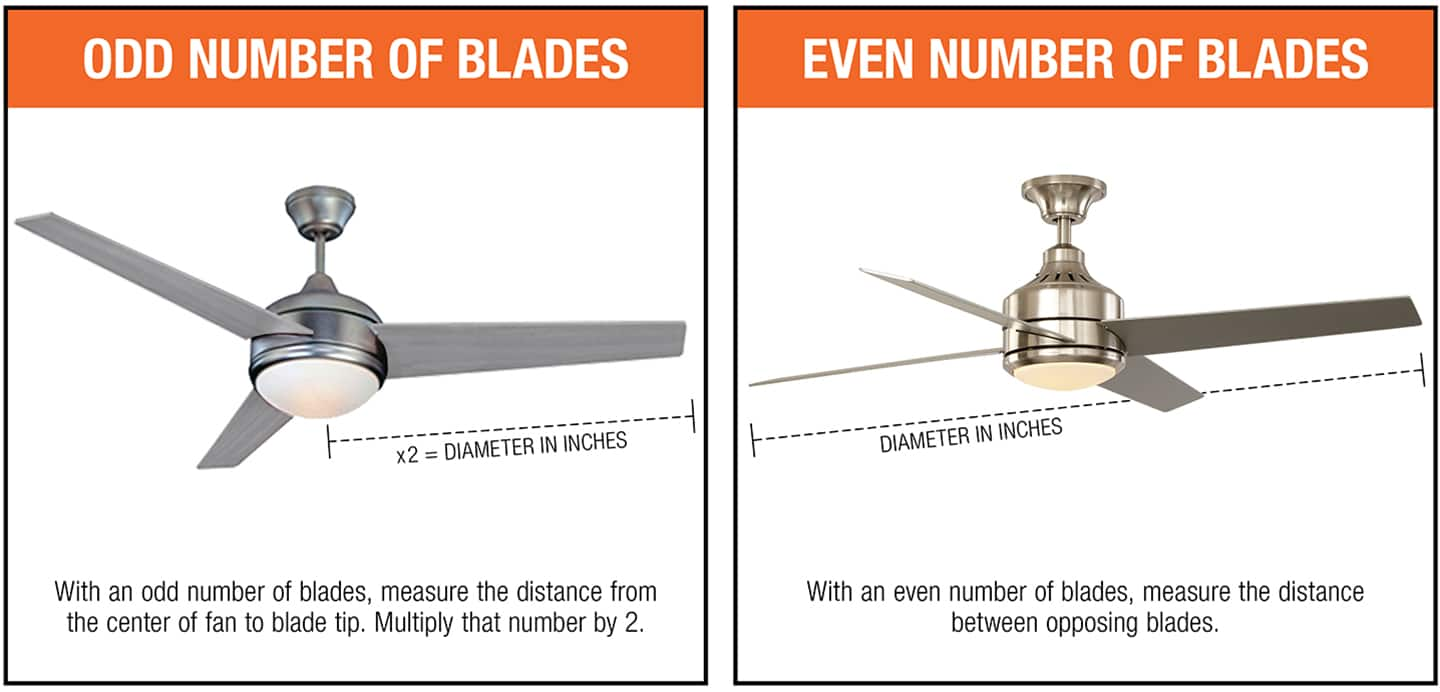
Alright, let’s talk ceiling fans! Not exactly the most glamorous topic, but trust me, getting the right size can be the difference between a room that feels like a tropical breeze and one that feels…well, stagnant. We want breezy, not blah!
Step 1: Measure Your Room – Embrace Your Inner Architect (Sort Of)
First things first, we need to know the square footage of the room you're planning to fan-tastic-ize. Think back to geometry class (I know, shudder), or just grab a measuring tape! Length times width, boom, you’re a square footage superstar.
Imagine your living room is a giant rectangle made of delicious chocolate. You need to know how much chocolate there is, right? Same principle! Measure those walls!
If your room is a weird shape (like maybe a trapezoid designed by a rogue pizza slice), you might need to break it down into smaller, more manageable rectangles or squares. Or, you know, just estimate. We're not building the pyramids here.
Step 2: The Fan Size Formula – Math That Won't Make You Cry
Okay, this is where the magic happens. We're going to match your room's square footage to a recommended fan size. Think of it as finding the perfect shoe size for your ceiling. Too big, and it's clown shoes. Too small, and you're hobbling around in agony (okay, maybe not agony, but definitely suboptimal airflow).
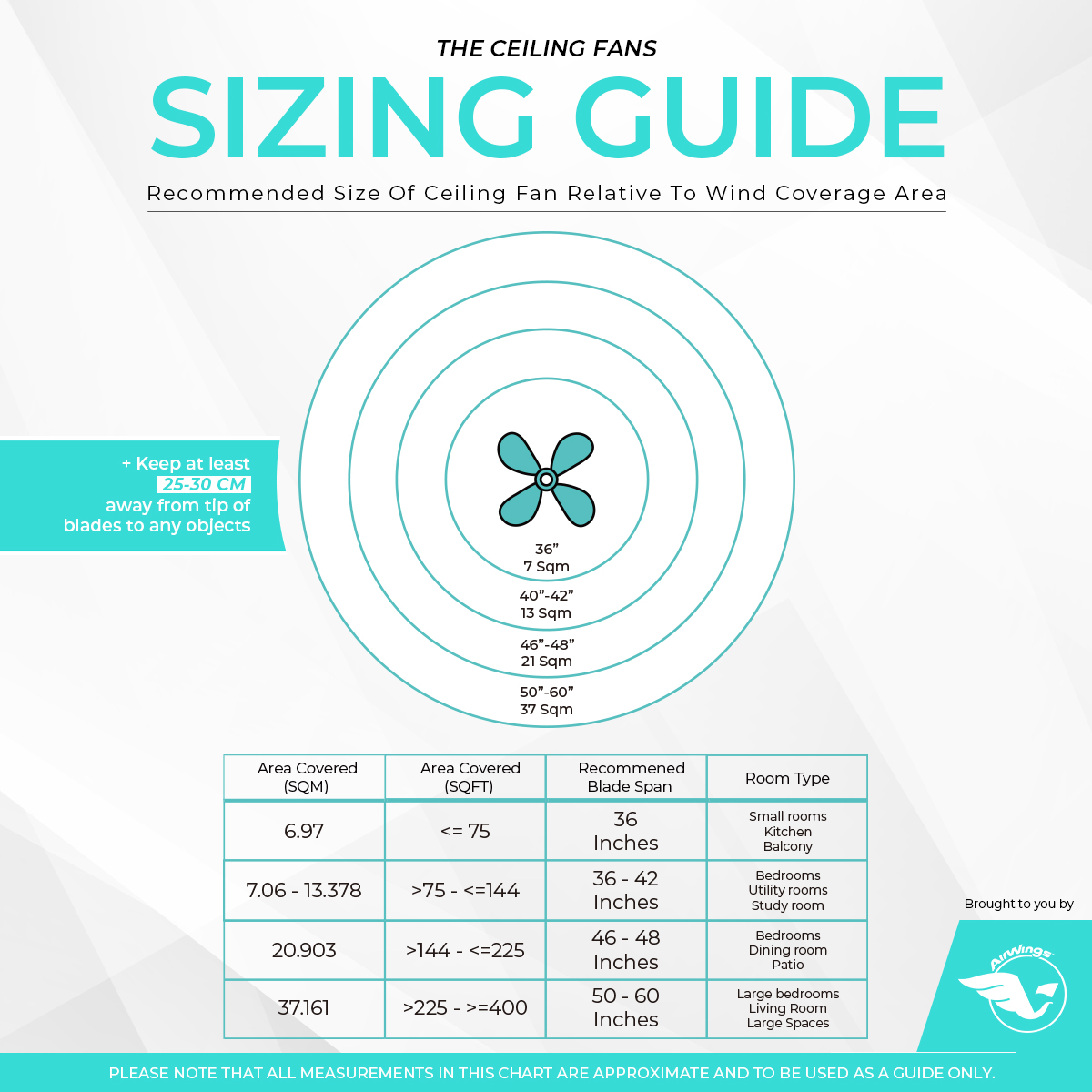
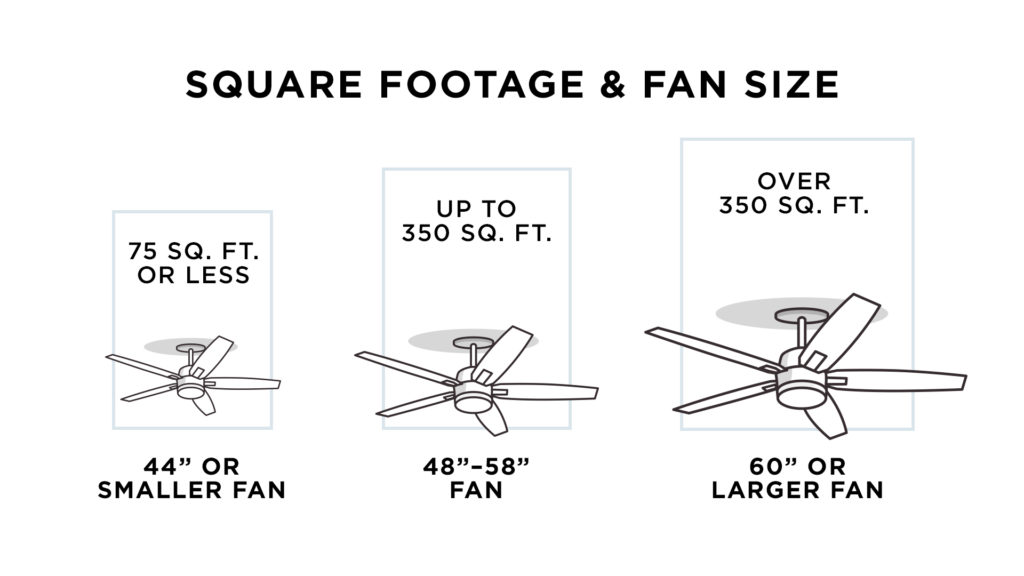
Rooms Under 75 Square Feet – The Tiny Dancer
For these petite spaces, like a small office or a cozy closet (with a surprisingly strong desire for air circulation?), a fan with a blade span of 36 inches or less is your best bet.
Picture a delicate, almost invisible fan gently caressing your air. It's like a whisper of coolness, not a hurricane.
These little guys are perfect for intimate settings. Don't try to put a monster truck fan in a dollhouse! You'll regret it.
Rooms Between 75 and 150 Square Feet – The Comfort Zone
Ah, the sweet spot! This is where most bedrooms and smaller living rooms fall. You're looking at a fan with a blade span between 42 and 48 inches.
Think of this as the Goldilocks zone of ceiling fans. Not too big, not too small, just right. Perfect for reading a book, taking a nap, or plotting world domination (with a cool head, of course).
These fans provide a good balance of air circulation and space efficiency. They won't overwhelm your room, but they'll definitely keep you comfortable.
Rooms Between 150 and 300 Square Feet – The Party Starter
Now we're talking! This is for your average-sized living room, dining room, or open-concept kitchen/living space. You'll want a fan with a blade span between 50 and 54 inches.
These fans are like the life of the party, circulating air with enthusiasm and keeping everyone happy. They're the social butterflies of the ceiling fan world.
Imagine a gentle breeze swirling through your space as you entertain guests, binge-watch your favorite shows, or perfect your soufflé. Ah, bliss!
Rooms Over 300 Square Feet – The Wind Tunnel (But in a Good Way)
For those cavernous rooms, the granddaddies of all spaces, you need a fan with a blade span of 56 inches or more. Or, consider using multiple fans! We're talking about creating a comfortable microclimate, not a dust storm.

Think of these fans as gentle giants, quietly and efficiently moving air throughout your vast expanse. They're the unsung heroes of large living rooms and multi-purpose spaces.
Multiple fans can be a great option to ensure consistent airflow throughout the entire area. It's like having your own personal weather system, perfectly tailored to your comfort.
Step 3: Ceiling Height – It's Not Just About Blade Span!
Okay, so we've tackled square footage, but don't get too cocky! Ceiling height is another crucial factor. You don't want your fan blades whizzing past your head like a caffeinated hummingbird. Safety first, people!
Generally, you want at least 7 feet of clearance between the floor and the bottom of the fan blades. Think of it as the "no accidental haircut" rule.
If your ceilings are lower than 8 feet, you'll need a "hugger" or "flush mount" ceiling fan. These fans sit closer to the ceiling, maximizing space and minimizing the risk of decapitation (a slight exaggeration, but you get the idea).
Vaulted Ceilings – A Fan's Paradise (With the Right Hardware)
Vaulted ceilings are beautiful, but they require a little extra attention when it comes to ceiling fans. You'll likely need a downrod, which is basically an extension pole that hangs the fan lower from the ceiling.

The length of the downrod depends on the slope of your ceiling. You want the fan blades to be at least 7 feet from the floor, even with the angle of the ceiling.
Consult a professional if you're unsure about the correct downrod length. It's better to be safe than sorry (and to avoid any awkward encounters with spinning blades).
Step 4: Consider Your Style – Because Functionality Can Be Fabulous!
Now that we've covered the technical stuff, let's talk about aesthetics! Your ceiling fan should complement your room's decor, not clash with it like a polka-dotted rhinoceros at a black-tie event.
Do you have a modern, minimalist space? Opt for a sleek, contemporary fan with clean lines and a simple design. Think "less is more," but with air circulation.
Are you more of a traditionalist? Look for a fan with ornate details, decorative blades, and maybe even a pull chain or two. Embrace the old-world charm!
Don't be afraid to get creative! There are ceiling fans that look like everything from vintage airplanes to tropical palm trees. Let your personality shine!
Remember, your ceiling fan is not just a functional appliance; it's a design statement. Choose wisely, and your room will thank you.
Step 5: Don't Be Afraid to Ask for Help – We're Here for You!
Choosing the right ceiling fan size can feel a little overwhelming, but don't worry! There are plenty of resources available to help you.
Most home improvement stores have knowledgeable staff who can guide you through the selection process. They're like ceiling fan whisperers, ready to answer all your questions.
You can also find tons of information online, including sizing charts, buying guides, and customer reviews. Arm yourself with knowledge!
And hey, if all else fails, just close your eyes, point at a fan, and hope for the best! (Just kidding…sort of.) Seriously though, don't hesitate to seek expert advice.
So, there you have it! Everything you need to know about choosing the perfect ceiling fan size. Now go forth and conquer those stuffy rooms! May your air be forever fresh and your breezes forever gentle!
Remember, a well-chosen ceiling fan is not just an appliance; it's an investment in your comfort and well-being. So choose wisely, and enjoy the sweet relief of perfectly circulated air!