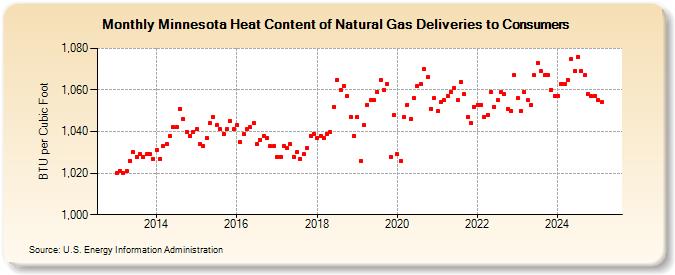
Natural Gas Btu Per Cubic Foot

Ever flicked on your stove, cranked up the furnace on a chilly morning, or enjoyed the warmth from a gas fireplace? If so, you're tapping into the incredible power of natural gas! It’s a clean, efficient energy source that fuels a huge part of our daily lives. But have you ever wondered how utility companies figure out how much energy they've actually delivered to your home? Or why some gas might be "better" than others? Get ready to unlock a tiny but mighty secret: the concept of Natural Gas Btu Per Cubic Foot. It's not just a technical term; it's the key to understanding your energy, your bills, and even how efficiently your appliances run!
So, what exactly are we talking about? Let's break it down. First, there's the Btu, short for British thermal unit. Think of a Btu as a little packet of heat energy. Specifically, it's the amount of energy needed to raise the temperature of one pound of water by one degree Fahrenheit. It's a fundamental unit for measuring thermal energy, whether it's from your gas furnace or the sun. Then we have the cubic foot, which is simply a standard measure of volume, like a box that's one foot long, one foot wide, and one foot high. Put them together, and Btu per cubic foot tells you precisely how much heat energy is packed into a specific volume of natural gas. It's like knowing how much "oomph" you're getting from each serving!
Now, why is this important for you? Imagine buying a bag of chips. You want to know how many actual chips (energy) you're getting, not just the size of the bag (volume). Natural gas isn't always uniform; its composition can vary depending on where it comes from. Some gas might have a higher concentration of methane, while other sources might contain more inert gases or heavier hydrocarbons like ethane or propane. These variations directly impact the energy content. A cubic foot of natural gas from one region might yield 1,000 Btu, while another might offer 1,050 Btu or even more. This difference might seem small, but it adds up!
Must Read
One of the biggest benefits of tracking Btu per cubic foot is ensuring fair billing. Utility companies measure the volume of gas you use (in cubic feet), but they charge you based on the energy you've actually consumed. By knowing the exact Btu content of the gas delivered to your home, they can adjust your bill to reflect the true amount of energy you've received, ensuring you're paying for the heat, not just the air. This protects consumers from paying for "lower quality" gas that delivers less energy. It's about getting exactly what you pay for!
Beyond your bill, understanding Btu per cubic foot also plays a crucial role in the efficiency and safety of your home appliances. Furnaces, water heaters, and stoves are all designed to operate optimally with a certain energy input. If the natural gas coming into your home consistently has a lower or higher Btu content than expected, it can affect how efficiently these appliances work. Knowing this figure helps ensure your appliances are burning fuel effectively, saving you money on energy costs, and operating within their safe parameters. So, while it might sound a bit technical, Natural Gas Btu Per Cubic Foot is truly a fascinating and valuable concept that helps keep our homes warm, our food cooked, and our energy consumption fair and transparent!