Name The Metal Which Is Used For Galvanising Iron

Imagine your favorite old metal swing set, the one you spent countless summer afternoons on, soaring towards the sky, pretending to be an astronaut. Or picture those sturdy, unassuming metal buckets you use in the garden, always ready to haul water or weeds. Ever wonder how they bravely face rain, mud, and the relentless onslaught of time without turning into a rusty, crumbly mess? The answer, my friends, lies in a secret weapon – a superhero metal called zinc!
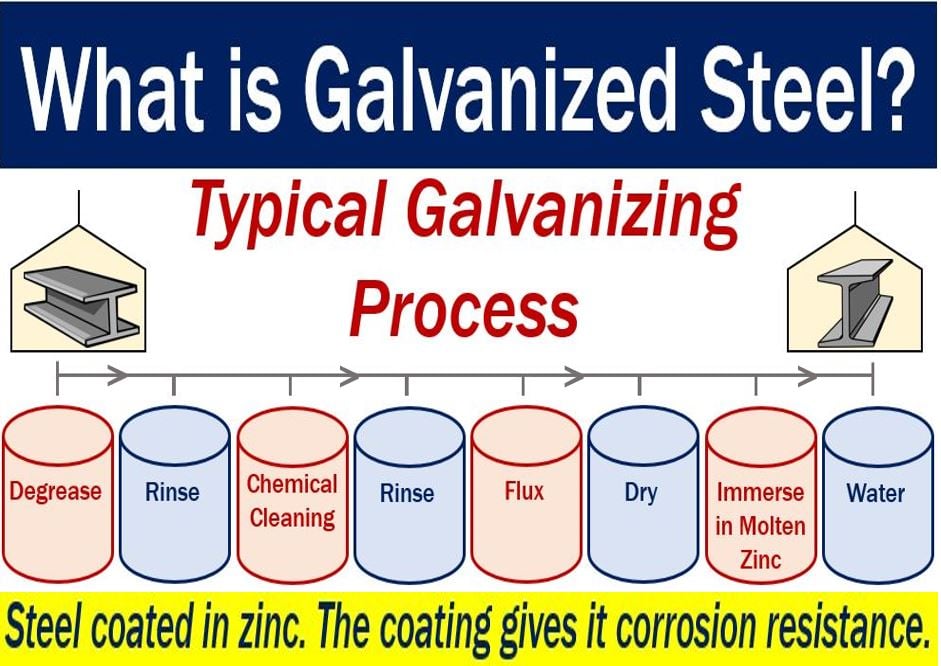
That's right, the metal used for galvanizing iron, the process that protects it from rust, is none other than zinc. Think of galvanizing as giving iron a super-powered shield, a zinc-suit that makes it practically invincible to the elements.
It’s a bit like that friend who always has your back, the one who selflessly takes the blame even when you accidentally spill grape juice on the pristine white carpet (we’ve all been there!). Zinc, in its own metallic way, is that kind of friend to iron.
Must Read
The whole process, galvanization, is surprisingly… unromantic. It doesn’t involve moonlight, slow dances, or whispered sweet nothings. Instead, it's a dunk-in-the-pool situation. Iron objects are often dipped into a bath of molten zinc. Picture tiny iron molecules holding their breath as they plunge into this fiery, metallic jacuzzi. When they emerge, coated in zinc, they’re not just clean, they’re protected!
But the magic doesn't stop there! Even if the zinc coating gets scratched or damaged (maybe a rogue squirrel decides to use your galvanized bucket as a nutcracker), the zinc continues to work its protective magic. This is because zinc is more "eager" to react with the environment than iron. It sacrifices itself, corroding first, thereby saving the iron from rusting. Talk about dedication! It's like a bodyguard willingly taking a bullet to save their charge. Zinc, you're a true hero!
![Types of Metals and Their Uses [with Pictures] - Engineering Learner](https://engineeringlearner.com/wp-content/uploads/2021/08/Metals.jpg)
Think about it: bridges that span vast distances, bravely battling wind, rain, and the constant wear and tear of traffic. They rely heavily on galvanized steel. Fences that stand tall, marking boundaries and keeping gardens safe. They're often galvanized. Even the humble corrugated iron roofing sheets that protect us from the elements owe their longevity to this wonderful process.
Galvanization isn’t just about functionality; it’s about sustainability, too. By protecting iron from rust, it extends the lifespan of countless products, reducing the need for replacements and ultimately saving resources. It’s like that responsible person who always remembers to turn off the lights, conserving energy and being mindful of the planet.
It’s easy to take for granted the unseen heroes that make our lives easier and safer. Zinc, quietly doing its job, is one of those heroes. It's the unsung champion of durability, the silent guardian against rust. So, the next time you see a shiny, galvanized object, take a moment to appreciate the amazing properties of this unassuming metal.
Next time you see a galvanized object, whether it's a roadside barrier or a garden tool, remember the zinc giving its all to protect the iron underneath. Give it a mental fist bump – it deserves it!
So, next time someone asks you what metal is used for galvanizing iron, you can confidently declare, "It's ZINC! The superhero of rust prevention!" And maybe, just maybe, you'll impress them with your newfound knowledge of this amazing, selfless metal. After all, who doesn't love a good superhero story, especially when it involves saving our precious iron from the clutches of rust?