
Modulus Of Elasticity Of 304 Stainless Steel

Ever leaned back in a chair, maybe a little too far, and felt that heart-stopping moment where it starts to creak and groan? Yeah, that's all about materials, how they bend, and how much they can take before going "Snap, crackle, POP!" Today, we're talking about a material that's pretty darn good at not doing that: 304 stainless steel, and specifically, its modulus of elasticity.
Okay, "modulus of elasticity" sounds like something straight out of a science textbook, right? Don't worry, we're not diving into PhD-level physics here. Think of it like this: it's basically a material's stiffness score. How much does it resist being bent, stretched, or squashed? A high modulus means it's really stiff; a low modulus means it's, well, more like a rubber band.
304 Stainless Steel: The "Reliable Friend" of Metals
Now, 304 stainless steel. This stuff is everywhere. Your kitchen sink? Probably 304 stainless. That fancy silverware? Yep, likely 304. Your washing machine drum? You guessed it! It's the reliable friend of the metal world, known for its corrosion resistance and decent strength. It's the "I'll be there for you" metal.
Must Read
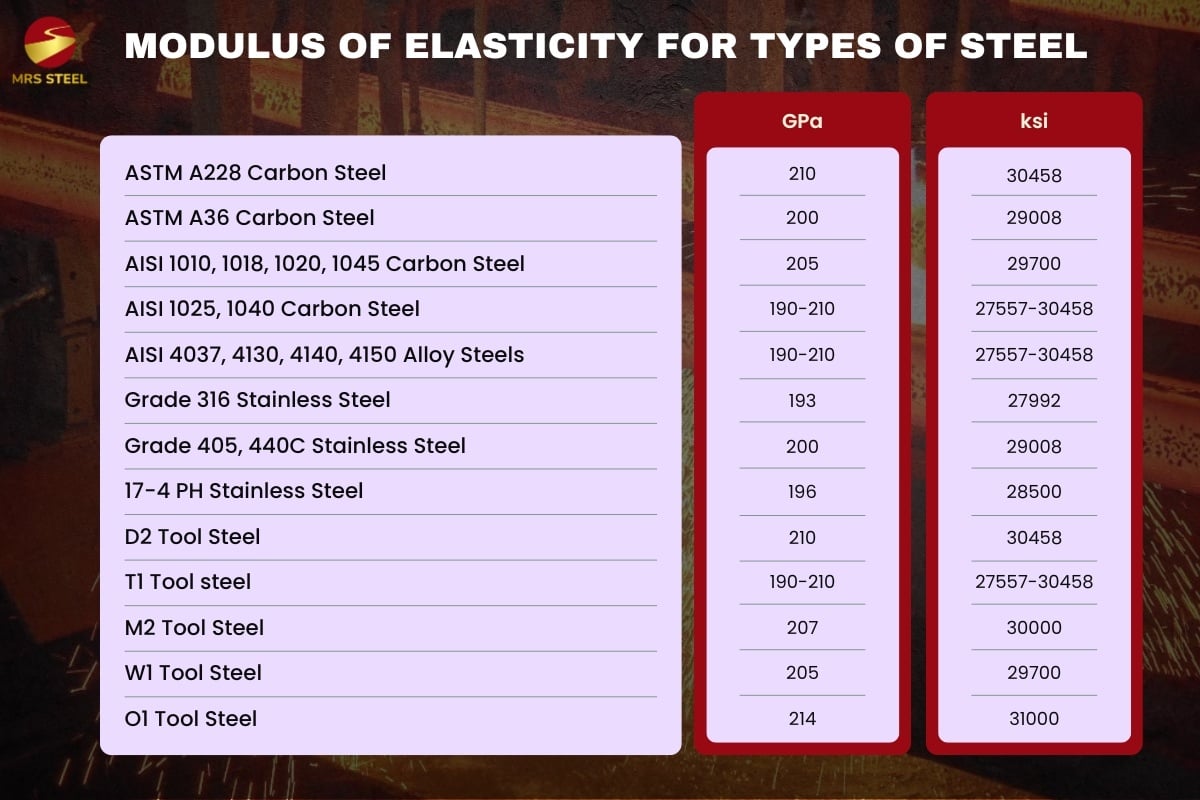
And its modulus of elasticity? Well, for 304 stainless steel, it's generally around 193 GPa (Gigapascals). Think of it like this: imagine trying to bend a really thick steel ruler. It's going to take a lot of force, right? That's because steel, in general, has a high modulus. Now, compare that to trying to bend a plastic ruler. Much easier, right? That's because plastic has a lower modulus.
So, 193 GPa for 304 stainless. It's not the highest modulus out there; some exotic alloys can go way higher. But it's a solid, respectable number that tells us this stuff isn't going to deform easily. It's going to hold its shape, even under stress.

Why Should You Care?
Okay, so maybe you're not designing bridges or skyscrapers. But understanding modulus of elasticity, even in a basic way, helps you understand why certain materials are used for certain things. Remember that wobbly chair example? A chair made of a material with a low modulus would be a disaster waiting to happen. You'd sink into it like quicksand!
Consider your car's suspension. The springs are made of steel with a specific modulus of elasticity, carefully chosen to provide a comfortable ride without bottoming out every time you hit a pothole. It's all about balancing stiffness and flexibility.
Or think about surgical implants. They need to be strong enough to withstand the stresses of the body, but also flexible enough to not cause discomfort. 304 stainless steel, or variations of it, is often used in medical applications because of its biocompatibility and its relatively high modulus, ensuring it won't bend and break under pressure.
Even something as simple as a paperclip relies on the principles of elasticity. You can bend it back and forth a few times, but eventually, it'll snap. That's because you've exceeded its elastic limit, and it's entered the realm of permanent deformation. That's a sad day for a paperclip!
It's All About Balance
In the end, the modulus of elasticity is just one piece of the puzzle when choosing a material for a specific application. Engineers have to consider strength, weight, cost, corrosion resistance, and a whole bunch of other factors. But understanding how stiff a material is – its resistance to deformation – is a crucial starting point. Think of it as the material's skeleton – providing the structure and support it needs to do its job.
So, next time you see something made of 304 stainless steel, give it a little nod of appreciation. It's working hard to hold its shape, resist corrosion, and generally be a reliable part of your everyday life. It might not be the flashiest material out there, but it's got a solid foundation, and that's something to admire!
