
Mig Welding Stainless Steel To Carbon Steel

So, you're thinking about joining the ranks of makers who boldly weld stainless steel to carbon steel? Awesome! It’s like mixing your Aperol Spritz (bubbly, bright) with a dark and stormy (deep, complex). On paper, it sounds a little crazy, right? But with the right approach, it's a beautiful blend of strength and finesse.
Welding these two metals together isn't exactly like sticking magnets together, though. It demands a little more understanding. Think of it like learning a new dance. You wouldn't just jump into the tango without knowing the basic steps, would you?
Why Bother Welding Stainless to Carbon Steel?
Before we get elbow-deep in sparks, let's address the "why." Imagine needing a flange for a stainless steel pipe system connected to a carbon steel vessel. Bam! Welding dissimilar metals becomes the star of the show. Cost savings are a big factor too. Why use expensive stainless steel everywhere if you only need its corrosion resistance in specific areas?
Must Read
It’s all about strategically using each material's best qualities. Carbon steel gives you that robust structural integrity, like the foundations of a skyscraper, while stainless steel provides that sleek, rust-defying armor, like the shiny exterior.
The MIG Approach: Controlled Chaos (but mostly controlled)
MIG (Metal Inert Gas) welding, also known as GMAW (Gas Metal Arc Welding), is a popular choice for this task. Think of it as the all-rounder of welding techniques – versatile and relatively easy to master. It's like the Swiss Army knife of joining metals.

Here's the deal: the MIG process uses a continuously fed wire electrode, shielded by an inert gas (usually a mix of argon and CO2), to create the weld. The arc melts the metals, fusing them together. Simple in theory, right? The devil, as always, is in the details.
Key Ingredients for Success: A Recipe for a Strong Weld
Here's what you'll need to consider:
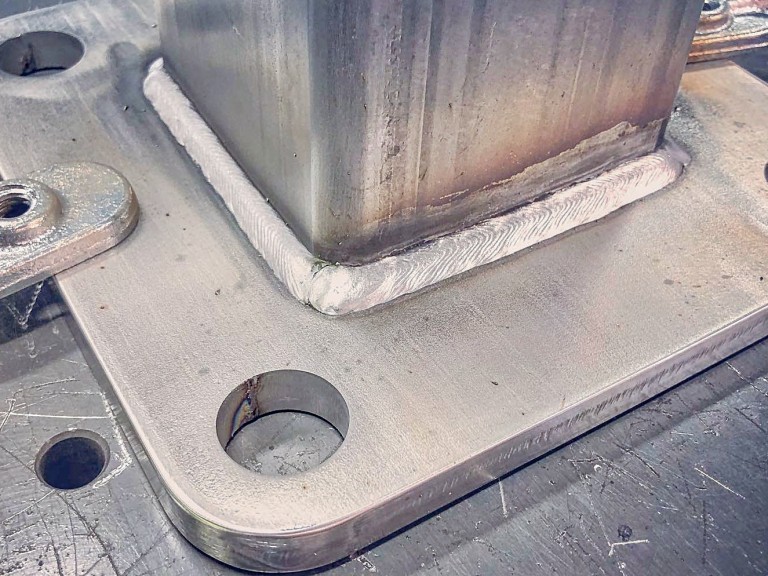
- Filler Metal: This is your most crucial choice. You can't just grab any old spool of wire. Use a filler metal specifically designed for welding dissimilar metals, typically a nickel-based alloy like ERNiCr-3 or ER309L. These alloys are more forgiving with different expansion rates.
- Shielding Gas: A mixture of Argon and CO2 is usually a good starting point. The CO2 helps with weld penetration, but too much can cause carbon migration into the stainless steel, which is a big no-no. Aim for a blend with lower CO2 content (around 5-10%).
- Technique: Use a short circuit transfer mode, which keeps the heat input low. Weaving techniques are generally discouraged because they tend to widen the heat-affected zone (HAZ). Think short, controlled bursts. Imagine you're delicately painting with molten metal.
- Preparation is Key: Cleanliness is next to godliness, especially in welding. Remove any rust, scale, or contaminants from both surfaces. A wire brush and degreaser are your best friends here.
- Preheat (Maybe): Depending on the thickness of the carbon steel, you might need a little preheat (around 200-300°F). This helps to slow down the cooling rate and prevent cracking. Consult a welding procedure specification (WPS) or a qualified welding engineer for specific guidelines.
Pro Tip: Practice, practice, practice! Use scrap pieces of similar thicknesses and materials to dial in your settings and technique before tackling your final project. It's like rehearsing for a big performance; nobody wants a welding fail in front of an audience (even if that audience is just yourself).
Potential Pitfalls and How to Avoid Them
Welding dissimilar metals can be tricky. Here are some common issues and how to combat them:

- Cracking: Different expansion rates can lead to cracking, especially in thicker sections. Preheat, the right filler metal, and controlled cooling can help prevent this.
- Corrosion: Galvanic corrosion can occur at the weld interface if the metals are exposed to a corrosive environment. Proper filler metal selection and protective coatings can mitigate this risk.
- Dilution: Excessive penetration of the carbon steel into the stainless steel can compromise the corrosion resistance of the weld. Use low heat input and the appropriate filler metal to minimize dilution.
A Little Bit of Metal Magic
Mastering the art of welding stainless steel to carbon steel is a satisfying accomplishment. It allows you to create complex structures, repair valuable equipment, and unlock new levels of creativity. It's not just about joining metal; it's about joining possibilities.
Think about it. Life, like welding, often involves joining seemingly disparate elements. We bring together different skills, personalities, and perspectives to create something new and meaningful. Just like the careful balance of heat, filler metal, and technique in welding, finding the right balance in life is essential for a strong and lasting connection.
