
Metals Semimetals And Nonmetals Periodic Table
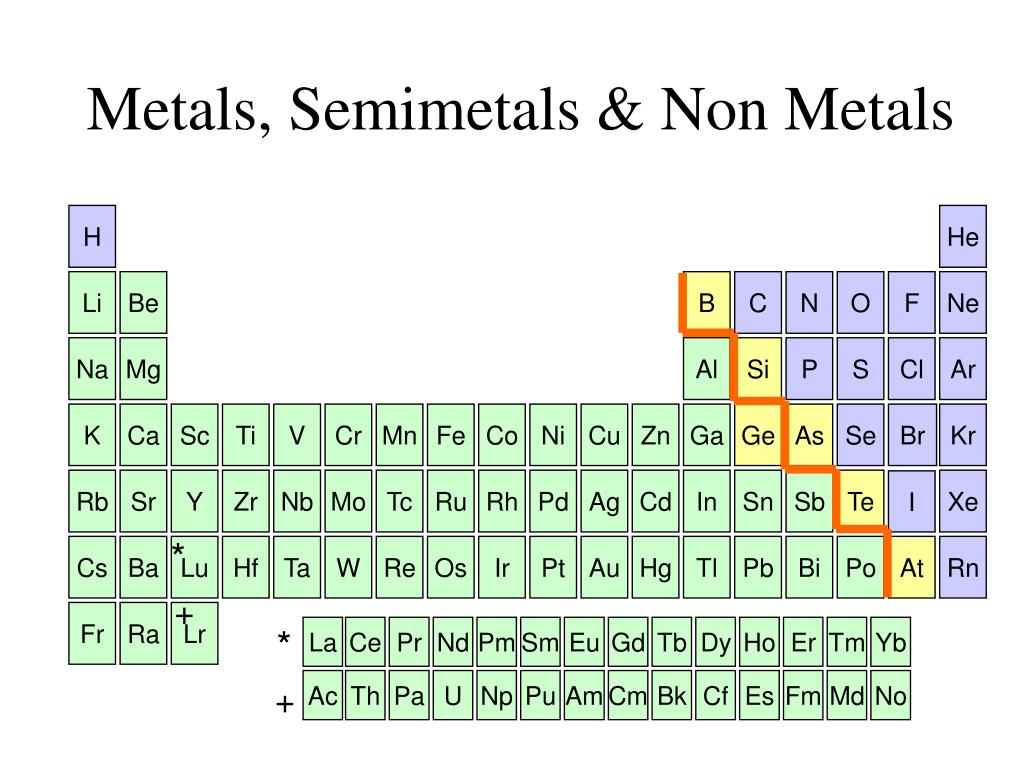
Alright, gather 'round, folks! Let's talk about the Periodic Table – that colourful chart of elements that probably gave you nightmares back in high school. But trust me, it's not as scary as it looks. Think of it as a giant, organized dating app for atoms. Today, we're focusing on three of the biggest groups on this atomic matchmaking service: metals, semimetals (or metalloids), and nonmetals.
Metals: The Shiny, Strong Types
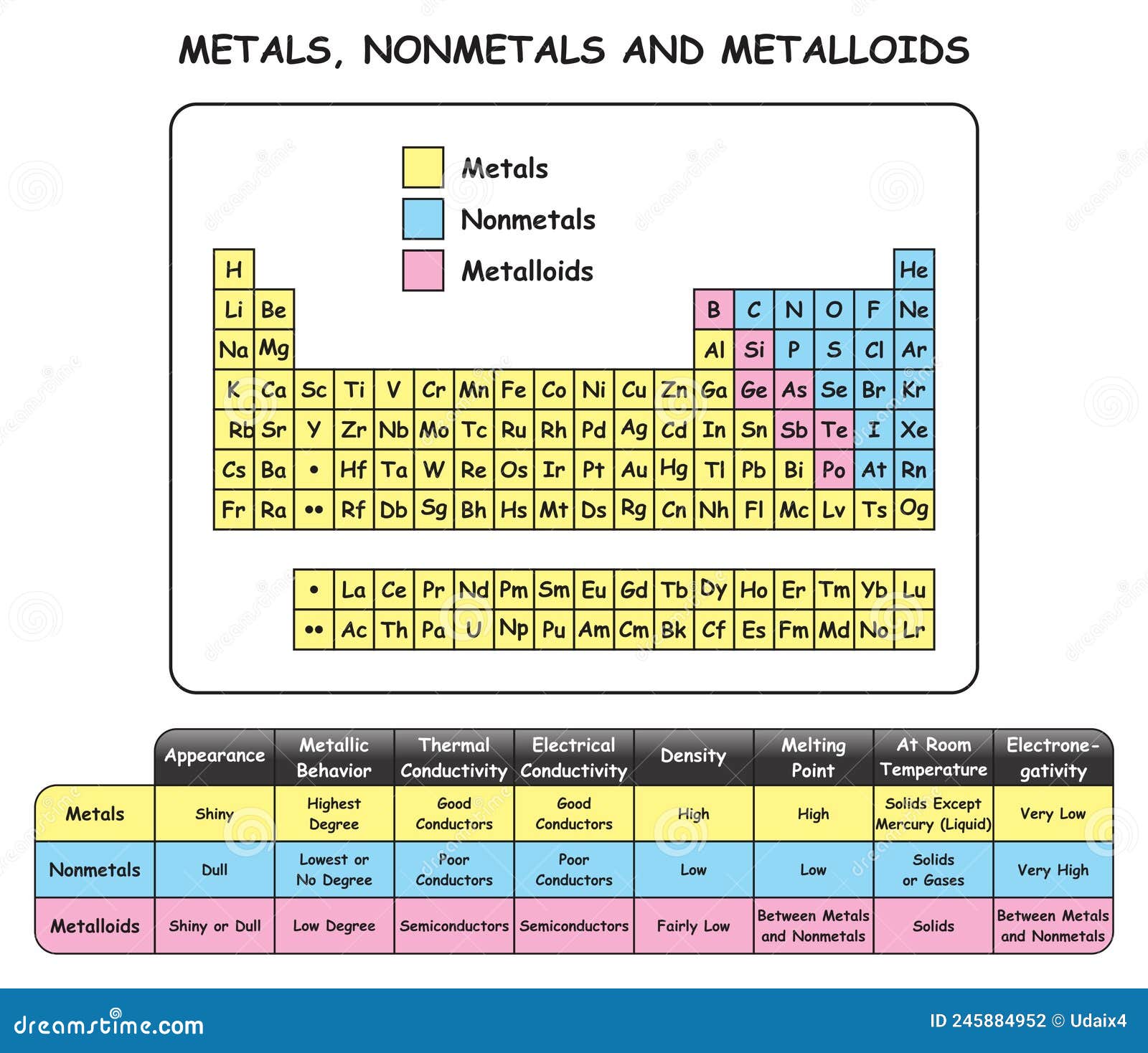
First up, we have the metals. These guys are like the popular kids in school – always attracting attention with their shiny personalities (literally!). They're the jocks of the atomic world, known for their strength and ability to conduct electricity and heat like it's nobody's business. Think of gold jewelry, your car's chassis, or the copper wires in your walls. They’re all metals showing off.
A fun fact? Most of the periodic table is actually made up of metals! They're like the default setting for elements. They're also generally eager to give away electrons. They are so eager, it is like they can't wait to get rid of them.
Must Read
And speaking of giving, metals are also responsible for some pretty spectacular explosions! Ever seen those online videos of metal reacting with water? Yeah, that's the metal being all generous with its electrons again, but this time with fiery consequences. Don't try that at home, kids!
Nonmetals: The Diverse and Quirky Bunch
Now, let's move on to the nonmetals. These are the artsy, individualistic types. They're not as flashy as the metals, but they're incredibly diverse. Some are gases (like oxygen, essential for, you know, living), some are solids (like carbon, the backbone of life and diamonds!), and one is even a liquid at room temperature (bromine – a real drama queen!).

Nonmetals are generally bad at conducting electricity and heat. They're like the opposite of the metals in every way! Instead of giving away electrons, nonmetals tend to be greedy and hog them! This electron-grabbing ability makes them excellent at forming bonds with other elements, including… metals!
A surprising fact? While metals are often associated with strength, some nonmetals are surprisingly versatile. Carbon, for instance, can form everything from soft graphite (in your pencils) to super-hard diamonds. Talk about a glow-up!
Semimetals (Metalloids): The In-Betweeners
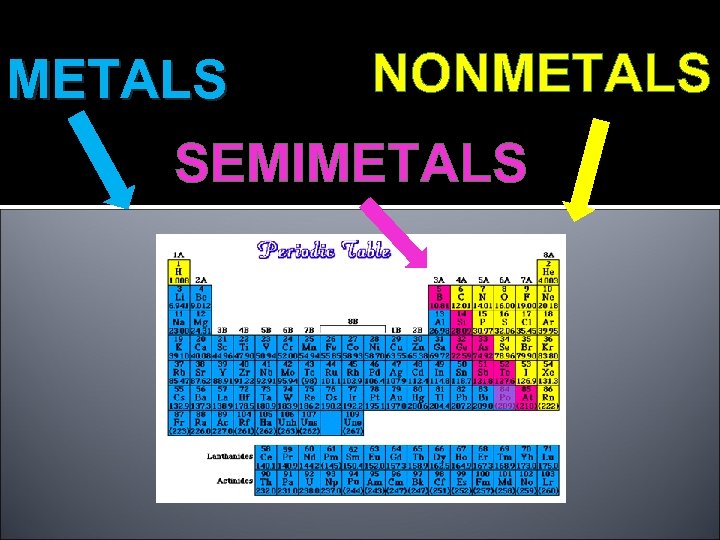
Finally, we have the semimetals, also known as metalloids. These guys are the awkward teenagers of the periodic table – not quite metals, not quite nonmetals. They're stuck somewhere in between, exhibiting properties of both.
Think of silicon, which is used in computer chips. It's a semiconductor, meaning it can conduct electricity under certain conditions, but not others. It's like a mood ring for electrons! Need a conductor? Fine. Need an insulator? Okay, I will be that too. That is some versatility!
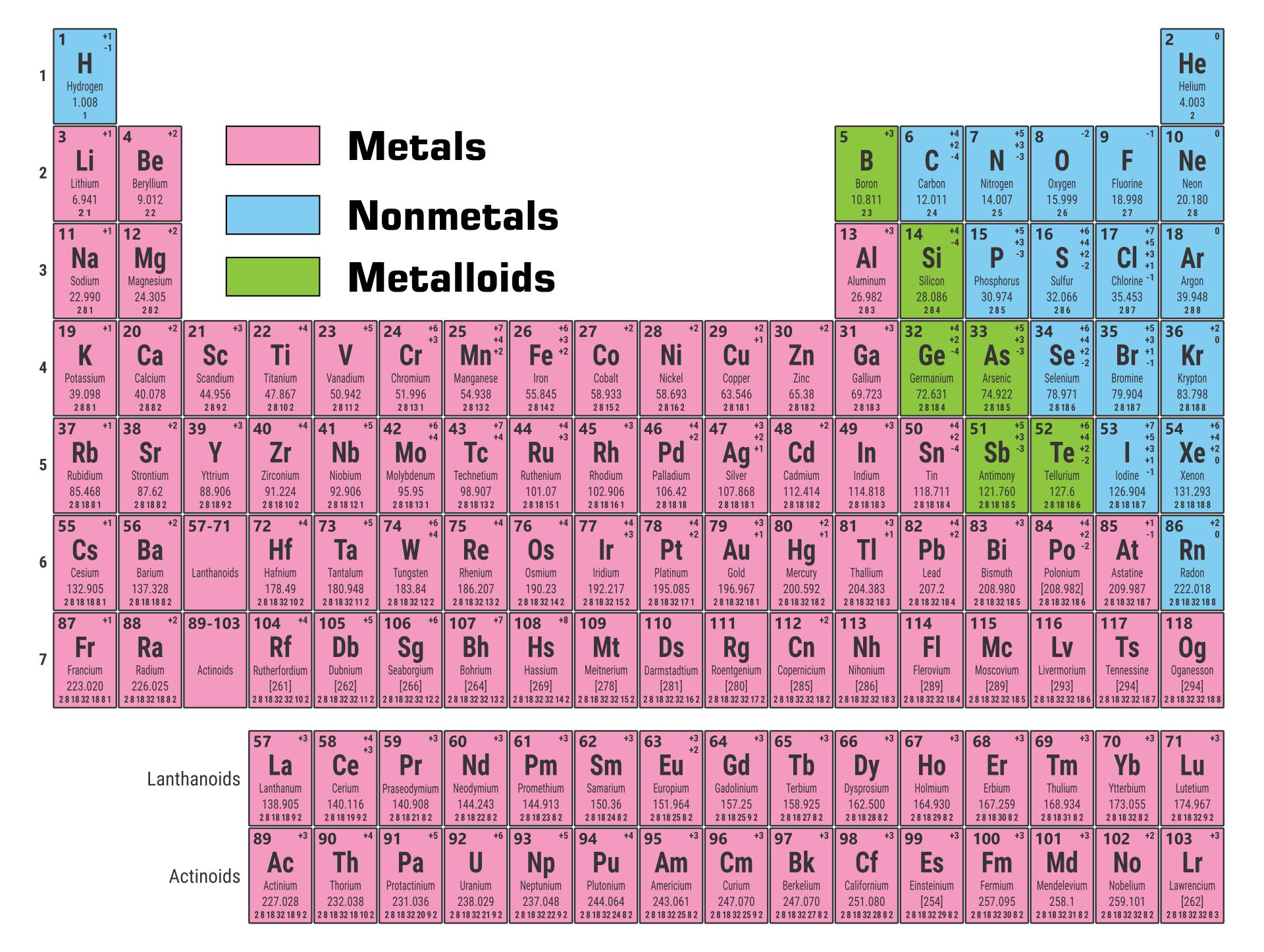
Semimetals are often found along the dividing line between metals and nonmetals on the periodic table (usually a zig-zag line). They're like the border patrol, keeping the peace between the two groups. And sometimes stirring up a little trouble, just for fun!
Here's the kicker: their "in-between" nature is what makes them incredibly useful. They are able to fine-tune the way they handle electricity, like adjusting the volume on a radio. This makes them essential components in electronics, from your smartphone to your laptop.
Bringing it all together: A Periodic Romance
So, there you have it! Metals, nonmetals, and semimetals – three very different groups of elements that make up the majority of the periodic table. They interact, react, and even explode together, creating the world around us (and occasionally providing some impressive YouTube content!).
Next time you look at the periodic table, remember it's not just a bunch of symbols and numbers. It's a dynamic, ever-changing cast of characters with their own unique personalities and quirks. And who knows, maybe you'll even find your own perfect atomic match!
Just kidding! (Mostly.) But seriously, understanding the basic properties of these groups can make chemistry a whole lot less intimidating. Now, go forth and impress your friends with your newfound knowledge of metals, nonmetals, and semimetals! You'll be the life of the party... at least, the science-themed parties.