
Metals Nonmetals Metalloids On The Periodic Table
Okay, picture this: I’m in the kitchen, attempting (and failing miserably, let's be honest) to bake a cake. The recipe calls for… everything. Flour, sugar, eggs, and then BAM! "1 tsp cream of tartar." I stare blankly at the jar. What is cream of tartar anyway? And suddenly, my brain jumps to: what's anything made of?! That, my friends, is how a failed baking session led me down a delightful rabbit hole of chemistry. And where does chemistry live? You guessed it: The Periodic Table!
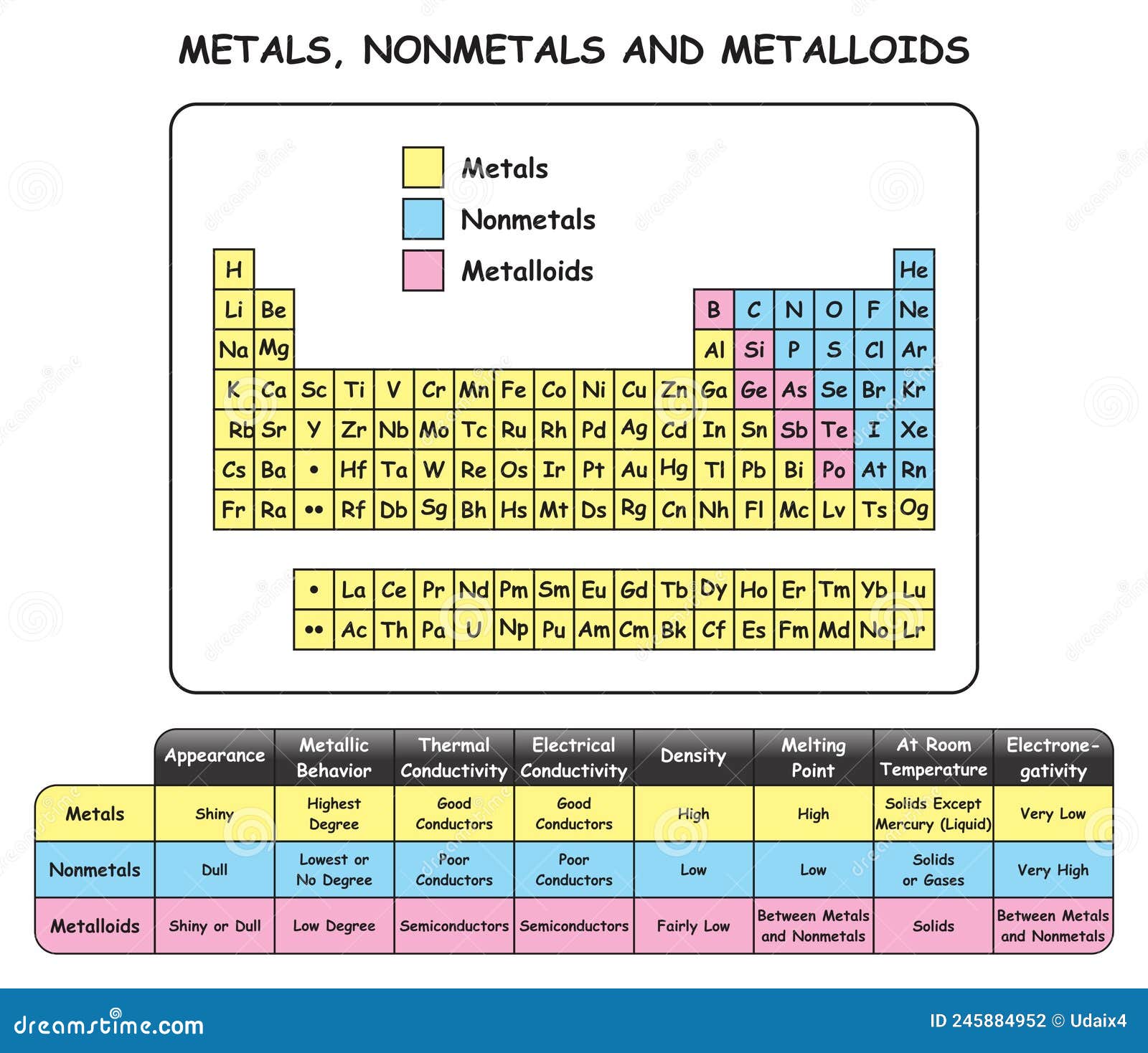
So, that giant chart with all the boxes? It's not just some random collection of symbols. It's a highly organized map showing us all the known elements in the universe. And these elements are conveniently grouped into three main categories: metals, nonmetals, and metalloids. Think of them as the cool kids, the quirky kids, and the… well, you’ll see.
Metals: The Shiny Showoffs
Let's start with the metals. These are the rockstars of the periodic table. They're generally located on the left side and in the middle, and they are usually the first to come to mind when you think of elements. Think iron, gold, silver, copper - stuff that glitters and gleams. (Which is probably why everyone loves them, let's be real.)
Must Read
What makes them so special? A few things: they're excellent conductors of heat and electricity. That’s why your pots and pans are made of metal – they heat up quickly and evenly. They are also malleable, meaning you can hammer them into thin sheets (like aluminum foil), and ductile, meaning you can draw them into wires. Try doing that with a piece of chalk! I dare you.
Metals tend to be shiny (hello, bling!), solid at room temperature (except for mercury, which is a weirdo liquid), and they often form positive ions (cations) when they react with other elements. This whole "positive ion" thing basically means they're generous and like to give away electrons. So noble, right?

Examples of common metals include iron (Fe), copper (Cu), gold (Au), and aluminum (Al). You encounter them all the time – in construction, electronics, jewelry, and even your morning coffee (okay, maybe not pure metal, but the machines that make it!).
Nonmetals: The Underdogs
Now, let's talk about the nonmetals. They live mostly on the right side of the periodic table, and they're often the opposite of metals in terms of properties. Think carbon, oxygen, nitrogen, chlorine. Less flashy, perhaps, but essential for life as we know it. (Don't let their lack of shine fool you.)
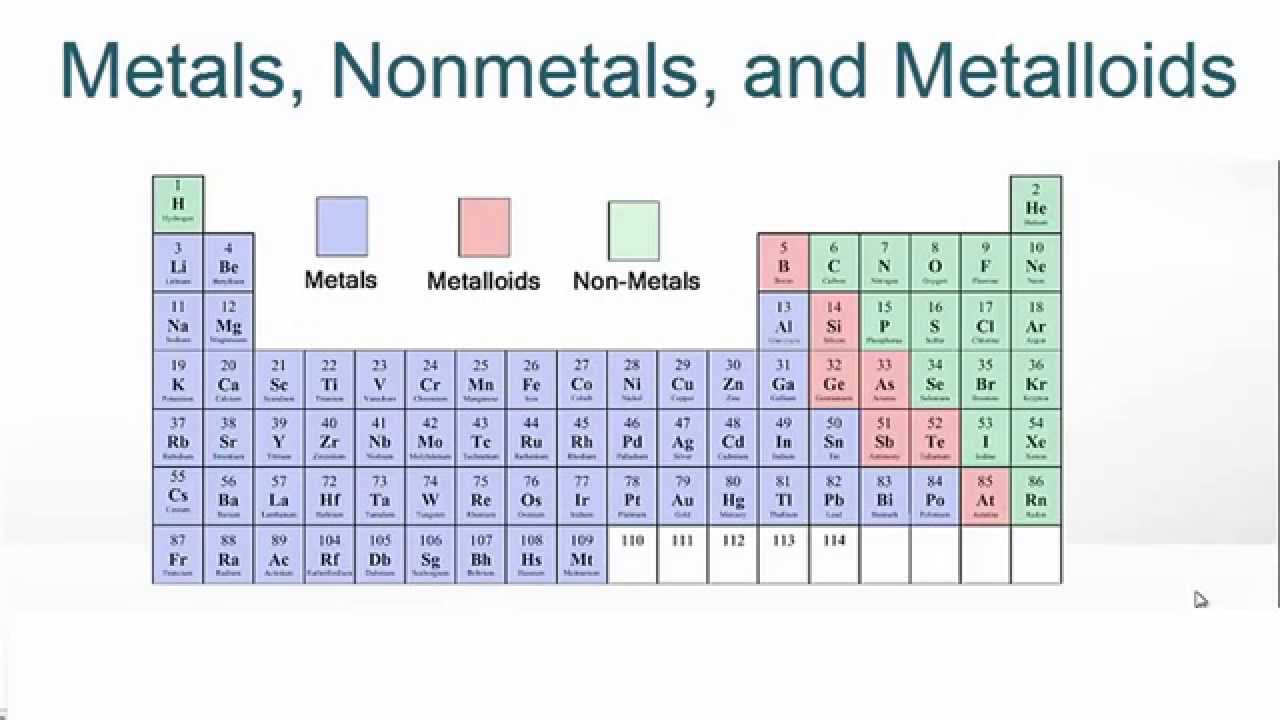
Unlike metals, nonmetals are generally poor conductors of heat and electricity. They're also often brittle, meaning they'll shatter if you try to hammer them into a sheet. (Imagine trying to make a sword out of sulfur. Disaster!) They can be solids, liquids, or gases at room temperature, which adds to their unpredictable nature.
Nonmetals are also more likely to form negative ions (anions) when they react with other elements, meaning they take electrons. A bit less generous than the metals, perhaps? (Just kidding… mostly.)
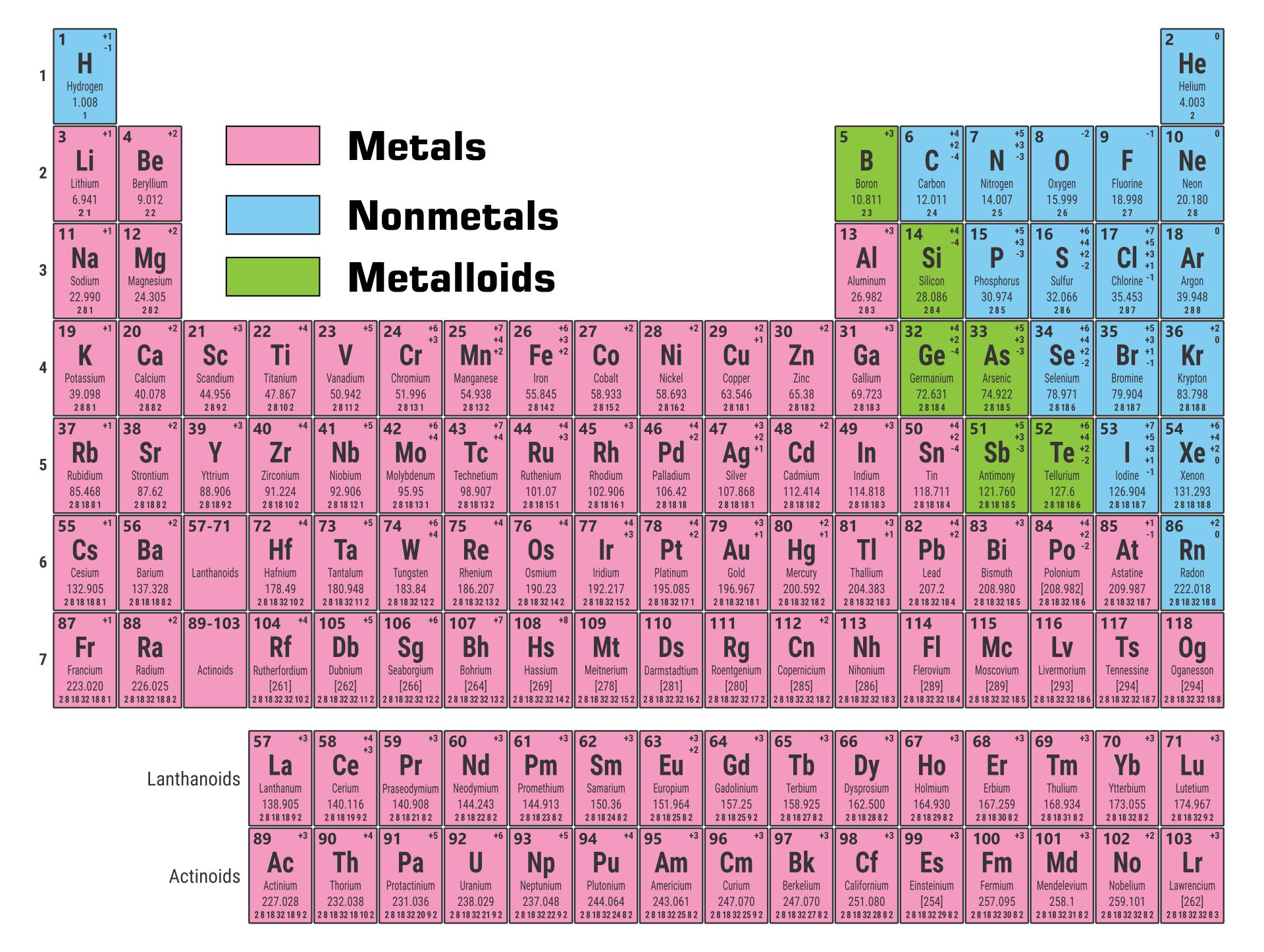
Examples include oxygen (O), which we breathe, nitrogen (N), which is a major component of the atmosphere, and chlorine (Cl), used to disinfect water. See? Super important stuff, even if they don't have the same star power as gold.
Metalloids: The In-Betweeners
And then we have the metalloids, sometimes called semi-metals. These guys are located along the zig-zag line that separates the metals and nonmetals on the periodic table. They're the ambiguous ones, exhibiting properties of both metals and nonmetals. The diplomats, if you will.

The most famous metalloid is probably silicon (Si), which is a crucial component in semiconductors. Semiconductors are the foundation of modern electronics, making computers, smartphones, and everything in between possible. So, while they might not be as glamorous as gold or as essential (immediately) as oxygen, they are definitely important.
Other metalloids include boron (B), germanium (Ge), arsenic (As), antimony (Sb), tellurium (Te), and polonium (Po). Their properties can vary depending on the conditions, making them incredibly versatile. They can be conductors under certain circumstances, and insulators under others. (Talk about having options!)
So, there you have it! Metals, nonmetals, and metalloids – the three main categories of elements on the periodic table. Each group has its own unique set of properties that make them useful in different ways. It’s like a chemical orchestra, each section playing its part to create the world around us. Pretty cool, huh? Now, back to that cake… maybe I'll stick to looking at the periodic table instead.