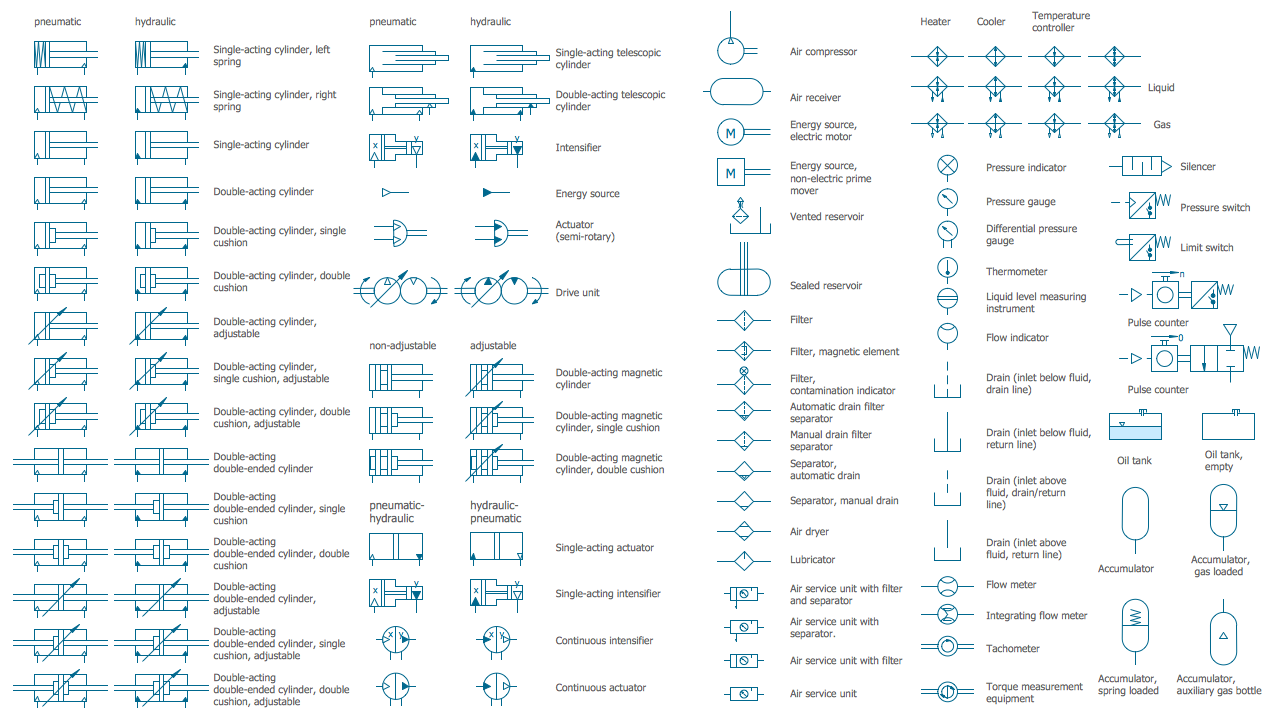
Mechanical Drawing Symbols In Engineering Drawing

Ever tried assembling IKEA furniture without the instructions? Yeah, that's kind of like trying to understand an engineering drawing without knowing the symbols. It's a recipe for confusion, frustration, and potentially a wobbly bookshelf that collapses at the worst possible moment. Think of mechanical drawing symbols as the universal language that engineers use to communicate ideas about how things should be built, designed, and generally, not fall apart.
Now, I know what you’re thinking: "Symbols? Sounds boring!" But trust me, once you get the hang of it, it's like unlocking a secret code. You'll start seeing the world differently – noticing the clever ways things are put together, and maybe even sketching out your own napkin inventions. (Don't worry, everyone starts with napkin inventions.)
Lines, Lines, Everywhere!
Let's start with the basics: lines. In the world of mechanical drawings, lines aren't just lines. They're secret messages in disguise. There are different types of lines, each with its own special meaning. Think of it like learning the different types of brushstrokes in painting. You wouldn't use a broad brush for detail work, would you?
Must Read
For example, a thick, dark, continuous line usually represents the outline of an object – the part you can actually see. It's like the star of the show, the main event. Then there are dashed lines, which often indicate hidden features – the stuff you can't see from the outside, like the secret compartment in your grandma's antique desk. Sneaky!
And don't forget center lines, those long-short-long lines that show the center of a circle or symmetrical feature. They're like the North Star, guiding you to the middle of the action. My first engineering professor used to say, "If you can't find the center line, you're lost!" He wasn't wrong.

Shape Up! The Geometry of Things.
Beyond lines, we get into shapes and dimensions. Things like circles, squares, and those weird little symbols that tell you about surface finishes (rough, smooth, shiny, you name it!). It's like learning a new alphabet, but instead of letters, you're learning about how things are made.
Imagine you're designing a coffee mug. You need to specify the diameter of the opening (so you can actually drink your coffee), the height (so it doesn't spill everywhere), and maybe even the angle of the handle (for optimal comfort). All of this information is conveyed using symbols and dimensions on a drawing.
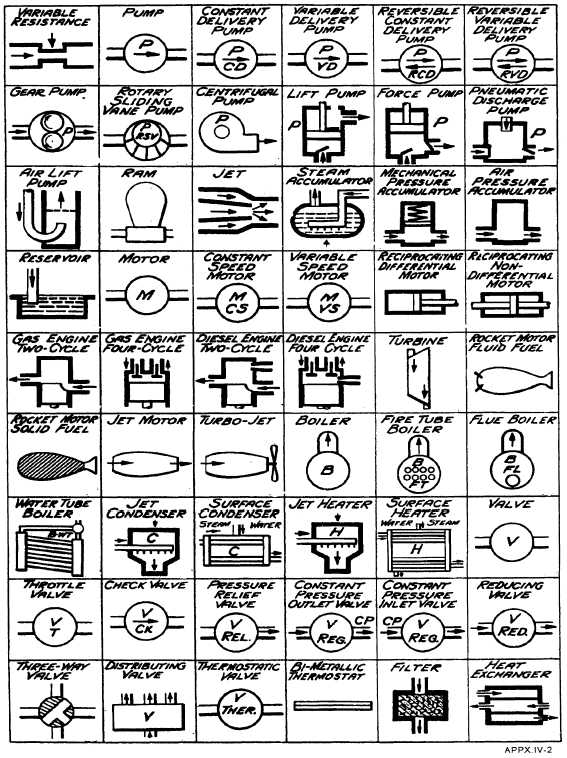
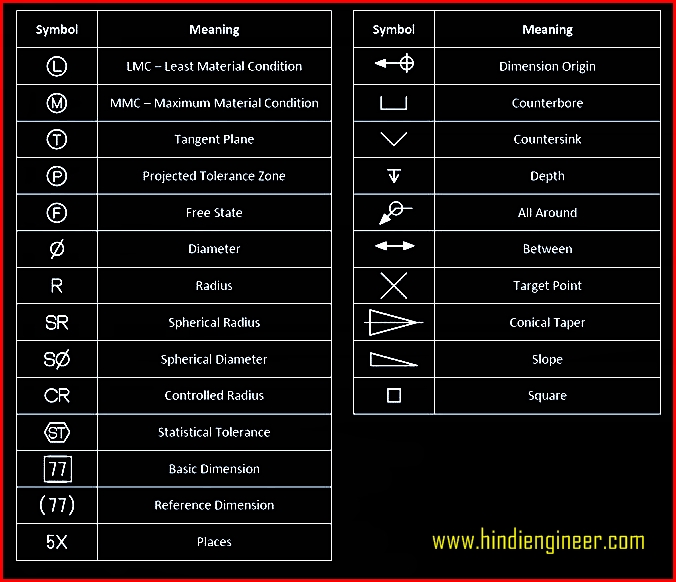
Think of tolerances as the acceptable wiggle room. It’s like telling a chef, “Okay, the recipe calls for 1 cup of flour, but a little more or less is fine.” Too much tolerance, and your bridge collapses. Too little, and you can't even fit the pieces together. Finding the right tolerance is a delicate balancing act.
Surface Texture: Feeling is Believing (Sometimes)
The surface finish symbols are another crucial element. These symbols tell you how rough or smooth a surface should be. Think about it: the surface of a car needs to be super smooth and shiny, while the surface of a wrench might be intentionally rough to provide a better grip. The symbols indicate the manufacturing processes to achieve those textures – like grinding, polishing, or even sandblasting.
Remember that time you bought a "rustic" coffee table online, and it arrived looking like it had been dragged through a gravel pit? That’s probably because the designer didn't specify the right surface finish. Or maybe they just didn't care. Either way, understanding these symbols can save you from future furniture disasters.
It's Not Just About The Drawing!
Here's the thing: learning mechanical drawing symbols isn't just about memorizing a bunch of squiggly lines. It's about understanding the design intent. It's about visualizing how something will be made, how it will function, and how all the pieces fit together. It's about being able to communicate your ideas clearly and effectively.
So, the next time you see a complex engineering drawing, don't be intimidated. Remember that it's just a collection of symbols, each with its own specific meaning. Take a deep breath, break it down, and start deciphering the code. You might just surprise yourself with what you can understand. And who knows, you might even avoid a wobbly bookshelf or two along the way!