
Made Almost Entirely Of Compact Bone
Hey, wanna talk about bones? Yeah, I know, sounds kinda dry. But trust me, this is gonna be wild! We're diving into the world of a bone that's basically one solid chunk. No spongy business here. We're talking pure, unadulterated compact bone. Boom!
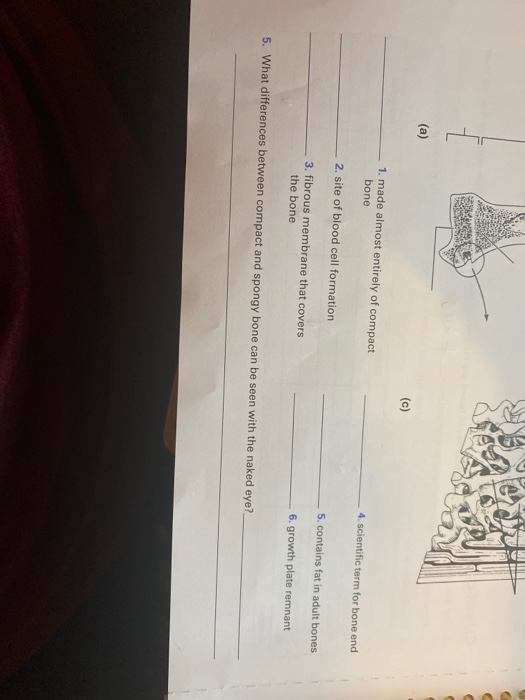
Ever heard of a long bone? Think femur, tibia, humerus. Those guys? Well, their shafts (the diaphysis if you wanna get technical) are almost entirely made of compact bone. It's like nature's way of saying, "I need this thing to be STRONG."
What's Compact Bone Anyway?
Okay, quick bone-anatomy 101. Bone isn't just some dead rock. It's living tissue. Compact bone is super dense and organized. Imagine tiny little tubes stacked together like miniature skyscrapers. These are called osteons, and they're the key to compact bone's strength.
Must Read
Think of it like this: regular bone is like a sponge. Lots of holes, kinda squishy. Compact bone is like a brick. Solid, dependable, ready to build a house…or, you know, support your body.
So, these osteons? They're packed with blood vessels and nerves. Yep, your bones have their own highway system. Gotta keep those bone cells happy and well-fed! It's a tiny metropolis inside your skeleton.

Why So Much Compact Bone?
Good question! These long bones are weight-bearing. They gotta hold you up, let you run, jump, and maybe even do a little interpretive dance. All that requires some serious structural integrity.
And compact bone? It's the ultimate strength champion. It resists bending and twisting like a boss. It's the reason you don't collapse into a puddle every time you stand up. Give your compact bone a little thank you nod. It deserves it.

Plus, think about how animals move. A cheetah needs super strong leg bones to run at incredible speeds. Those bones? Loaded with compact bone. A bird needs light but strong bones to fly. That's where their long bones come into play.
Funky Facts About Compact Bone
Ready for some quirky details? Here we go!
- Did you know that the arrangement of osteons in your compact bone changes over time? It's constantly remodeling itself based on the stresses you put on it. Lift weights? Your bone gets stronger! Sit on the couch all day? It might get a little weaker. Use it or lose it, baby!
- Compact bone is not completely solid. It has tiny little canals that connect the osteons. These canals are called canaliculi (try saying that five times fast!). They allow bone cells to communicate and share nutrients. It's like a secret underground tunnel system for bone cells!
- Even though compact bone is super hard, it's still slightly flexible. This flexibility helps it absorb impacts and prevent fractures. Think of it like a really strong, slightly bendy ruler.
More Than Just Structure
Okay, so compact bone is amazing for providing strength and support. But it does even more! It also serves as a reservoir for calcium and phosphate. Your body uses these minerals for all sorts of things, like nerve function and muscle contraction.

If your blood calcium levels get too low, your body will actually break down some bone to release calcium into the bloodstream. It's like your bones are saying, "Don't worry, body, I got you!"
So basically, your compact bone is not just a structural component; it's a mineral storage facility, too. Pretty neat, huh?

Why Should You Care?
Well, understanding your bones helps you take better care of them! Eat a healthy diet rich in calcium and vitamin D. Get regular exercise, especially weight-bearing exercise. And protect your bones from injury. After all, you only get one skeleton. Gotta treat it right!
Think about this: next time you see a skeleton, remember that those long, sturdy bones are packed with compact bone, the unsung hero of your body's structural system. It's tough, adaptable, and essential for life. Go forth and appreciate the amazingness of compact bone!
See? Bones aren't so boring after all. They're actually kinda…awesome. Pass it on!