
Level 3 Charging Station Power Requirements
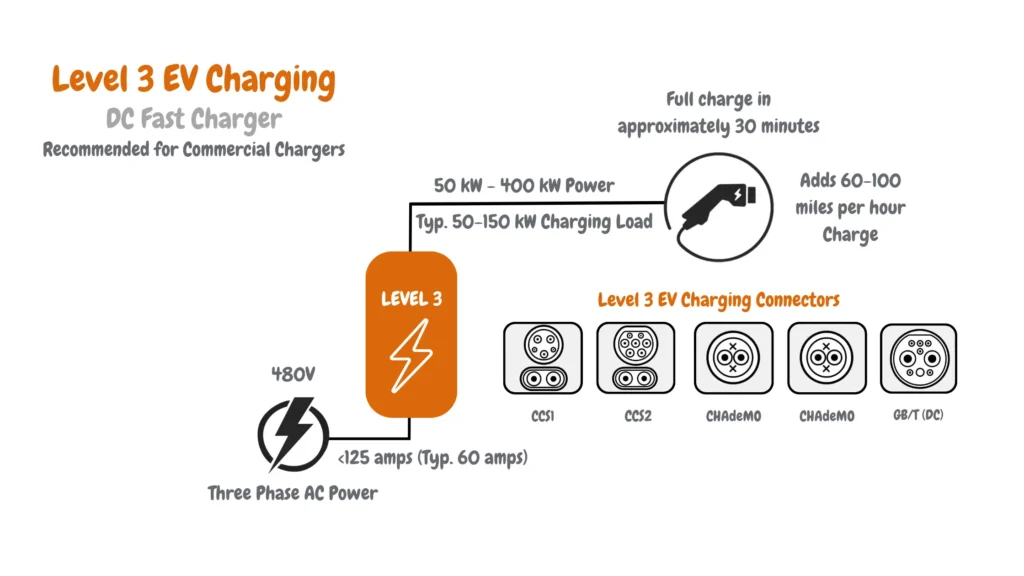
So, you're thinking about diving headfirst into the electric vehicle (EV) revolution? Awesome! You're joining the ranks of eco-conscious drivers, leaving gasoline fumes in the rearview mirror. But before you envision yourself silently gliding past gas stations, let's talk juice – specifically, the high-octane kind. We're talking about Level 3 charging, the Ferrari of EV charging.
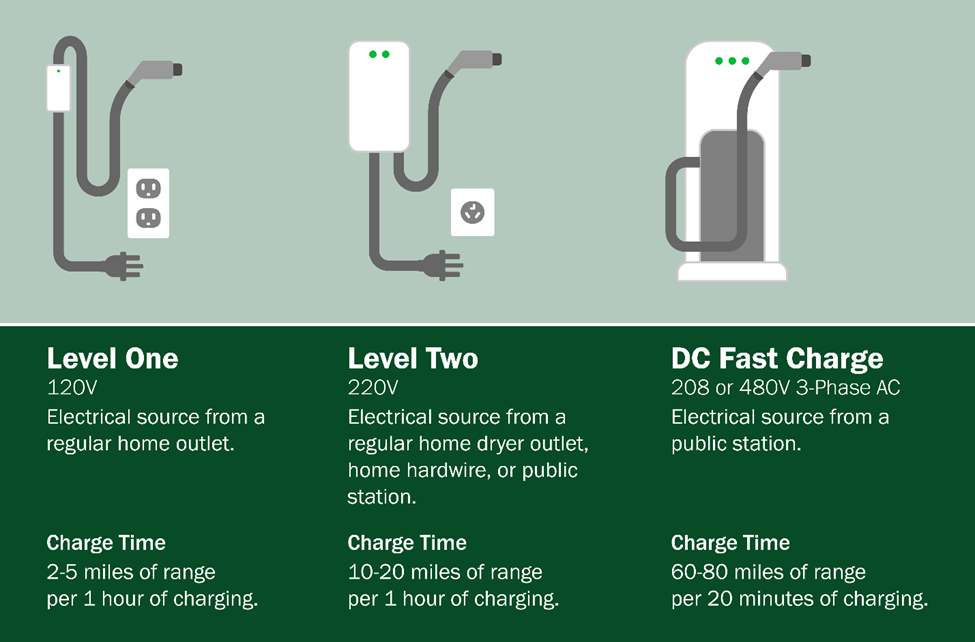
Level 3, also known as DC Fast Charging (DCFC), is the quickest way to replenish your EV battery. Think of it as the difference between sipping coffee (Level 1) and chugging an energy drink (Level 3). But just like you wouldn't plug a toaster into a nuclear reactor (we hope!), understanding the power requirements of Level 3 charging is crucial.
Power Hungry: Understanding the Numbers
Let's get down to brass tacks. Level 3 chargers need a significant amount of power – far more than your standard home outlet can provide. We're talking about voltages ranging from 400 to 800 volts DC and currents that can exceed 500 amps. Think of it like trying to power a small town versus just your kitchen lights.
Must Read
In practical terms, this translates to a power requirement between 50 kW and 350 kW (and even higher in some ultra-fast charging stations!). To put that into perspective, a typical household uses around 5-10 kW at peak demand. So, a Level 3 charger needs roughly 10-70 times the power of your house!
Fun Fact: The sheer power demand of Level 3 charging stations is why you often see them located near substations or other high-capacity power sources. They're essentially tapping into the grid's main arteries.
Infrastructure is Key: What Makes it Work
It's not just about the raw power; it's about the entire infrastructure supporting it. Level 3 chargers require specialized electrical equipment, including:
:max_bytes(150000):strip_icc()/charging-stations-levels-04-f5ca10a8b0354dd28bb59b1c1f004680.jpeg)
High-voltage transformers: To step down the voltage from the grid to the charger.
*Powerful circuit breakers: To protect the equipment from overloads.
*Robust cabling: To handle the high current flow.
Cooling systems: Many Level 3 chargers need active cooling to prevent overheating.
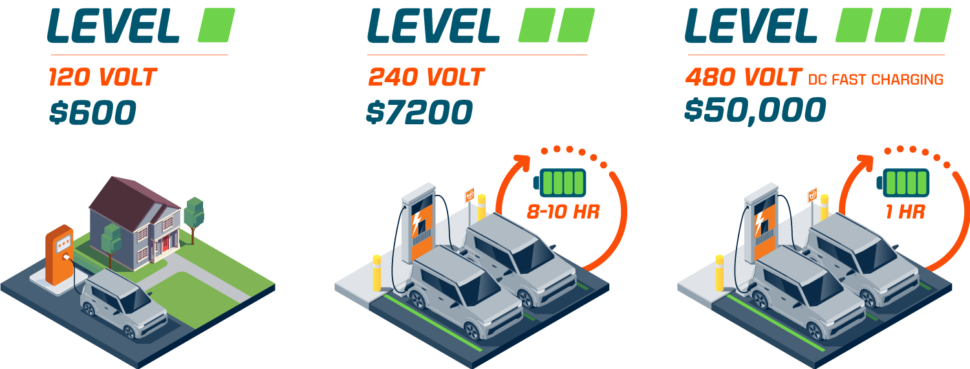
This is why installing a Level 3 charger is a major undertaking, requiring specialized permits, electrical expertise, and a hefty investment.
Real-World Considerations: It's Not Just About the Charger
The power requirements don't stop at the charging station itself. You also need to consider the impact on the local grid. Imagine everyone in your neighborhood suddenly plugged in their EVs for a Level 3 charge at the same time. The grid could buckle under the strain, leading to brownouts or even blackouts.

This is why utility companies are actively working to upgrade infrastructure and implement smart charging strategies. Smart charging allows utilities to manage charging demand by adjusting charging rates based on grid conditions. Think of it as the grid politely asking your EV to wait a little bit before guzzling all the electrons.
Practical Tip: Consider charging your EV during off-peak hours, typically late at night or early in the morning, when demand on the grid is lower. You'll often get cheaper electricity rates too!
Future Forward: What's on the Horizon
The future of Level 3 charging is looking bright. Advancements in battery technology are allowing for faster charging times and higher power transfer rates. We're also seeing the development of more efficient and compact charging stations.
As EV adoption continues to grow, expect to see even more Level 3 chargers popping up in convenient locations like gas stations, shopping centers, and highway rest stops. The goal is to make charging your EV as quick and easy as filling up a gas tank – without the guilt!
Cultural Reference: Remember Doc Brown's DeLorean in "Back to the Future"? Imagine needing a flux capacitor-sized power source to charge it! While we're not quite there (yet!), Level 3 charging is definitely pushing the boundaries of what's possible with electric power.
A Final Charge: Connecting to Daily Life
Understanding the power requirements of Level 3 charging might seem technical, but it highlights a larger point: energy consumption touches every aspect of our lives. From the devices we use to the cars we drive, electricity powers our modern world.
Being mindful of our energy usage, choosing energy-efficient options, and supporting sustainable energy solutions are all small steps we can take to create a more sustainable future. So, the next time you plug in your phone, remember the journey that electricity takes to get to you – and appreciate the power of a simple plug.