Led Vs Incandescent Christmas Lights Energy Usage
:max_bytes(150000):strip_icc()/LEDvs.IncandescentChristmasLights-1f778e82839940c3862e33d8c71484c2.png)
Twinkling lights, cozy nights, and the scent of pine needles – it’s Christmas time! But amidst all the festive cheer, have you ever paused to consider the energy powering those dazzling displays? Comparing LED vs. incandescent Christmas lights might seem like a mundane task, but understanding the difference can actually be quite illuminating (pun intended!). Not only can you save a few bucks on your electricity bill, but you can also make a more eco-conscious choice. Who knew holiday decorating could be so… empowering?
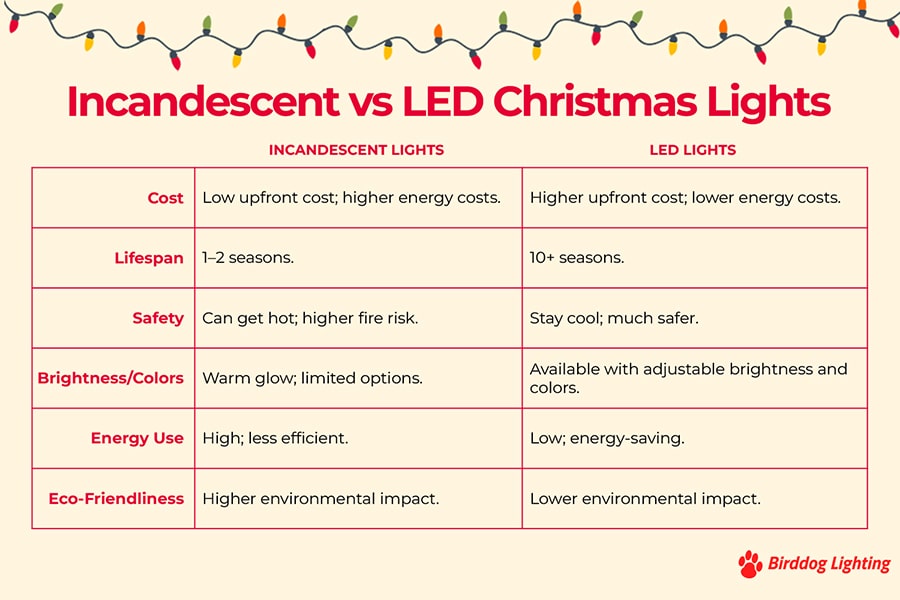
Let's dive into the heart of the matter. The primary purpose of Christmas lights, of course, is to add a touch of magic to our homes and neighborhoods. But the benefits of understanding their energy consumption go beyond aesthetics. Traditional incandescent lights, while nostalgic, are essentially tiny heaters masquerading as light sources. They convert a significant portion of the electricity they consume into heat, not light, making them incredibly inefficient. LED (Light Emitting Diode) lights, on the other hand, are much cooler. They use a semiconductor to produce light, converting electricity much more effectively. This means less wasted energy and more actual illumination per watt consumed.
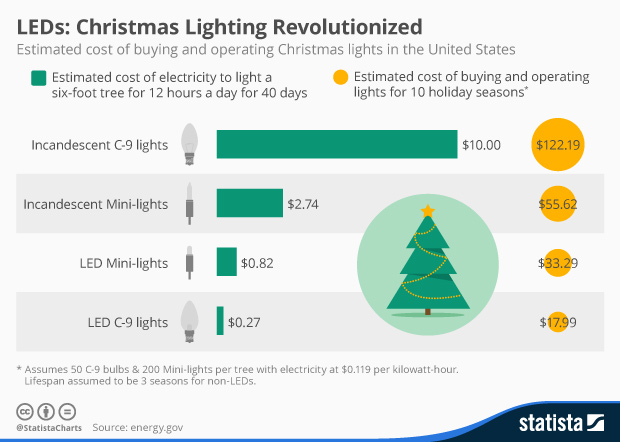
The difference in energy usage is truly staggering. Imagine decorating your entire house with strings of incandescent lights. You'd likely see a noticeable bump in your electricity bill. Replace those same lights with LEDs, and you’ll likely notice a negligible difference. To illustrate, a string of 100 incandescent Christmas lights might consume around 40 watts, whereas a similar string of 100 LED lights might only use around 4-10 watts. Over the course of a holiday season, that difference can add up to a significant saving. Think of all the extra hot cocoa you could buy!
Must Read
The concept of energy efficiency applies in so many areas of daily life and education. In schools, teachers use examples like Christmas lights to explain concepts like energy conservation and sustainability. Students can even conduct their own simple experiments, comparing the heat generated by different types of bulbs. At home, understanding the efficiency of our appliances, from refrigerators to washing machines, empowers us to make informed choices that benefit both our wallets and the environment. Buying energy-efficient appliances, like choosing LED bulbs, contributes to a smaller carbon footprint, which is becoming increasingly important in our world.
So, how can you explore this topic further? It's actually quite simple! Take a look at the packaging of your Christmas lights. It should clearly state the wattage. Compare the wattage of your old incandescent lights with the wattage of new LED lights. You can even use an online energy consumption calculator to estimate the cost of running each type of light string for a set period. Another fun and educational activity is to simply feel the heat emitted by each type of light. Be cautious and don't touch them directly for extended periods, but you'll quickly notice the significantly lower heat output of LEDs. Ultimately, choosing LED Christmas lights is a small change that can make a big difference – for your wallet, and for the planet. Happy decorating!