
Laser Beam Welding Vs Electron Beam Welding

Ever wondered how they stick incredibly strong stuff together? Things that need to withstand massive pressures and temperatures? Well, hold onto your hats because we're diving into the world of super-powered welding! Forget your grandpa's soldering iron, we're talking lasers and electron beams. It’s like comparing a firefly to a lightning bolt. Both give light, but… well, you get the idea.
So, what are these heavy hitters? We're talking about Laser Beam Welding (LBW) and Electron Beam Welding (EBW). They sound like something straight out of a sci-fi movie, right? And honestly, they practically are. Let's break it down, keeping it fun and avoiding the technical jargon. Think of it as kitchen science...but with million-dollar equipment.
Laser Beam Welding: Pew! Pew! Goes the Laser
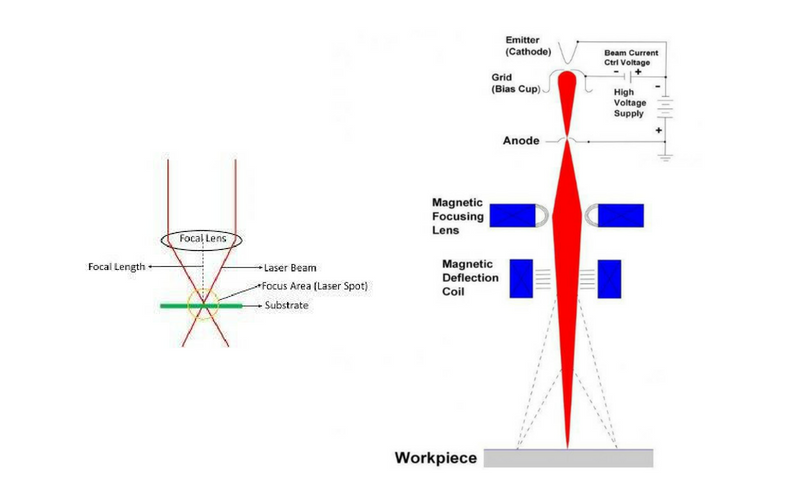
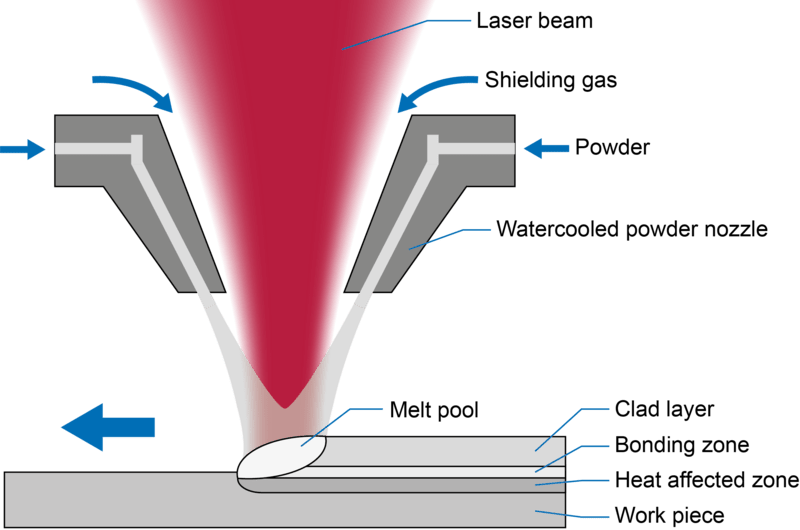
Imagine a super-focused lightsaber. Okay, maybe not quite that dramatic, but close. LBW uses a highly concentrated laser beam to melt and fuse materials together. This laser is so powerful it can weld materials with incredible precision. We're talking surgical levels of accuracy. Think stitching together two microscopic pieces of metal! And the best part? It's relatively fast! It's the welding equivalent of a cheetah on a caffeine rush.
Must Read
Why is this cool? Well, because you can weld things without affecting a large area around the weld. Think of it like this: you're baking a cake, but you only want to cook a tiny portion. LBW is like having a super-precise oven that can do just that. Minimizing heat distortion and making it perfect for delicate components.
"LBW is like painting with light, but instead of painting, you're welding!"

Also, LBW can be done in open air! While some applications still benefit from shielding gases to prevent oxidation, the process doesn't require a vacuum. That makes it much more practical and easier to implement in various manufacturing settings. Score one for convenience!
Electron Beam Welding: Zap! Going Vacuum
Now, let's crank things up to eleven. EBW takes things to a whole new level. Instead of light, it uses a focused beam of… you guessed it, electrons! These electrons are accelerated to crazy speeds and then smashed into the materials you want to weld. The kinetic energy transforms into heat, melting the metal at the point of contact and creating an incredibly strong weld.
The catch? It usually requires a vacuum. Think of it like this: those electrons are tiny. Air molecules get in the way, scattering them like bowling pins. To get a clean, focused beam, you need to remove all that air. Hence, the vacuum chamber. It’s like conducting a secret meeting where no one can eavesdrop.
"EBW provides the deepest, narrowest welds possible."
Why bother with the vacuum then? Because EBW delivers welds that are super strong and deep. Perfect for situations where you need maximum structural integrity, like in aerospace or nuclear applications. Think about welding thick sections of steel for a submarine, and you get the idea.
The vacuum environment also has another benefit: it's incredibly clean. This means there's less chance of impurities contaminating the weld, resulting in a stronger and more reliable joint.
Laser vs. Electron: The Ultimate Showdown!
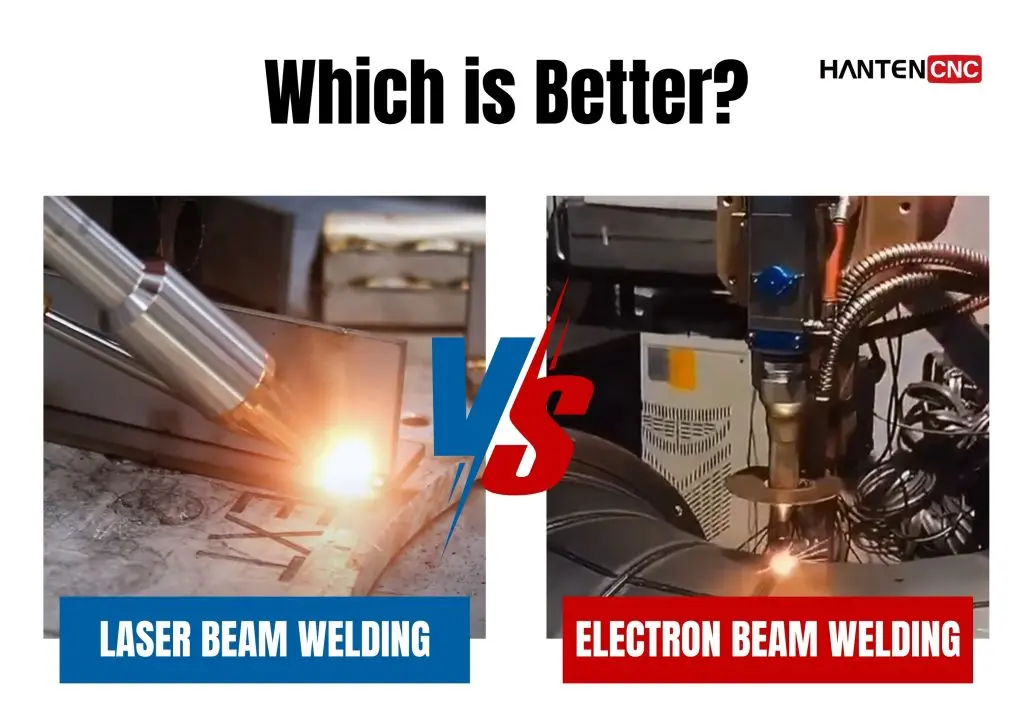
So, which one is the champ? Well, it depends! LBW is faster, more versatile (thanks to the open-air option), and generally cheaper. It’s the jack-of-all-trades of the welding world.
EBW, on the other hand, is the specialist. It delivers unparalleled weld quality and depth, but requires a more complex setup and takes longer. It's the master craftsman, taking its time to create a perfect masterpiece.
Think of it as a choice between a sports car (LBW) and a tank (EBW). Both get you somewhere, but in very different ways!
Both LBW and EBW are amazing feats of engineering. They allow us to build incredible things, from spacecraft to medical implants. Next time you see something amazing, remember that it might just be held together by a beam of light or a stream of electrons!
Who knew welding could be so exciting? Maybe it's time to ditch that afternoon movie and dive into the world of high-energy beam welding. You might just discover your next passion!