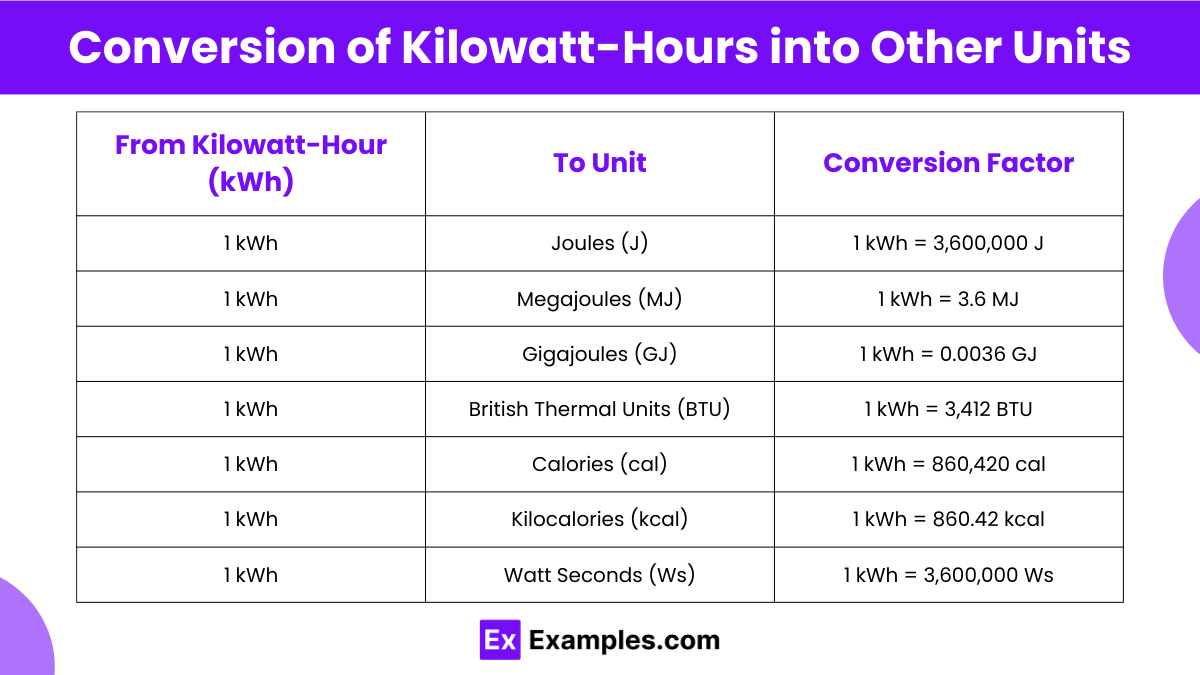
Kilowatt Hour Is The Unit Of
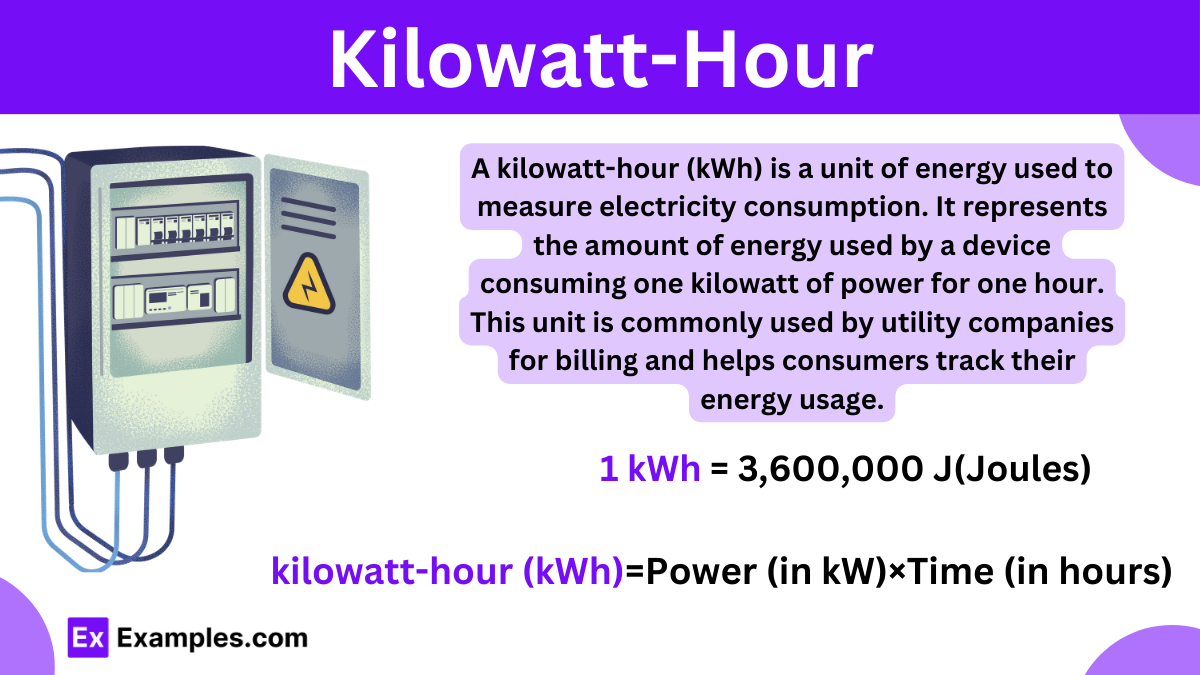
Ever found yourself staring at your electricity bill, a little puzzled by some of the jargon? Right there, usually near the bottom, you’ll spot those three letters: kWh. It might seem like just another technical term, but understanding what a kilowatt-hour is can actually be surprisingly fun and incredibly empowering. It’s not just for engineers; it’s for anyone who uses electricity, which, let’s face it, is pretty much all of us!
Think of it this way: a kilowatt-hour isn't a measure of how much power your device is using at any single moment, but rather the total amount of energy it consumes over a period of time. Imagine a garden hose. The flow rate (how much water comes out per minute) is like power, measured in kilowatts (kW). But the total amount of water you use to fill your pool is like energy, measured in kilowatt-hours. So, when your bill says you’ve used 300 kWh, it means you've consumed the equivalent of a 1,000-watt (1 kW) appliance running for 300 hours, or a 100-watt light bulb running for 3,000 hours! It’s the unit of energy that makes sense of our consumption.
The main purpose of the kilowatt-hour is to give us a practical way to quantify energy use and, more importantly, to price it. Utilities charge us based on the kWh we consume because it’s a direct measure of the work done by their electricity. This clarity brings a heap of benefits. For one, it allows you to compare the energy efficiency of different appliances. Should you buy that new fridge? Its annual kWh rating will tell you a lot about its running cost. Secondly, it helps us all make more conscious choices about energy conservation. When you know that leaving lights on contributes to your kWh usage, you're more likely to flick that switch off!
Must Read
You’ll encounter kilowatt-hours everywhere in daily life once you start looking. Of course, there's your electricity bill, which is the most common example. But it also pops up on appliance energy labels, showing you the estimated annual kWh consumption of a washing machine or TV. Electric vehicle (EV) charging stations often display how many kWh you're adding to your car's battery. If you have solar panels on your roof, their output is proudly measured in kWh, letting you see exactly how much green energy you’re generating. In education, understanding kWh is fundamental for physics students studying power and energy, and for environmental science classes exploring energy footprints and sustainability.

Ready to get curious and explore it yourself? A super simple tip is to just check your next electricity bill. Find the kWh usage and compare it to previous months. Did you use more or less? What changed? Another practical way to explore is with a cheap and cheerful energy monitor (often called a "Kill-A-Watt" meter). You plug an appliance into it, and it tells you exactly how much power it's drawing and, over time, how many kWh it consumes. It’s incredibly insightful to see the real-time energy use of your toaster, laptop, or even that old phone charger! Many online calculators can also estimate the kWh usage and cost of various activities, like running your air conditioning for an hour.
So, the next time you see “kWh,” don’t just glaze over it. Recognize it as the friendly unit that helps you understand, manage, and even save on your energy. It’s a small piece of knowledge that offers a big slice of control over your home’s energy story.