
Is Young's Modulus And Modulus Of Elasticity Same
Hey there, friend! Ever found yourself scratching your head, wondering if Young's Modulus and Modulus of Elasticity are secretly the same thing dressed in different outfits? You're not alone! It’s like trying to figure out if your "chill" outfit is just a fancy version of your "lazy day" pajamas. Let’s unravel this elastic mystery together, shall we?
The Elasticity Expedition: A Gentle Start
Okay, so picture this: you’re holding a rubber band. You stretch it (gently, we don't want any rubber band-related injuries!), and it springs back to its original shape when you let go. That, my friend, is elasticity in action! It's the material's superpower to return to its original form after being deformed. Think of it as a material's "memory."
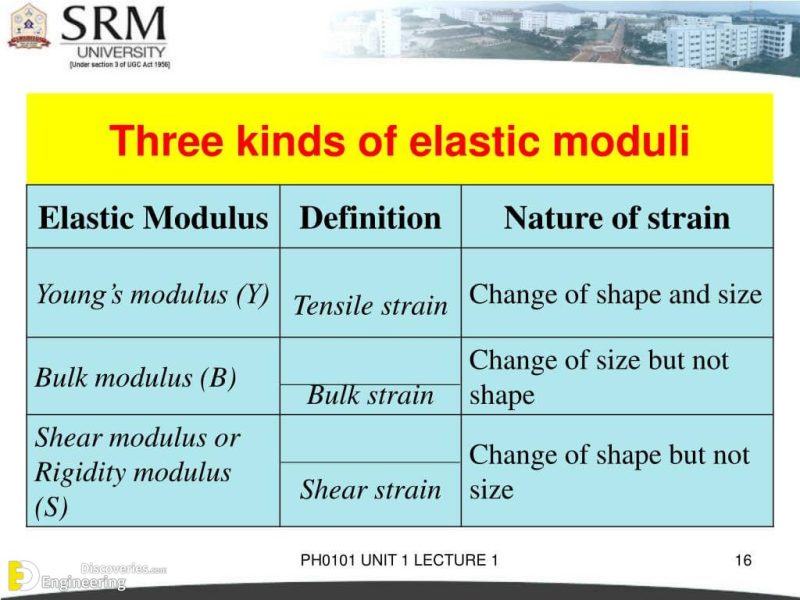
Now, the modulus of elasticity is a broader term. It's basically a measurement of a material's stiffness. The higher the modulus, the stiffer the material. It's like saying a diamond is stiffer than silly putty (duh!). There are different types of moduli, each dealing with a specific type of deformation. Don't worry, we're not diving too deep into the physics ocean today!
Must Read
Young's Modulus: The Longitudinal Luminary
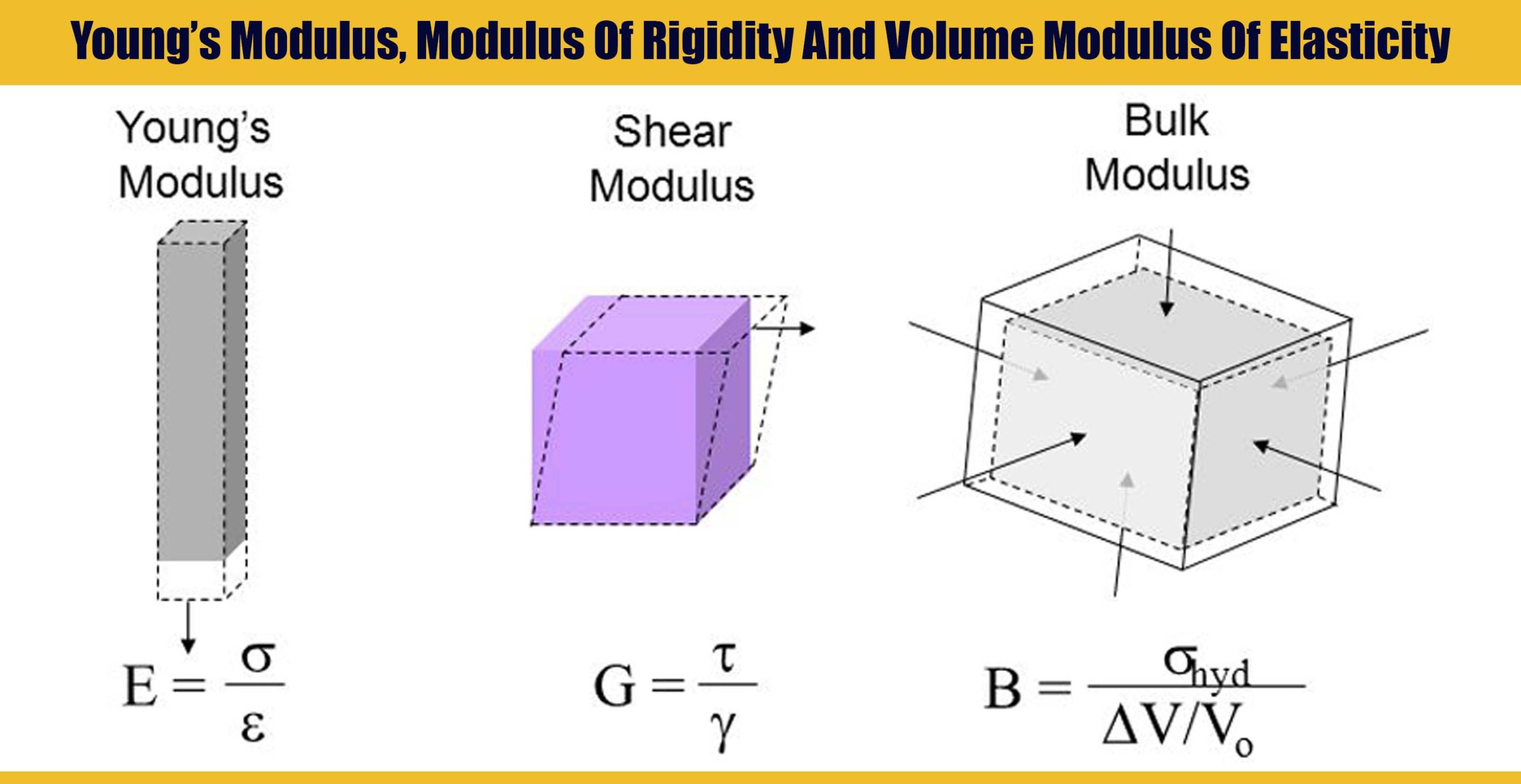
Enter Young's Modulus, sometimes called the elastic modulus! This guy is a specific type of modulus of elasticity. He deals exclusively with how a material responds to tensile or compressive stress – that is, when you're stretching or squishing it along its length. Imagine pulling on a rope or compressing a spring.
Think of it like this: the modulus of elasticity is like the category "fruit," and Young's Modulus is like a "banana." A banana is definitely a fruit, but not all fruits are bananas! Get it? Okay, good! high five.
Essentially, Young's modulus is the ratio of tensile stress (force per unit area) to tensile strain (change in length divided by original length). So, if you apply a certain force to stretch a material, Young's modulus tells you how much it will stretch relative to its original length. It’s like having a superpower to predict how bendy (or not bendy!) something is going to be!
So, Are They the Same or What? (The Big Reveal!)
Here's the short and sweet answer: Young's Modulus is a type of Modulus of Elasticity, but not the only one. It's a specific measurement dealing with stretching or compressing. The Modulus of Elasticity is a more general term that encompasses various types of moduli, including shear modulus (twisting) and bulk modulus (compression from all directions, like when you're underwater… which isn’t typically a stretching/compressing situation).
Think of it like squares and rectangles. All squares are rectangles, but not all rectangles are squares. Young's Modulus is a specific "square" within the broader "rectangle" of the Modulus of Elasticity.

To recap:
- Modulus of Elasticity: General term for stiffness.
- Young's Modulus: Specific modulus for stretching/compressing.
Why Does This Matter Anyway?
You might be thinking, "Okay, that's neat, but why should I care?" Well, understanding these concepts is crucial in engineering! Architects use them to design buildings that won't collapse. Aerospace engineers use them to build airplanes that can withstand extreme stresses. Even dentists use them when choosing materials for fillings! It's all around us, ensuring things don't break (or at least, break in a predictable way!).

Without understanding Young's Modulus, imagine building a bridge out of… well, silly putty. Not a great plan!
The Grand Finale: Elasticity Enlightenment!
So, there you have it! We've conquered the elastic landscape and emerged victorious! You now know the difference between Young's Modulus and the Modulus of Elasticity. You’re practically a material science guru! Go forth and impress your friends with your newfound knowledge. Just don't start stretching everything in sight – leave some rubber bands for the rest of us!
Remember, learning new things is like stretching your brain – it might feel a little weird at first, but it makes you more flexible and resilient in the long run. Keep exploring, keep questioning, and keep that curious spirit alive! You've got this!
