
Is Watts The Same As Volt Amps

Ever found yourself staring at the back of an appliance, or perhaps a computer power supply, and noticed different electrical units? We often see things rated in Watts (W), but then sometimes you might spot something like Volt-Amps (VA). "Wait a minute," you might think, "aren't they basically the same thing? It's all about power, right?" This little mystery is actually a super fun and useful tidbit to unravel, and understanding the difference can help you make smarter decisions about your electronics, from choosing the right backup battery to simply appreciating how electricity works in our daily lives.
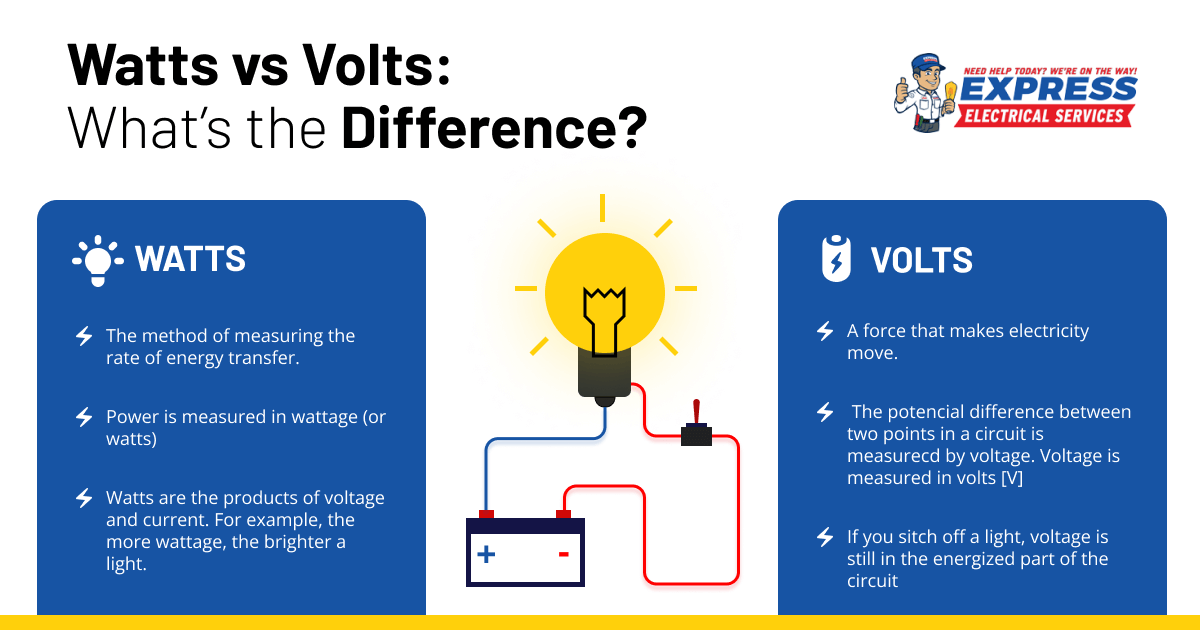
So, let's dive in! At its heart, both Watts and Volt-Amps are indeed measures of electrical power, but they describe slightly different aspects of it. Think of it like this: Watts represent the real power – the actual work being done. This is the power that heats your toaster, spins your fan, or lights up your bulb. It's the energy that gets converted into useful output. On the other hand, Volt-Amps represent the apparent power – the total power that's being supplied by the electrical source. This includes the real power (Watts) plus something called reactive power, which doesn't actually do any work but is still "seen" by the power grid and your wiring. The relationship between them is called the power factor, which is essentially a ratio between the real power and the apparent power. For a purely resistive load, like an old incandescent light bulb or a simple heater, Watts and Volt-Amps are nearly identical, and the power factor is close to 1.
Why does this matter? Well, in our modern world full of motors, computers, and sophisticated power supplies, devices often have components that store and release energy, creating that reactive power. A classic real-world example is an Uninterruptible Power Supply (UPS), those battery backups for your computer. You'll notice they are almost always rated in VA, for instance, a 1500VA UPS. But the devices you plug into it, like your computer, are rated in Watts. Why the discrepancy? Because the UPS has to deliver the total apparent power (VA) to handle everything, including the reactive power that circuits like switch-mode power supplies in computers require, even if only a portion of that VA is converted into actual work (Watts). Similarly, large industrial transformers are rated in VA because they have to handle the total current and voltage without necessarily doing "work" themselves in the traditional sense. Understanding this helps you size your UPS correctly – you usually need a VA rating significantly higher than the combined Wattage of your devices to ensure stable operation.
Must Read
Ready to explore this cool concept yourself? It's surprisingly easy! One fantastic way is to get your hands on a Kill-A-Watt meter (or a similar home power meter). These handy gadgets plug into your wall and then you plug an appliance into them. Many of them will display not only the Watts an appliance is drawing, but also the Volts, Amps, and sometimes even the power factor! Try plugging in different things: a simple lamp, a phone charger, a fan, or even a small vacuum cleaner. You'll likely see how the power factor changes, revealing the difference between Watts and Volt-Amps for different types of loads. You could also just check the labels on your devices. Compare a simple toaster oven (likely very close W and VA) with a ceiling fan (more likely to have a noticeable difference). It’s a fun, low-stakes way to become a mini-electrical detective and gain a deeper appreciation for the energy flowing all around us!

:max_bytes(150000):strip_icc()/the-difference-between-watts-vs-volts-4767057_V3-9bb4bdf5c97d4f758cbc185d40376e89.png)
