
Is Thermal Conductivity A Physical Property

Hey friend! Ever wondered why metal feels colder than wood, even when they're the same temperature?
It's all about thermal conductivity. Sounds fancy, right?
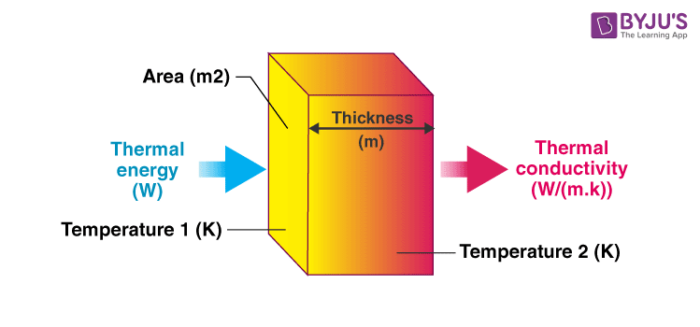
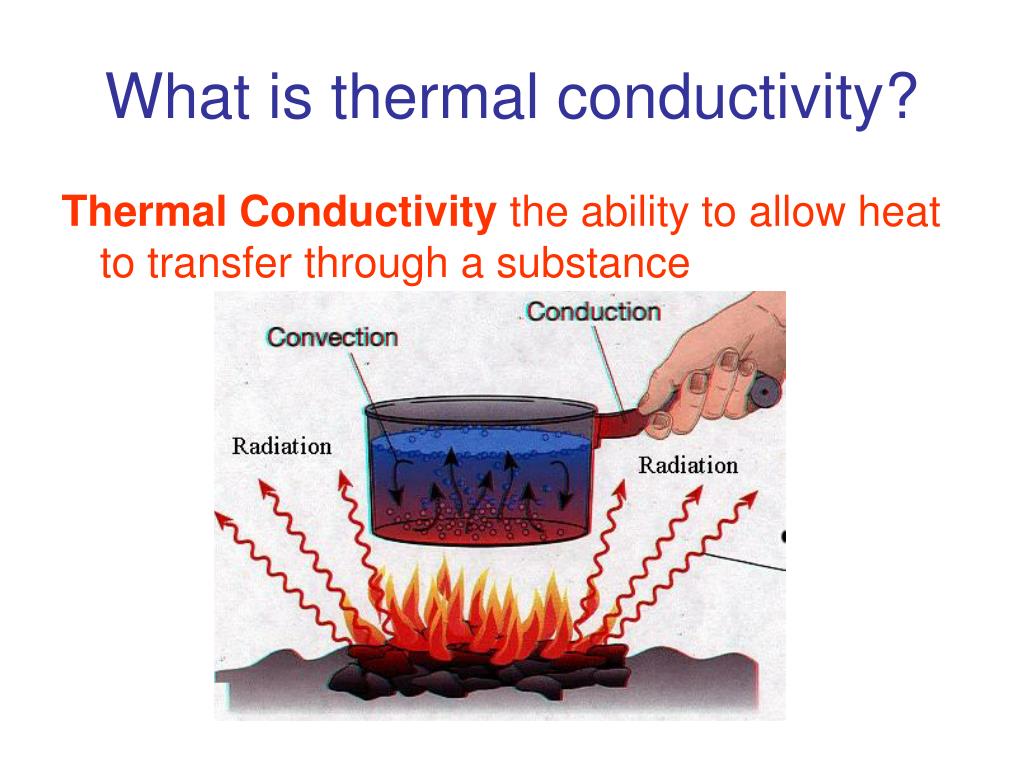
But don't worry, it's actually super simple. Think of it as how well something conducts heat.
Must Read
So, is it a thing? Is it a physical property?
You betcha! Thermal conductivity is definitely a physical property. It's like density or melting point. It's a characteristic of the material itself.
It doesn't change based on how much of the stuff you have. A tiny metal spoon and a huge metal pot? Same thermal conductivity!
It describes how easily heat can flow through a material. Imagine heat as tiny little runners. Some materials are like super smooth tracks, others? More like obstacle courses!
Thermal conductivity is measured in watts per meter-kelvin (W/mK). Don't sweat the units! Just know that higher numbers mean better heat conductors.
Think of it this way: The higher the number, the faster the heat zips through!

The Champions and the Chumps of Heat Transfer
Let's talk about some examples. Get ready to meet some stars and some… less stellar performers!
Diamond is a superstar! Seriously, it's a thermal conductivity champion. That's why it can feel so cold to the touch, even at room temperature. It sucks heat away super fast.
Then there's copper and aluminum. These are your classic metals. Great for pots, pans, and heat sinks in computers.
And what about wood, plastic, and styrofoam? They're more like heat insulators. They resist the flow of heat.
They're like, "Heat? Not today, buddy!" This is why your coffee cup doesn't burn your hand, and why your house stays warm in the winter (hopefully!).
Fun fact: Still air is actually a pretty good insulator! That’s why down jackets are so warm – they trap air around your body.
Why should you care?
Well, knowing about thermal conductivity is surprisingly useful. It's everywhere!
Consider building materials. You want good insulation in your walls to keep your energy bills down. Low thermal conductivity is your friend here.
Think about cookware. A copper-bottomed pan heats up quickly and evenly. High thermal conductivity = happy cooking!
Even in electronics, it's crucial! Computers generate heat, and that heat needs to be removed to prevent them from frying themselves. That's where heat sinks (usually made of aluminum or copper) come in.
See, even the tech wizards are thinking about thermal conductivity!

Quirky Thermal Conductivity Facts
Did you know that the thermal conductivity of some materials changes with temperature?
Yep! Heat 'em up, and their ability to conduct heat can shift. It's not always a huge difference, but it can be important in some applications.
Also, the thermal conductivity of a material can be affected by its purity. Impurities can get in the way of the heat flow.
So, a super pure metal might conduct heat better than a less pure version.
Another funny thing? Water. It's not a great conductor of heat, which is why it takes a while to boil a pot of water (despite what you might think!). But it is better at conducting heat than air!
Think about the last time you stepped in a puddle on a cold day!
So, What's the Big Deal?
Thermal conductivity might sound like a dry, scientific concept. But it's actually a key to understanding the world around you.
It explains why your feet get cold on a tile floor, why your oven mitts work, and why your computer doesn't melt.
It's a fundamental physical property that impacts everything from building design to cooking to technology.
And now, you're armed with the knowledge to impress your friends at your next dinner party! You can casually drop facts about the thermal conductivity of diamond. They'll be amazed. Or maybe they'll just politely nod and change the subject. Either way, you'll know the truth!
Isn't science fun?