Is The Sun Fusion Or Fission

Alright, settle in, grab another coffee (or whatever your beverage of choice is), because we're about to tackle one of those big, cosmic questions that probably only pops into your head when you're staring idly out a window: How does the Sun actually work? Is it like some giant, celestial nuclear power plant, or something else entirely? We're talking about the ultimate cosmic toaster, the giver of tans, the reason we don't all just freeze into a giant ice cube in space.
For ages, smarty-pants scientists debated this. Some thought it was just a giant burning ball of coal – which, let's be honest, would be incredibly inefficient and quite messy. Imagine the soot! Others thought maybe it was some sort of super-charged chemical reaction. But then, as we started peeking into the secrets of the atom, two big contenders emerged from the scientific ring: fusion and fission.
Let's Talk Fission, Baby!
First up, fission. Now, if you've ever heard of nuclear bombs or nuclear power plants, you've heard of fission. It's basically the atomic equivalent of taking a really big, fragile vase and smashing it into smaller pieces. When you break apart heavy, unstable atoms – like uranium or plutonium – they release a truly staggering amount of energy. It’s like magic, but with way more physics and a lot more boom.
Must Read
So, could the Sun be a giant fission reactor? Think about it: massive energy, right? Sounds plausible. But here's where we hit a snag, a rather inconvenient truth for the fission-Sun theory. For fission to work, you need a steady supply of those heavy, fissionable elements. Uranium, plutonium... these aren't exactly common, even in cosmic terms. If the Sun were powered by fission, it would have run out of fuel faster than you can say "solar flare." It'd be like trying to run your car on, I don't know, truffles. Delicious, but not sustainable.
Plus, fission leaves behind a lot of messy, radioactive byproducts. If the Sun were doing fission, it'd be a glowing, toxic waste dump. And while it might give you a nice tan, it probably wouldn't be very good for, well, anything else. The Sun, despite its fiery temper, is actually a remarkably clean operator on a cosmic scale.

Enter Fusion: The Sun's True Power Move
Okay, so if it's not fission, what's left? Drumroll, please... it's fusion! Fusion is fission's cooler, cleaner, infinitely more powerful cousin. Instead of breaking big atoms apart, fusion is all about taking tiny, light atoms and slamming them together with such incredible force that they fuse into a heavier atom. It's like trying to get two magnets to repel each other until you push so hard they just snap together and become one super-magnet. Only, instead of magnets, it's atomic nuclei, and instead of a 'snap,' it's a cosmic explosion of energy.
The star of this show, the Sun's favorite ingredient, is hydrogen. Hydrogen is the most abundant element in the universe. It's everywhere! Imagine if your car ran on air – that's how much fuel the Sun has. Inside the Sun's core, where temperatures hit a mind-boggling 15 million degrees Celsius (that's 27 million Fahrenheit, for those keeping track in freedom units) and the pressure is a gazillion times that of Earth's atmosphere, hydrogen atoms are squeezed and slammed together so violently that they fuse. They usually turn into helium, which is a noble gas and totally non-toxic. Think party balloons, not nuclear waste.

And here's the kicker, the secret sauce, the scientific mic drop: when four hydrogen nuclei fuse to become one helium nucleus, the resulting helium nucleus is actually a tiny, tiny bit lighter than the original four hydrogen nuclei combined. Where did that missing mass go? Ah, my friends, it didn't disappear! It was converted directly into pure energy. This is where Einstein's famous equation, E=mc², struts onto the stage. Even a minuscule amount of mass, when multiplied by the speed of light squared, turns into an absolutely colossal amount of energy. This is why the Sun shines!
The Sun: A Giant, Gassy, Fusion Reactor
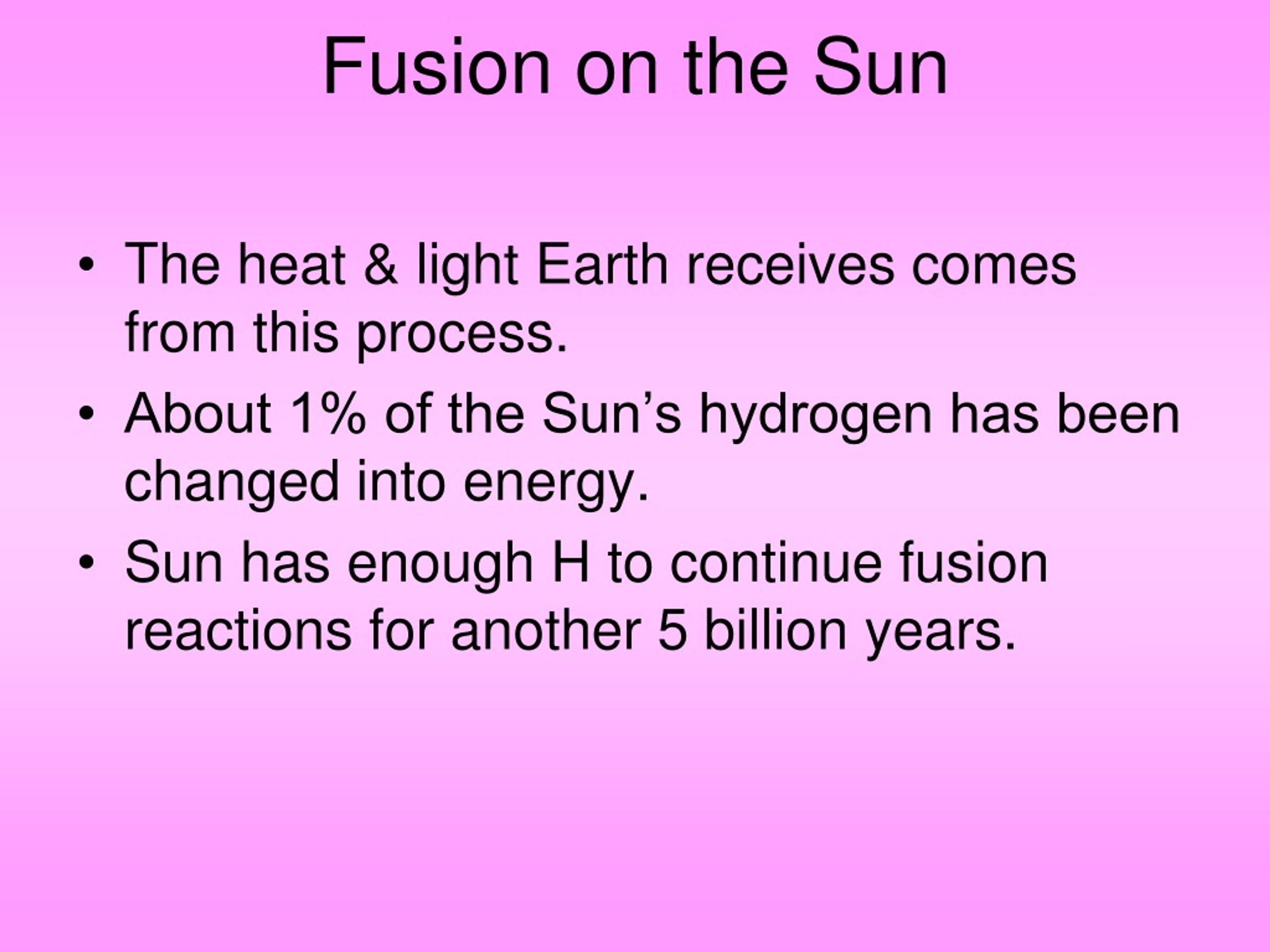
So, the Sun is essentially a giant, self-sustaining hydrogen bomb, but a very, very slow-motion and incredibly well-behaved one. It's been doing this for about 4.6 billion years, and it's got enough hydrogen left to keep going for another 5 billion years. That's a lot of sunshine left in the tank!

Every second, the Sun converts about 600 million tons of hydrogen into helium. And in that process, about 4 million tons of matter are converted directly into energy. That's like taking 4 million African elephants and turning them into pure light and heat every single second. Mind-boggling, right?
We humans, we're still trying to figure out how to harness fusion power here on Earth. It's incredibly difficult because we don't have the Sun's monstrous gravity to help us squeeze atoms together. We have to use super-powerful magnetic fields and lasers to create those extreme conditions for mere milliseconds. But the Sun? It's been running its fusion masterpiece perfectly for billions of years, just chilling out, providing us with light, warmth, and the occasional glorious sunset.
So, the next time you feel the warmth of the Sun on your face, remember: you're not basking in the glow of a messy, unsustainable fission reactor. You're feeling the clean, efficient, and utterly spectacular power of stellar fusion. It's the universe's ultimate power source, and our very own star is a master at it. Now, about that second coffee...