
Is Mg An Alkaline Earth Metal
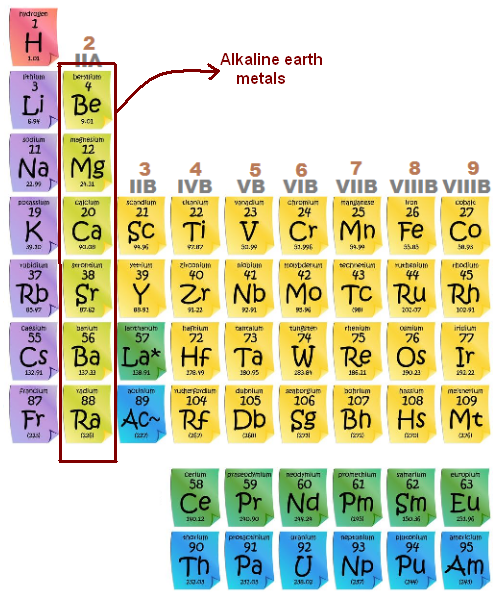
Hey there, coffee buddy! Grab a mug, because we're about to dive into one of those burning questions that, let's be honest, probably only burns brightest in my brain at 3 AM. Today's mystery? Is our buddy Magnesium – the 'Mg' you see chilling on the periodic table – actually an Alkaline Earth Metal? Intriguing, right? Or maybe just mildly interesting. Either way, let's chat!
What's an Alkaline Earth Metal Anyway?
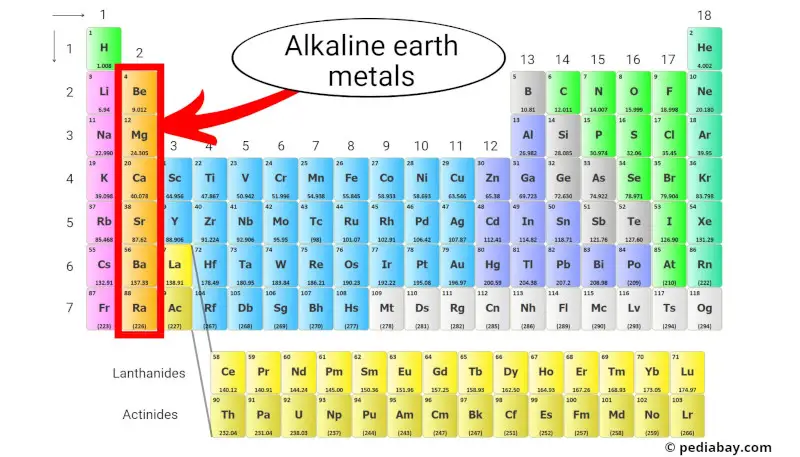
Okay, so before we put Mg under the microscope, we probably need a quick refresher. What even is an alkaline earth metal? Picture this: you're looking at the periodic table (you know, that giant, beautiful spreadsheet of everything, probably gathering dust since high school). The alkaline earth metals are chilling in Group 2, just to the right of the super-duper reactive alkali metals (Group 1, like sodium – hello, explosion!).
Must Read
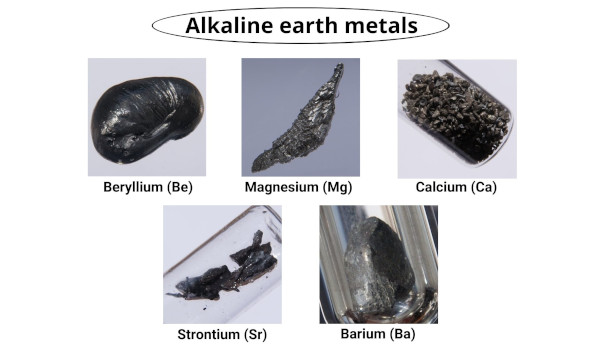
Think of them as the slightly more laid-back cousins of the alkali metals, but still pretty feisty in their own right. They've got two valence electrons they're just itching to get rid of. Why? Because getting rid of those two makes them super stable, like finally getting to relax after a long week. This desire to shed electrons makes them quite reactive, forming cool compounds, and generally being rather... well, metallic. They're typically shiny, silvery-white, and ready to party (chemically speaking, of course!).
Enter Magnesium! Our Star Player.
So, where does our friend Magnesium fit into this whole shindig? Well, take another peek at that periodic table. Mg, atomic number 12, is sitting pretty right there in... you guessed it! Group 2. See? The plot thickens, or perhaps, it unthins quite rapidly. It's got that classic silvery-white sheen, and if you've ever seen magnesium ribbon burn (safely, of course, with a responsible adult and proper eye protection!), you know it puts on a spectacular, blindingly bright show.
Talk about being flashy! It's like the show-off of the metal world, but in a good, useful way. It’s light, it’s relatively strong, and it loves to mingle, chemically speaking. It's not one to sit quietly in the corner, that's for sure. From old-school flash photography to modern aircraft components, Magnesium gets around!

The Big Reveal: Is Mg An Alkaline Earth Metal?
So, the moment of truth! Drumroll please... Is Mg an Alkaline Earth Metal? A resounding, enthusiastic, 'YES, absolutely!' It checks all the boxes, folks. It's like finding Waldo, but Waldo is clearly wearing a striped shirt and hat right where he's supposed to be. No tricks here!
Magnesium embodies all the key characteristics of its Group 2 brethren. It readily forms a +2 ion, it's a reactive metal (though not as explosively reactive as sodium, thankfully!), and it's got that classic metallic luster. So, if you ever doubted its membership in the exclusive alkaline earth metal club, you can now rest easy. It's a full-fledged, card-carrying member, no questions asked.
Why It Matters (Beyond Trivia Points!)
But why should we care, beyond scoring some trivia points at your next impromptu science quiz? Well, Magnesium is kind of a big deal! It's super important for us humans, for starters. Ever taken a magnesium supplement for muscle cramps or better sleep? Yep, that's our guy! It's involved in over 300 biochemical reactions in your body, from nerve function to bone health. Pretty neat, huh?
It's also vital for plants, forming the central atom in chlorophyll – you know, the stuff that makes plants green and lets them turn sunlight into snacks. Without magnesium, plants can't photosynthesize, and then... well, no snacks for anyone! Plus, remember those bright fireworks we mentioned earlier? Often magnesium is a key ingredient, giving us those stunning white flashes that light up the night sky. So, it's not just a dusty element on a chart; it's a vital, flashy, health-boosting, light-show-producing rockstar!
And chemically speaking, it fits right in because, like its Group 2 buddies (think calcium, strontium, barium), it's got those two outer electrons just itching to react. That's why it readily forms ions with a +2 charge. It's always looking to share, or rather, donate, its electrons to achieve a stable electron configuration. A real team player, you might say, always looking for stability – a lesson for us all, perhaps? Ha!

Wrapping It Up!
So there you have it, folks! The mystery is solved, the coffee is probably getting cold, and you can now confidently tell anyone who asks (or doesn't ask, let's be real) that Magnesium is indeed an Alkaline Earth Metal. A true member of the shiny, reactive, two-valence-electron club, making the world a brighter, healthier, and more chemically fascinating place.
Thanks for joining me on this little chemical adventure! Now, about that second cup... maybe we can ponder the reactivity of potassium next time? Just kidding! (Mostly.)