
Is Kilowatt A Unit Of Energy
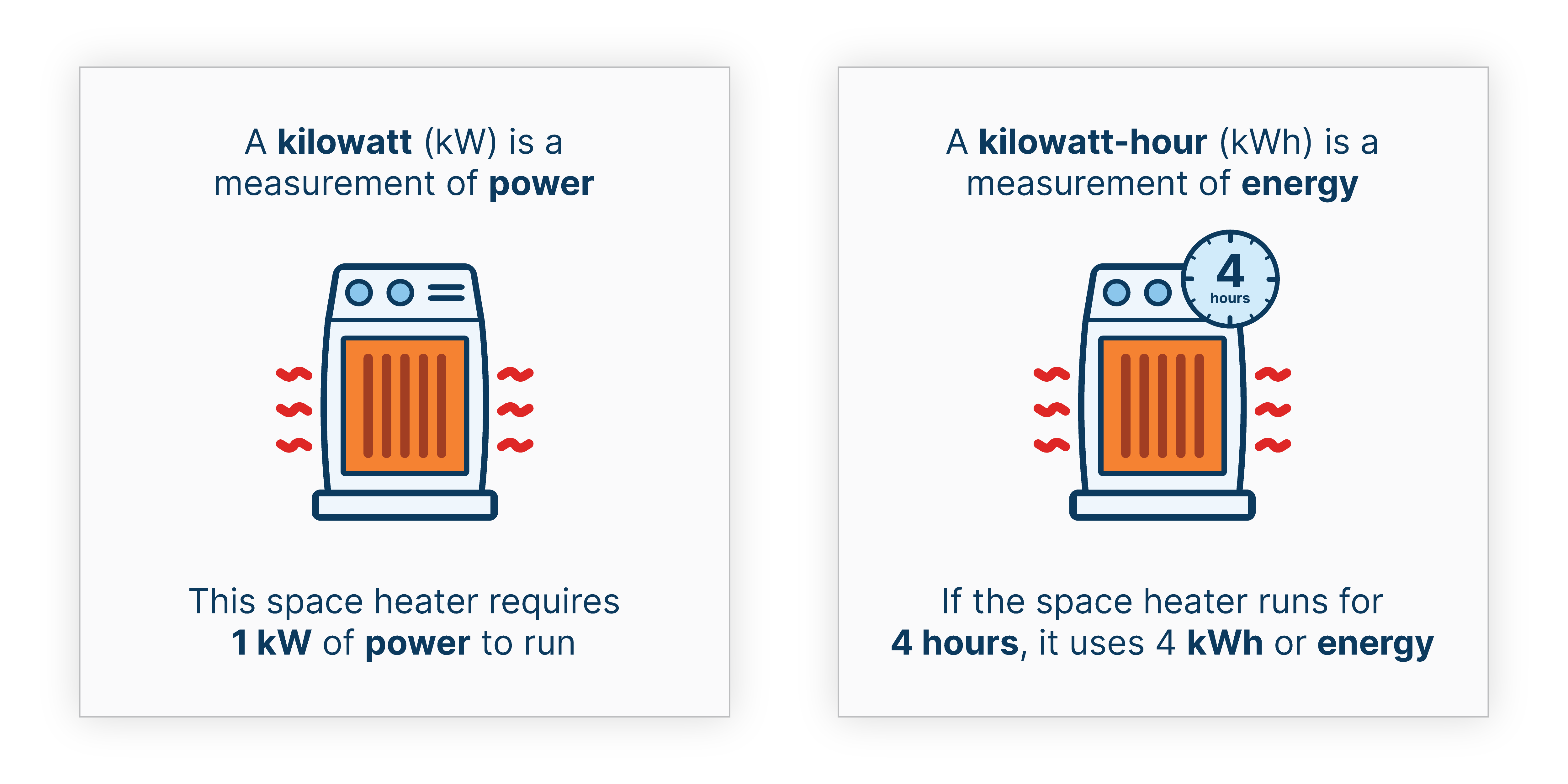
Hey there, curious mind! Ever found yourself staring at an appliance, seeing "kilowatt" (or "kW") and scratching your head, wondering if it's just another fancy word for energy? You're definitely not alone. It's one of those things that sounds super scientific but actually has a pretty simple, and dare I say, fun explanation. So, let's grab a virtual coffee and unravel this little mystery together, shall we?
So, Is Kilowatt a Unit of Energy?
Alright, let's get straight to it. The short, sweet, and slightly surprising answer is: no, not directly!
"Wait, what?!" I hear you exclaim. "My kettle says 2000W, isn't that how much energy it uses?" Well, yes and no. And that "no" part is actually super interesting once you get your head around it.
Must Read
Kilowatt (kW) is actually a unit of
Think of it this way: power is about how fast energy is being used or produced. It’s like the speed limit of energy. Energy, on the other hand, is the total amount of work done or the total fuel available.
Power vs. Energy: The Fun Analogies!
The Car Analogy:
Imagine you're driving a car.

- Your car's engine power (often measured in horsepower, but let's pretend it's kilowatts for a moment) tells you how quickly it can accelerate or maintain speed. A high-power engine can go fast. That's your kilowatt (kW).
- The amount of fuel in your tank, and how far you've actually driven, is your energy. A big tank means more total fuel, letting you travel a greater distance.
See? You can have a super powerful car (high kW), but if you only drive it for five minutes, you haven't used a huge amount of fuel (energy). Conversely, a less powerful car driving for hours and hours will use a lot of fuel!
The Water Hose Analogy:
Let's try another one. Think about a garden hose filling a bucket.
- The flow rate of water coming out of the hose (how many liters per second it gushes out) is like power (kW). A wider hose with strong pressure has a high flow rate.
- The total amount of water in the bucket after you've filled it up is like energy. You can have a super powerful hose, but if you only turn it on for a second, you won't have much water in the bucket.
Pretty neat, right? Kilowatt tells you how much oomph something has at any given moment.
So, What Is a Unit of Energy Then?
If kilowatt is power, what do we use to measure the actual energy?

The standard unit of energy is the Joule (J). But in the world of electricity, especially on your power bill, you'll see something a bit different, and it brings kilowatts back into the picture in a very important way!
Introducing the kilowatt-hour (kWh).
A kilowatt-hour is literally what it sounds like: a kilowatt of power used for one hour. It's the "power" multiplied by "time."
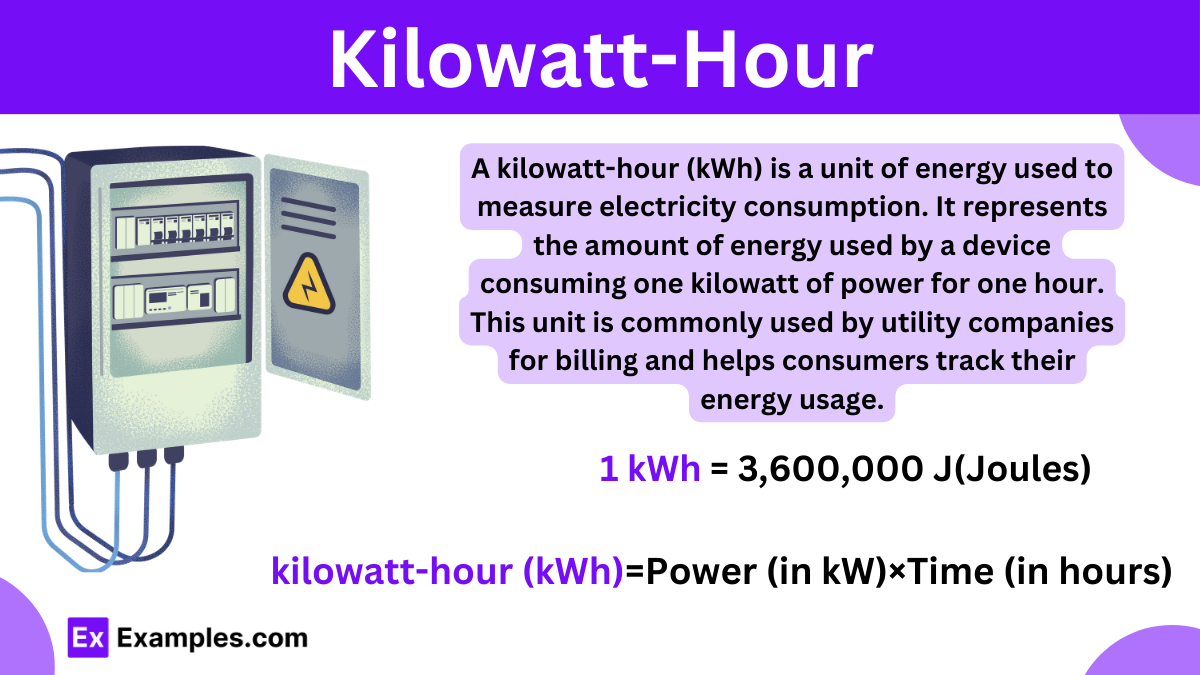
Power × Time = Energy
This is why your electricity bill doesn't charge you for "kilowatts." It charges you for "kilowatt-hours." That's the total energy you've consumed!
- Your 2000W (2kW) kettle running for 15 minutes (0.25 hours) uses 2 kW * 0.25 h = 0.5 kWh of energy.
- A 100W (0.1kW) light bulb left on for 10 hours uses 0.1 kW * 10 h = 1 kWh of energy.
See how the amount of power (kW) and the duration (hours) both determine the total energy (kWh)?
Why Does This Matter? (Beyond Bragging Rights at Parties)
Understanding the difference between kilowatt (power) and kilowatt-hour (energy) isn't just a fun fact; it's super practical!

It helps you:
- Read your electricity bill: Now you know what those mysterious "kWh" charges actually mean. You're paying for the amount of energy used, not just how quickly it was drawn.
- Understand appliances: A high-kW appliance (like a hair dryer or kettle) uses energy very quickly. If you use it for a short burst, it might consume less total energy than a low-kW appliance (like a fridge) that runs all day long.
- Be more energy-conscious: Knowing this helps you make smarter choices. If you want to save energy, you can either choose less powerful appliances, or simply use your powerful appliances for shorter durations.
Wrapping It Up: The Cool Takeaway
So, while kilowatt itself isn't a unit of energy, it's absolutely crucial for understanding energy. It tells us about the rate at which energy is being transferred or used. It's the engine's horsepower, the water hose's flow, the runner's speed.
The next time you see "kW" on an appliance, you can confidently say, "Ah, that's its power rating – how quickly it does its thing!" And when you see "kWh" on your electricity bill, you'll know exactly what you're paying for: the total amount of energy that kept your lights on and your coffee hot.
Isn't science cool when you break it down? Stay curious!