Is Flux Core The Same As Mig
Ever found yourself looking at welding machines, maybe dreaming of building something cool in your garage, and then getting totally swamped by the jargon? You might hear terms like "MIG" and "Flux Core" thrown around, often in the same breath. It’s enough to make you scratch your head and wonder: are they actually the same thing, just with different names?
Well, friend, you're not alone! It's a super common question, and one that often leads to a bit of confusion. Let's peel back the layers and get curious about these two popular welding buddies. Think of this as a casual chat, not a stuffy lecture!
So, Is Flux Core Just a Type of MIG?
Alright, let’s get right to the heart of it. The simple answer is: not quite. While they look similar from the outside – both use a continuously fed wire electrode – they operate on a fundamental difference that sets them apart. Think of them like two different types of sandwiches: both delicious, both involve bread and fillings, but definitely not the same experience, right?
Must Read
Most folks, when they say "MIG welding," are usually talking about a process technically called Gas Metal Arc Welding (GMAW). This is your classic, go-to wire-feed welding with an external shielding gas. Imagine a superhero with a trusty sidekick providing a protective force field – that's the shielding gas in traditional MIG. It keeps the molten weld pool safe from sneaky atmospheric contaminants like oxygen and nitrogen, which would otherwise weaken your weld and make it look ugly.
So, when you see a MIG welder, you’ll typically spot a big tank of gas (often an argon/CO2 mix) hooked up to it. That gas is crucial for the traditional MIG process. It's like the quiet, unsung hero behind a beautifully smooth, clean weld.
Enter Flux Core: The Rebel Cousin
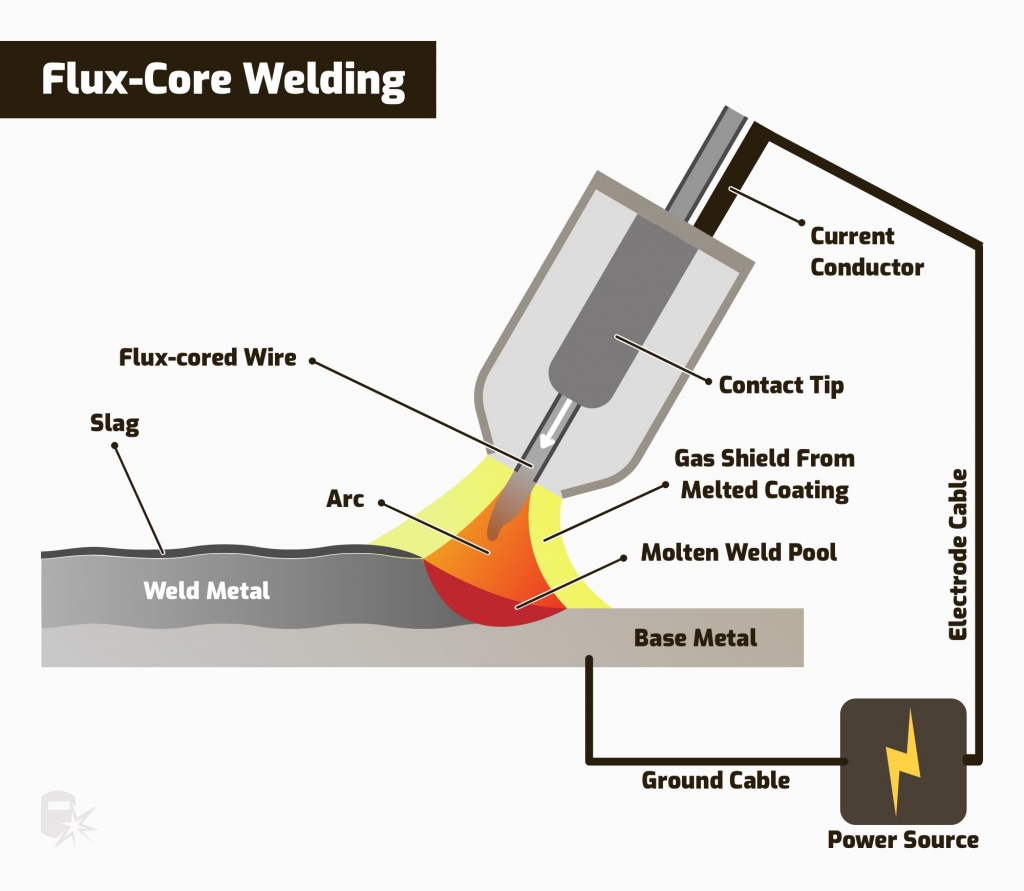
Now, let's talk about Flux Cored Arc Welding (FCAW), or as we affectionately call it, Flux Core. This is where things get interesting! Flux Core also uses a continuously fed wire, just like MIG. But here’s the kicker: it usually doesn't need an external gas tank. Mind blown, right?
How does it pull off this magic trick? Instead of an external gas shield, the secret sauce is hidden inside the wire itself. The wire is tubular, and packed within that tube is a special flux material. When this flux heats up during welding, it melts and creates its own protective gas shield, along with a layer of slag (which is easily chipped away later). It’s like a self-sufficient, little welding marvel!
Think of it this way: if traditional MIG is a chef who carefully prepares each dish in a controlled kitchen, Flux Core is more like a rugged grill master who can cook up a storm pretty much anywhere, rain or shine, even with a bit of wind trying to mess things up.

The Nitty-Gritty Differences: Why Does It Matter?
Okay, so they both use wire, but one needs a gas bottle and the other doesn’t. Why should you care? Well, these differences lead to some pretty significant pros and cons for each method, making them ideal for different situations.
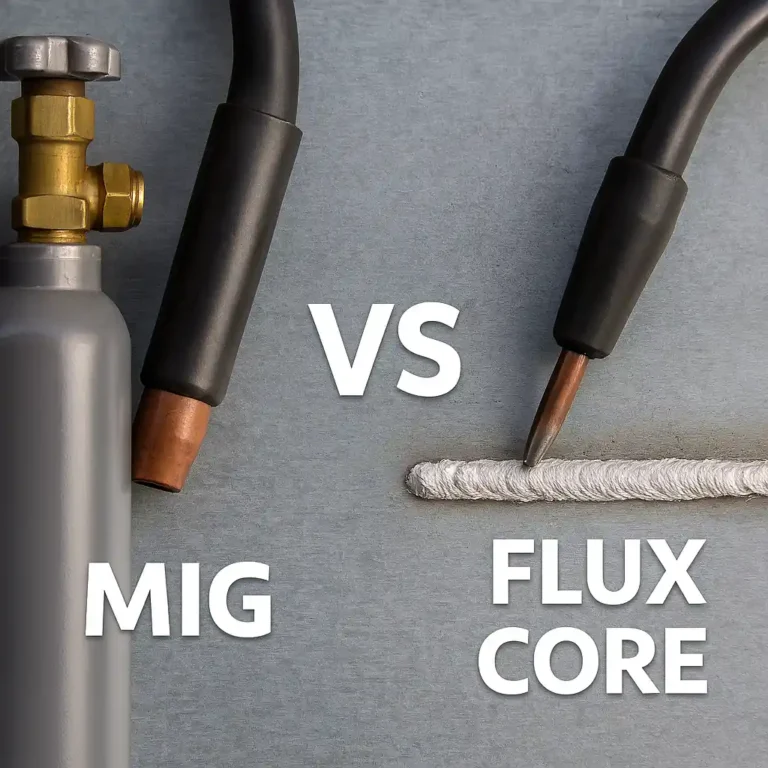
- Shielding Method: This is the big one! MIG = external gas bottle. Flux Core = flux inside the wire.
- Portability: Guess which one is easier to lug around without a bulky gas tank? Yup, Flux Core wins here. It's often the go-to for field work or quick repairs where you don't want to drag a tank.
- Outdoor Welding: Wind is the arch-nemesis of traditional MIG. It can blow away that precious shielding gas, leading to porous, weak welds. Flux Core, with its self-generated shield (and often a more robust slag layer), is much more forgiving in windy conditions. Perfect for outdoor projects!
- Cleanliness & Prep: Traditional MIG generally produces cleaner welds with less spatter and slag, often requiring less post-weld cleanup. It also likes clean metal. Flux Core can be a bit messier, producing more spatter and always leaving a slag layer to chip off. However, Flux Core is often more tolerant of rusty or dirty metal, making it a hero for quick repairs on less-than-perfect surfaces.
- Penetration: Generally speaking, Flux Core often provides deeper penetration into the base metal, which can be great for thicker materials or structural applications where strength is paramount.
- Appearance: MIG welds are typically smoother and aesthetically pleasing, especially for visible joints. Flux Core welds can be a bit rougher in appearance due to the slag, but don't let looks fool you – they can be incredibly strong!
Are They Related? Absolutely!
Despite their differences, it’s important to remember that both MIG and Flux Core welding are part of the broader family of wire-feed welding processes. This means they share some core characteristics: an electric arc melts a continuously fed wire, joining two pieces of metal. So, if you learn one, many of the core machine operations and hand movements will feel familiar when you try the other. Think of them as close cousins who grew up in the same house but ended up with very different careers!
The Takeaway: Different Tools for Different Jobs
So, no, Flux Core is not the same as MIG. They are distinct processes, each with its own superpowers and quirks. Traditional MIG (GMAW) is fantastic for clean, precise work, often on thinner metals, where aesthetics and minimal cleanup are priorities. Flux Core (FCAW) shines in situations where portability, outdoor capability, working with less-than-perfect metal, and strong penetration are key.
Understanding the difference isn't just about knowing jargon; it’s about empowering yourself to choose the right tool for your specific project. Whether you’re fixing a fence post out in the yard, building a fancy metal sculpture, or just tackling a rusty trailer hitch, knowing whether to grab your gas-shielded MIG or your self-shielded Flux Core machine will make all the difference.
And that, my friend, is pretty cool, isn't it?