
Is Electrical Engineering Harder Than Mechanical

Ever sat around with your engineering pals and wondered, really truly wondered, which field demands more brain power? Is it the solid, tangible world of gears and grease? Or the zippy, invisible realm of current and circuits? We're talking about the age-old, totally unofficial, and utterly fun debate: Is Electrical Engineering harder than Mechanical Engineering?
Let's be real. Both are tough cookies. They're like choosing between running a marathon barefoot or juggling flaming chainsaws. Both will make you sweat. Both require intense dedication. And both will probably make you question your life choices at 3 AM during finals week. But where's the fun in just saying "they're both hard"? We need to dig a little deeper, with a twinkle in our eye and a playful jab ready!
The Great Engineering Showdown!
Picture this: you're at a party. Someone mentions they're an engineer. Immediately, the silent judging begins. "Oh, a mechanical engineer? So you build… engines?" Or "Electrical? So you fix… lightbulbs?" It’s all in good fun, of course. But deep down, every engineer believes their discipline is the true king (or queen) of the academic mountain.
Must Read
Let's break down the contenders, shall we? Grab your theoretical popcorn!
Mechanical: The Tangible Titans
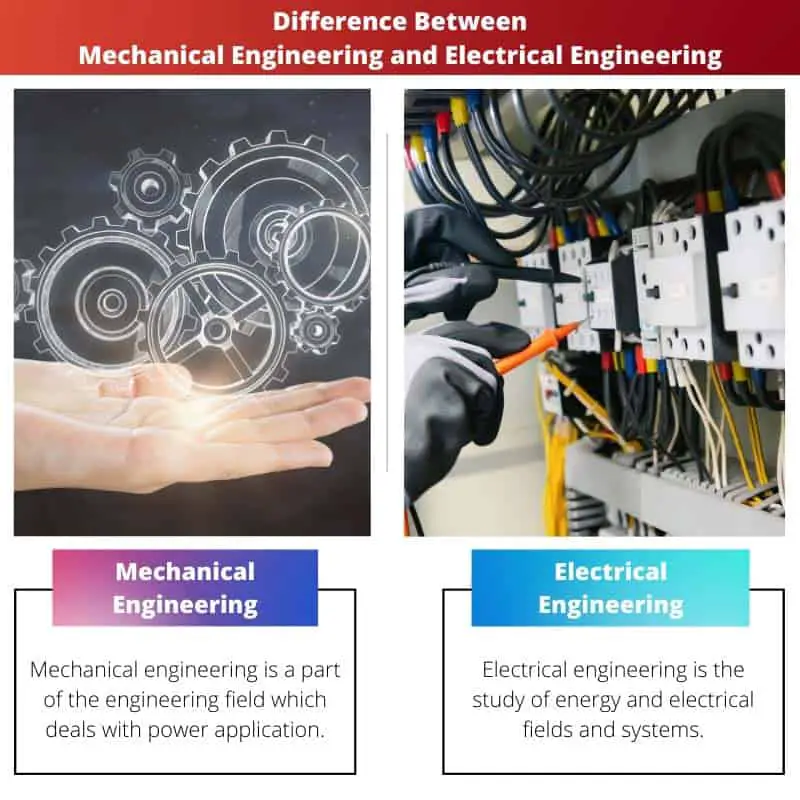
Ah, Mechanical Engineering. It's the granddaddy of engineering, in many ways. You can see it. You can touch it. You can even, sometimes, kick it (not recommended for actual machines, obviously). Think about it: massive bridges, roaring jet engines, sleek sports cars, even your trusty coffee maker. These are the mechanical marvels that shape our physical world.

ME often feels more intuitive. Gravity pulls things down. Friction slows things. Forces push and pull. You learn about stresses, strains, thermodynamics – how heat moves, how things break (and how to stop them from breaking). It's all about motion, energy, and the physical properties of materials. You literally design things that move.
There's a beautiful, elegant logic to it. You build models, you test prototypes, you iterate. It's like playing with super-advanced LEGOs, but your pieces are made of steel and your instructions are differential equations. One quirky fact? Mechanical engineers are behind those incredible Rube Goldberg machines – intricate contraptions designed to perform a simple task in an overly complicated, chain-reaction fashion. Pure mechanical genius!
Electrical: The Invisible Wizards
Now, let's talk about Electrical Engineering. This is where things get a bit more... mystical. Where do you even begin with something you can't see? Electrons. Current. Voltage. These are like tiny, super-fast ninjas zipping around wires, making your phone work, your computer hum, and your entire digital life exist. EE deals with the fundamental forces that power everything modern.
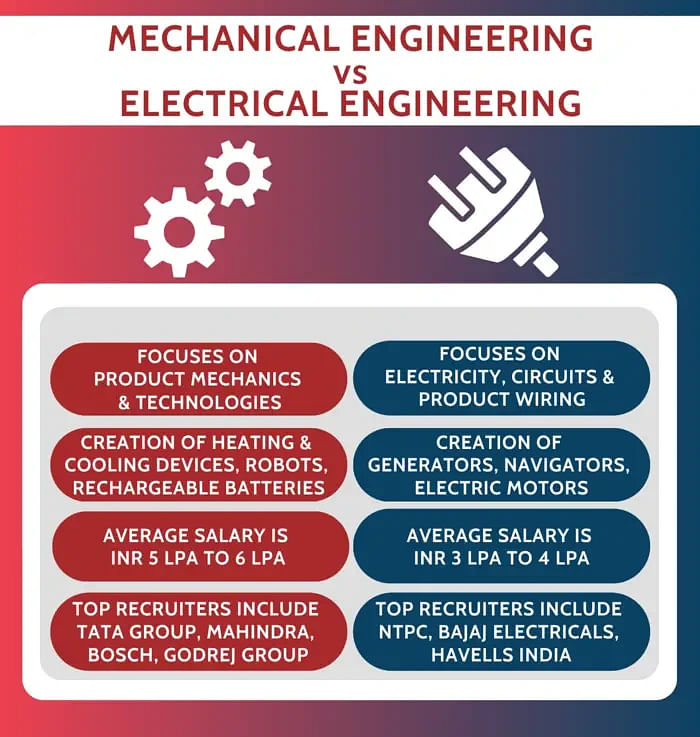
The concepts can feel very abstract. You're dealing with electromagnetic fields, quantum mechanics (sometimes!), signals, waves, and circuits so tiny you need a microscope to even appreciate their complexity. It’s less about brute force and more about elegant control, precise timing, and the magical dance of invisible particles. Making a light blink on a circuit board feels like a tiny act of sorcery.
EE students often joke that if you see smoke come out of your circuit, you've just released the "magic smoke" that makes it work. Once it's gone, it's gone! This field demands a different kind of spatial reasoning, a mental agility to visualize the unseen. From massive power grids to the microchips inside your smartwatch, electrical engineers are the true architects of our connected world.
When Worlds Collide: The Mechatronics Mash-up
Here's the funny part: in today's world, the lines are blurring faster than a runaway electron. Enter Mechatronics! This glorious love child of Mechanical and Electrical Engineering is what makes everything cool happen. Robots? Drones? Self-driving cars? They need both the physical structure and movement (ME) AND the brains, sensors, and control systems (EE).
A mechanical engineer might design the robotic arm, but an electrical engineer makes it move with precision, sees with cameras, and feels with sensors. They're two sides of the same coin, constantly collaborating, borrowing ideas, and probably still playfully bickering over coffee.
So, Who Wins? (Spoiler: Everyone!)
The truth? There's no objective answer. The "hardness" is entirely subjective. It boils down to how your brain is wired. Some people thrive on the tangible, macroscopic world of forces and materials. They love seeing their designs come to life, feeling the weight of their creations. For them, ME might feel "easier" because it clicks intuitively.

Others revel in the abstract, the microscopic, the unseen flow of information and energy. They love solving puzzles with invisible components, making complex systems communicate. For them, EE might feel like a natural fit. It’s about different ways of thinking, different problem-solving muscles getting a workout.
Why This Banter is Just So Fun
This friendly rivalry is fantastic because it highlights the incredible diversity within engineering. It shows that there isn't one "right" path to innovation. Both fields are profoundly challenging, incredibly rewarding, and absolutely essential to our modern existence. Without either, our world would grind to a halt (or never have started moving in the first place).
So, the next time someone asks, "Which is harder?", just smile. Tell them it's like asking if a rocket scientist or a brain surgeon has a tougher job. They're both doing mind-blowing, world-changing things. And that, my friend, is something truly awesome to celebrate!