Is Ductility A Physical Or Chemical Property

Ever tried stretching a rubber band too far? Or maybe you've watched a blacksmith shape a glowing piece of metal? You've encountered the concept of ductility, even if you didn't know the fancy name for it. But is ductility a physical or chemical property? Let's unravel this with a dash of everyday fun.
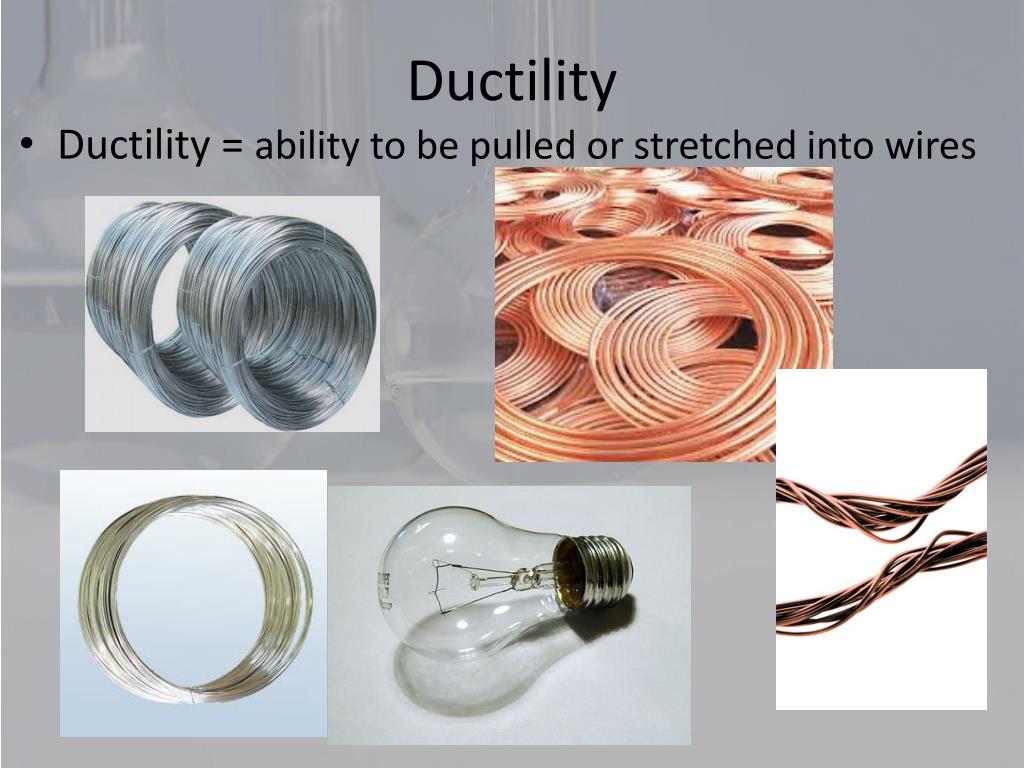
To understand if it's physical or chemical, let's first define what ductility actually is. In simple terms, ductility is a material's ability to be stretched into a wire. Think of copper wires snaking through your walls, delivering electricity. That's ductility in action!
So, Physical or Chemical?
Here's the juicy bit. Ductility is a physical property. Why? Because when a ductile material is stretched into a wire, its chemical composition doesn't change. Copper is still copper, gold is still gold. We're just changing its shape, not its essence.
Must Read
Think of it like Play-Doh. You can roll it into a long, thin snake, or squash it into a pancake. Is it still Play-Doh? Absolutely! You've just altered its form, its physical appearance, but the actual recipe of Play-Doh remains the same. Same goes for metals when we talk about ductility.
Now, let's contrast this with a chemical property. Chemical properties describe how a substance reacts with other substances. For instance, flammability (how easily something burns) is a chemical property. When wood burns, it transforms into ash, smoke, and gases – completely different substances! That's a chemical change.

Ductility doesn't involve any such transformation. It's all about reshaping what already exists.
Why Should You Care About Ductility?
Okay, so it's a physical property. Big deal, right? Actually, it is a big deal! Ductility impacts our lives in countless ways. Here are a few reasons why it's worth a little thought:
- Electrical Wiring: As mentioned before, copper's ductility is essential for making wires that power our homes and devices. Without ductile metals, we'd be stuck with bulky, inefficient electrical systems (imagine a world without smartphones... shudder!).
- Construction: Steel, often used in construction, possesses ductility, allowing it to bend and deform under stress rather than snapping. This is crucial for earthquake resistance in buildings and bridges. It gives structures a chance to flex and survive, rather than crumble.
- Jewelry Making: Gold and silver, known for their beauty, are also incredibly ductile. This allows jewelers to create intricate designs and delicate settings for precious stones. Imagine trying to make a beautiful ring out of something brittle – it just wouldn't work!
- Manufacturing: Ductility plays a vital role in forming metal components for cars, airplanes, and countless other products. It allows manufacturers to shape metal into complex shapes without it breaking.
In short, ductility enables us to create things that are both strong and flexible, essential for modern life.

Ductility: A Little Story
Imagine a blacksmith, let's call him Bob, working in his forge. He heats a piece of iron until it glows red-hot. This heat doesn't change the iron chemically (it’s still iron), but it makes it softer and more ductile. Bob can then hammer and shape the iron into a horseshoe. He's not turning iron into something else, he's just changing its form, leveraging its physical property of ductility. Without ductility, Bob's work would be impossible; the iron would simply shatter under his hammer.
Examples of Ductile and Non-Ductile Materials
To drive the point home, let's compare some materials:
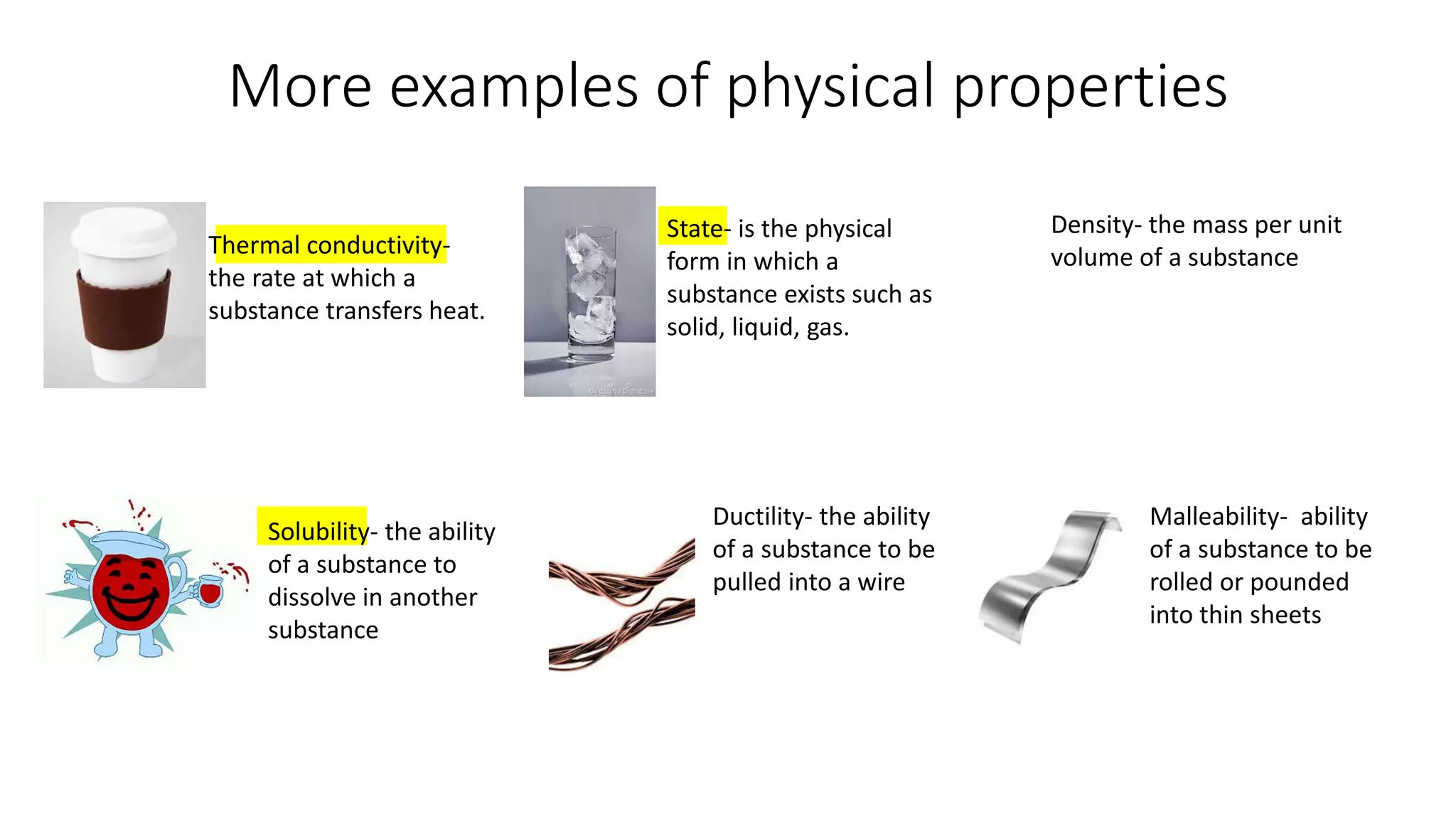
- Ductile Materials: Gold, silver, copper, aluminum, steel (some alloys). These can be drawn into wires relatively easily.
- Non-Ductile (Brittle) Materials: Glass, concrete, ceramic. Try bending glass... you'll get shards, not a stretched wire!
Think of bending a paperclip (ductile – it bends) versus snapping a dry twig (brittle – it breaks). That's the difference!
Wrapping It Up
So, there you have it! Ductility is definitely a physical property – a material's ability to be stretched into a wire without changing its chemical makeup. It's a property that underpins much of our modern world, from the electricity flowing through our homes to the cars we drive. Next time you see a wire or a piece of shaped metal, take a moment to appreciate the amazing property of ductility!
Hopefully, this little exploration has made the world of physical and chemical properties a bit more accessible and a lot more fun. Keep exploring, keep questioning, and keep appreciating the amazing science all around us!