
Is Copper Solid Liquid Or Gas

Ever paused to think about the stuff that makes up our world? Like, really, really think about it? It’s pretty wild when you get down to the nitty-gritty. Today, let’s chat about a superstar metal that's probably in your pocket, under your house, or even helping you cook dinner right now: copper.
You see it everywhere, right? Those shiny pennies (if you still have any!), the pipes under your sink, the elegant pots and pans in your kitchen, and, oh, so many wires making our gadgets buzz. But here’s a fun brain-tickler: is copper a solid, a liquid, or a gas?
Chances are, your first thought was, "Well, duh, it's a solid!" And you’d be absolutely right for 99.9% of your daily interactions. Let's dive into why.
Must Read
Copper: The Reliable Solid Friend
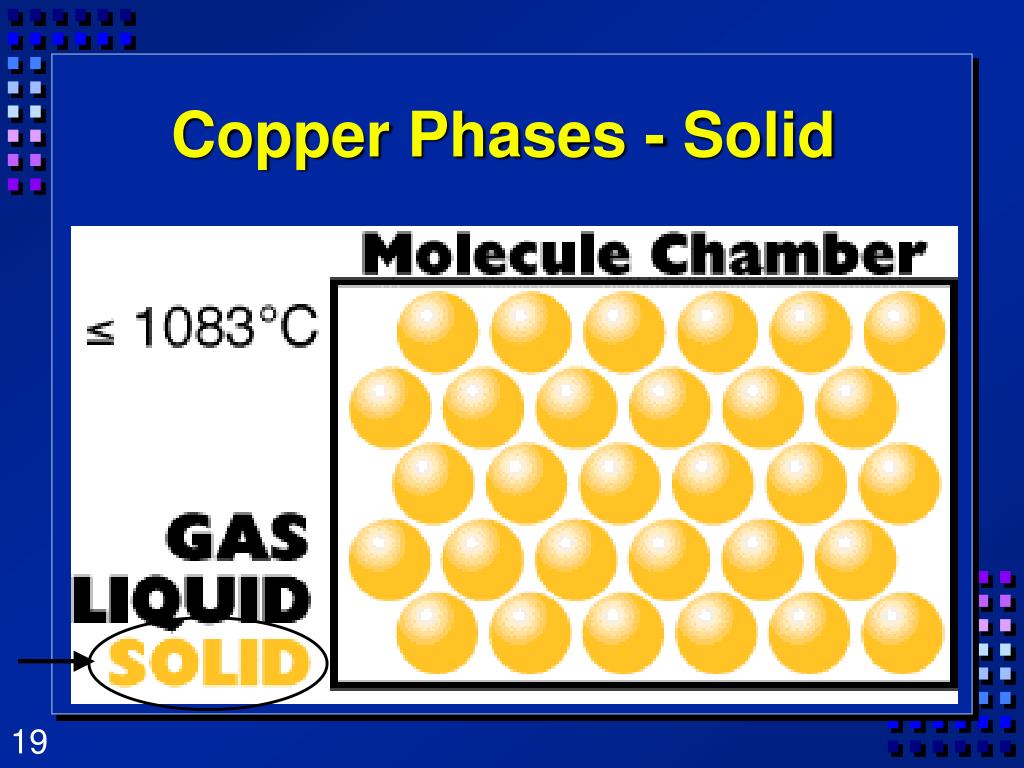
Think about a solid. What comes to mind? A sturdy rock, your favorite mug, or maybe even your smartphone. Solids have a definite shape and volume. Their tiny particles – the atoms – are like a perfectly choreographed dance troupe, holding hands tightly and vibrating in fixed positions. They don't just wander off; they stay put, giving the solid its structure.
That's our copper! At the temperature we usually live in (what scientists call "room temperature"), copper is a fantastic solid. It’s strong, it holds its shape, and it’s super useful. Imagine trying to make a house out of liquid copper pipes – that would be a very messy construction site! Or plugging your phone into a gaseous copper charger? Nope, doesn't quite work.
This reliable, solid nature is precisely why we depend on copper so much. It’s in our electrical wiring, letting electrons zip along happily to power our lights and screens. It’s in our plumbing, carrying water without leaking. It's in those beautiful decorative pieces, standing tall and proud. Copper, in its solid state, is truly the unsung hero of our modern world, just quietly doing its job.
But Wait, Can Copper Be a Liquid?
Okay, so copper is a solid. Usually. But here’s where things get interesting. Remember how we said those little copper atoms are holding hands tightly? What happens if you introduce a whole lot of energy, say, in the form of extreme heat?
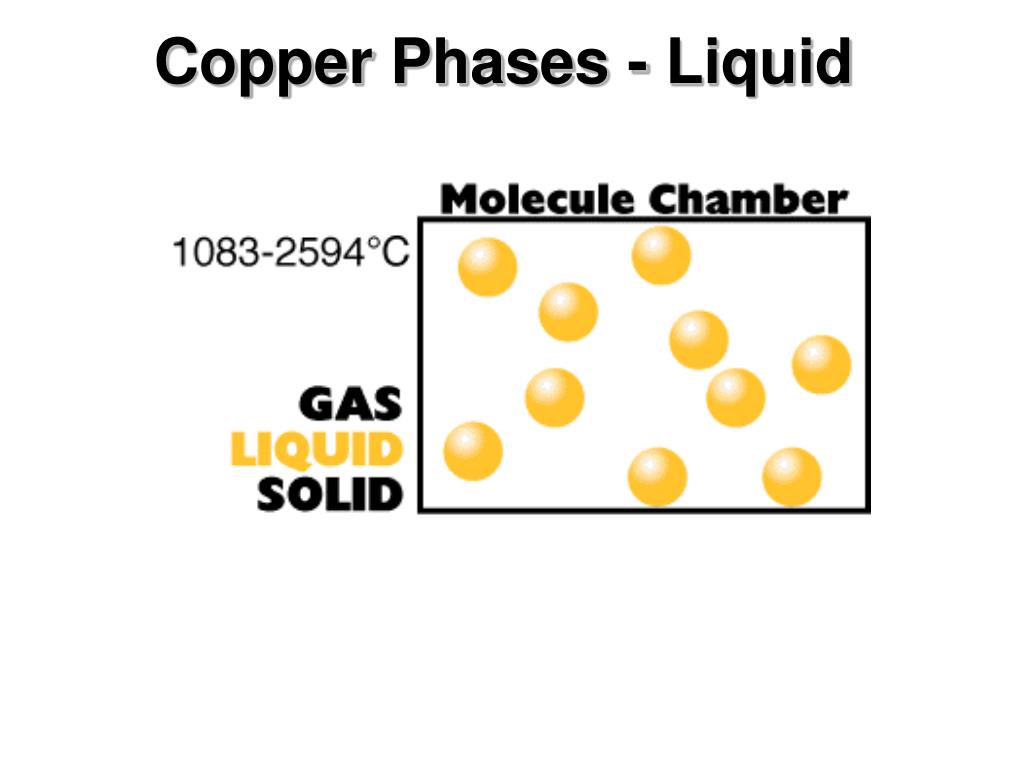
Those atomic dance partners start getting really energetic. They vibrate faster and faster, until eventually, they just can’t hold on anymore! Their grip loosens, and they start sliding past each other. When that happens, our solid copper transforms into a liquid.
Think about an ice cube. It's a solid, right? But put it in the sun, and it becomes a puddle of water. Copper does the same thing, just at a much, much higher temperature! We’re talking about a scorching 1,984 degrees Fahrenheit (or 1,085 degrees Celsius). That's hotter than your oven could ever dream of getting!
+Liquids+Gas+Brass:+copper+and+tin.jpg)
At these incredible temperatures, solid copper melts into a beautiful, glowing, fiery-orange river of liquid metal. It’s a sight to behold, often seen in foundries where skilled craftspeople work with molten metals. So, yes, copper absolutely can be a liquid!
And What About a Gas? Can Copper Just... Evaporate?
Now, this is where it gets really wild and moves far beyond our everyday experience. If you take that liquid copper and crank up the heat even more, those atoms that were sliding past each other start getting so much energy that they completely break free from one another. They fly off in all directions, becoming an invisible cloud.
This is when copper turns into a gas. Just like boiling water turns into steam, liquid copper can turn into gaseous copper vapor. But, boy, does it take a lot of heat! We're talking about an insane 4,644 degrees Fahrenheit (or 2,562 degrees Celsius). That’s hotter than some parts of the sun!
You won't accidentally stumble upon gaseous copper in your kitchen, thankfully. This state is usually reserved for highly specialized industrial processes or in really extreme scientific conditions. It’s a testament to the incredible range of states matter can take on!
Why Should We Care About Copper's Many Personalities?
So, why is any of this important for folks like you and me, just trying to enjoy our day? Well, understanding copper's different states actually helps us appreciate just how incredible and versatile this metal is!
Solid copper is the workhorse. It’s what gives us all those vital tools and technologies: the wires that power our homes, the pipes that bring us clean water, and the circuit boards in our phones and computers. Without copper being a reliable solid, our modern world as we know it simply wouldn’t exist.

Liquid copper is the shapeshifter. This is where the magic of manufacturing happens! When copper is melted, it can be poured into molds to create new shapes – like bells, statues, or even new ingots for recycling. It’s how we transform old copper into shiny new products, making it one of the most sustainable metals out there. So, next time you see a beautiful bronze statue, give a nod to the molten copper that helped create it!
Gaseous copper, while not something you'll encounter on a Tuesday morning, is important in super-specialized fields, like creating certain types of lasers or understanding the composition of stars. It reminds us that even the most familiar substances have extreme hidden sides!
From the penny in your hand to the intricate wires powering the internet, copper is a truly remarkable element. It’s a sturdy solid when we need it, a flowing liquid for creation, and a fleeting gas at unimaginable temperatures. It’s a humble reminder that there’s a whole lot of fascinating science hidden in the everyday things around us. And that, my friends, is something worth smiling about!