
Is Continental Crust Thicker Than Oceanic Crust
Hey there, earthling! Ever wonder what's lurking beneath your feet? I'm not talking about monsters (though, Halloween is coming!), but rather the Earth's crust. And have you ever pondered whether the ground under the oceans is different from the ground on land? Well, grab a metaphorical shovel, because we're about to dig into that very question!
Specifically, we're tackling a heavyweight question: Is the continental crust thicker than the oceanic crust? Get ready for some geological gossip!
Crust Cousins: A Tale of Two Types
Imagine the Earth's crust like a giant, cracked eggshell. It's not one solid piece, but a bunch of plates that are constantly moving and bumping into each other. Now, this "eggshell" comes in two main flavors: continental and oceanic.
Must Read
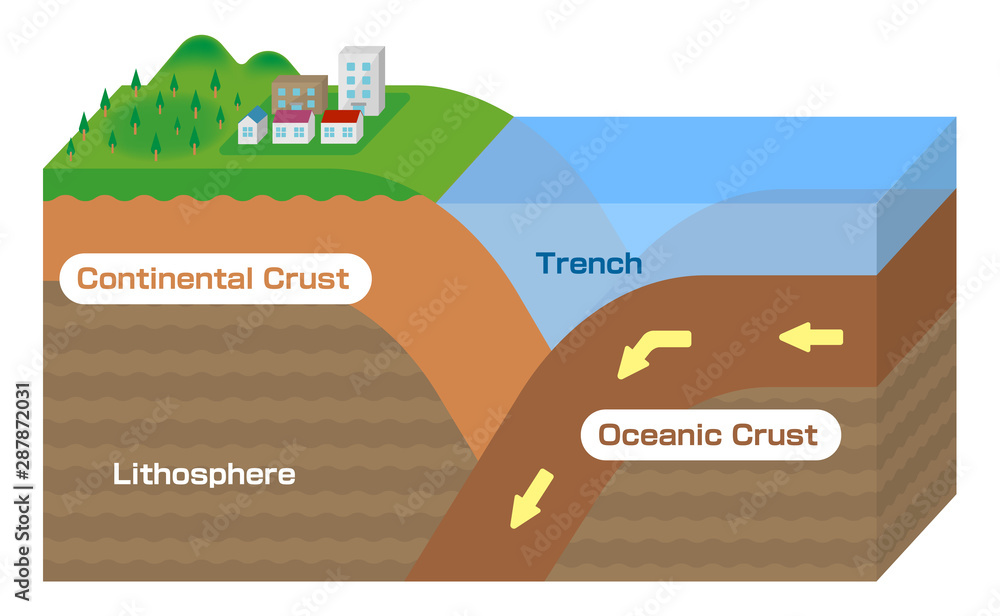
Think of continental crust as the stuff that makes up the continents – you know, those big landmasses where we build our houses, grow our food, and occasionally argue about politics. This crust is relatively old, light, and, dare I say, a bit bougie (because it floats higher on the mantle below). It's made up of a variety of rocks, with granite being a VIP.
On the other hand, we have oceanic crust. This is the stuff that makes up the ocean floor. It's younger, denser, and generally less complex than its continental cousin. Its rock star is basalt. Basically, it's the no-nonsense, get-the-job-done type of crust. If crusts had personalities, oceanic crust would be the reliable friend who always shows up on time.
The Thickness Throwdown!
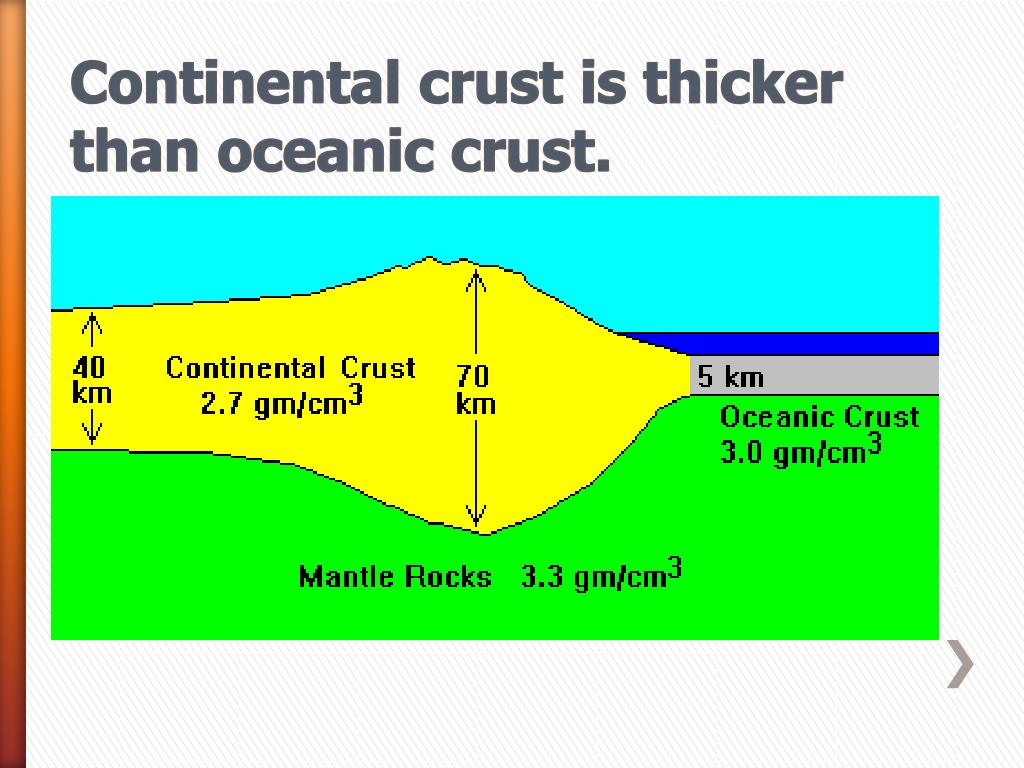
Okay, drumroll please... Who wins the thickness competition? The answer, my friend, is resounding! Continental crust is indeed thicker than oceanic crust. Think of it like this: continents are like icebergs – they have a significant portion submerged (in the mantle), making them overall thicker.
Continental crust can range from about 30 to 70 kilometers (around 19 to 43 miles) thick. That’s seriously thick! Imagine stacking Eiffel Towers on top of each other – you'd need a whole bunch to equal that thickness. Oceanic crust, on the other hand, is a lightweight contender, typically ranging from only about 5 to 10 kilometers (around 3 to 6 miles) thick. It's practically wafer-thin in comparison! So thin, a particularly grumpy whale could probably... well, never mind.
Why the difference? Good question! It all boils down to how these two types of crust are formed. Continental crust is formed over billions of years through complex geological processes. It's like a really long-running bake-off where all sorts of ingredients get added in over time, resulting in a rich, layered cake. Oceanic crust, on the other hand, is constantly being formed at mid-ocean ridges (underwater mountain ranges) and recycled back into the mantle. It’s a much faster, simpler process, like a quick pizza dough recipe.
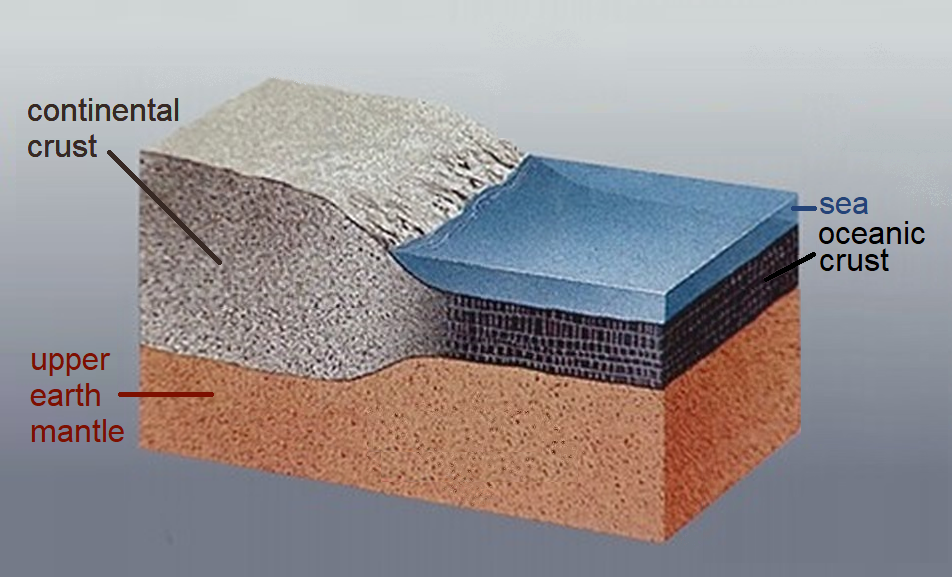
Another reason? Continental crust is less dense so it floats higher on the mantle, meaning more crust needs to be present to displace enough of the mantle to achieve equilibrium.
So What? Why Should I Care?
You might be thinking, "Okay, cool fact, but does this actually matter to me?" And the answer is... kind of! Understanding the differences between continental and oceanic crust helps us understand a whole host of things about our planet, from plate tectonics and earthquakes to the formation of mountains and the distribution of resources. It's all connected!

Plus, knowing cool facts like this makes you a hit at parties. Trust me. (Disclaimer: May not actually make you a hit at parties. Results may vary. Side effects may include increased intellectual smugness.)
In short, the Earth's crust is a fascinating and dynamic place, and knowing that continental crust is thicker than oceanic crust is just one small piece of the puzzle. But every piece counts, right?
A Happy Ending (Because Why Not?)
So, there you have it! We've explored the depths (or rather, the thicknesses) of the Earth's crust and emerged victorious (or at least, slightly more knowledgeable). The next time you're standing on solid ground, remember that you're standing on a thick layer of continental crust, and somewhere far below, it's bumping up against it's thinner cousin. And isn't that a wonderful thought? The world is full of interesting things, just waiting to be discovered. So go forth, explore, and never stop asking questions! After all, the more we learn about our planet, the better we can take care of it. Now go get yourself some pizza (thin crust, obviously, to honor the oceanic crust!).
-2.webp)