
Is Bronze On The Periodic Table

Imagine holding a shimmering, golden-brown statue, perhaps a majestic lion or a victorious athlete. Or picture a gleaming medal around a champion's neck, catching the light with its rich, warm glow. Chances are, you're thinking of bronze.
Bronze has been a part of human history for thousands of years. It helped build civilizations, crafted incredible works of art, and even gave a whole historical era its name: the Bronze Age.
Given its incredible importance and distinctive qualities, a fun question often pops up: Is bronze on the Periodic Table?
Must Read
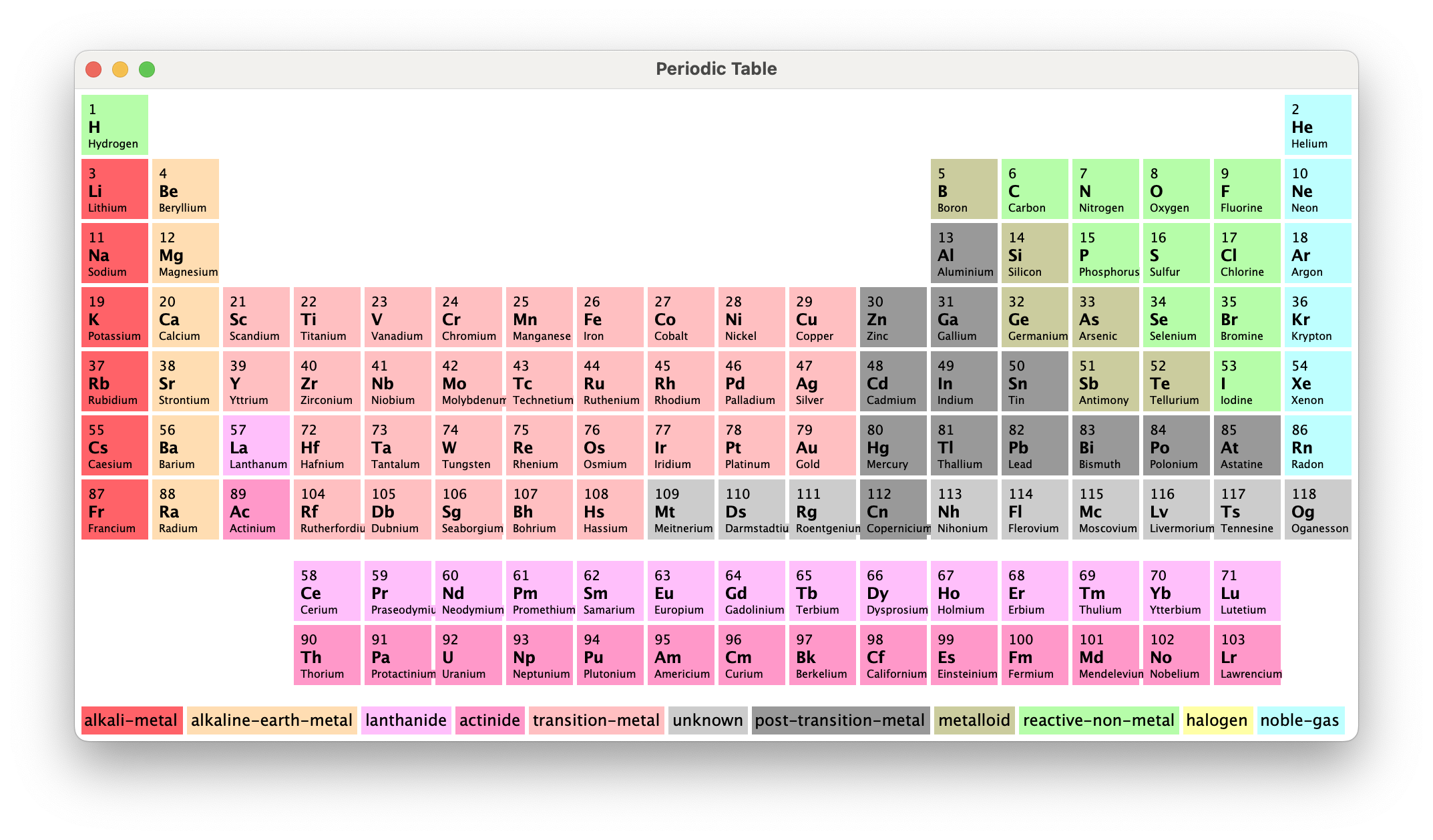
You know the Periodic Table, right? That big, colorful chart hanging in every science classroom, listing elements like oxygen, gold, and iron.
It’s essentially the ultimate guest list for the fundamental building blocks of everything in the universe. Each spot on that table is reserved for a unique, pure element, a type of atomic "LEGO brick" that can't be broken down into simpler substances.
So, does bronze have its own special square, perhaps between zinc and gallium?
The surprising, and perhaps slightly disappointing, answer is: No, bronze is not on the Periodic Table.
Before you sigh in disappointment, let's explore why and discover an even more fascinating truth about this beloved metal.
The reason bronze doesn’t have its own spot is simple: the Periodic Table is for single, pure elements.
Bronze, you see, is not a pure element. It's something much cleverer and more collaborative: it's an alloy.

Think of an alloy like a fantastic recipe or a super team-up. It's a material made by blending two or more different metals together, or sometimes a metal and another non-metal ingredient.
The magic of bronze truly comes alive when we look at its main ingredients. Its primary components are on the Periodic Table, and they’re true superstars in their own right!
The vast majority of bronze is made from beautiful, reddish-brown copper.
Yes, copper, the element that carries electricity, forms lovely green patinas, and has been used by humans for millennia, proudly sits on the Periodic Table as Cu.
But copper on its own, while useful, can be a bit soft. It's easily bent and not always ideal for sharp tools or sturdy structures.
This is where bronze’s second crucial ingredient steps onto the scene: tin.
Tin is a silvery-white metal, often used to coat other metals or found in solder. It, too, has its own special place on the Periodic Table, known by its symbol Sn.
So, when you combine copper (mostly) with tin (a smaller but vital amount), you don't just get a mix; you get something entirely new with superior qualities.
Imagine a master chef taking two wonderful ingredients, like flour and sugar, and transforming them into a delicious cake. The cake isn't just flour or sugar; it’s a new creation with its own unique taste and texture.
That's what happens when metallurgists, or ancient artisans, melt down shimmering copper and silvery tin together.
They carefully blend them, allowing their atoms to intermingle as they cool and solidify. The result is bronze: a material that is much harder, stronger, and more durable than either copper or tin alone.
This ingenious act of alloying was a revolutionary discovery, changing the course of human civilization.
Before bronze, tools and weapons were often made of soft copper or stone. They broke easily, limited in their effectiveness.
But with the advent of bronze, suddenly humanity could forge much tougher tools for farming, stronger weapons for defense, and more intricate and lasting art.
The discovery of how to make bronze was a giant leap forward, ushering in the Bronze Age. This period saw incredible advancements in technology, warfare, and artistic expression across diverse cultures.

Imagine the ancient craftspeople, melting metals in rudimentary furnaces, experimenting with ratios, and finally discovering this magical new material.
It wasn't just a material; it was progress, a testament to human ingenuity and our innate desire to improve upon the gifts of nature.
From the towering statues of ancient Greece to the functional axes that cleared forests, bronze became the backbone of early societies.
It allowed for greater efficiency, increased prosperity, and gave artists an enduring medium to express their visions.
Even today, thousands of years later, bronze continues to play a vital role in our world. It's not just a relic of the past.
You’ll find it in the robust gears of machinery, where its strength and resistance to wear are invaluable.
It’s still the preferred material for many beautiful sculptures, capable of capturing fine detail and aging gracefully with a lovely patina.
And, of course, think of the rich, resonant tones of musical instruments like bells and cymbals – many are crafted from precisely formulated bronze alloys.

So, while bronze doesn't have its own name on the ultimate guest list of elements, it proudly stands as a shining example of what happens when elements collaborate.
It’s a powerful reminder that the Periodic Table isn't just a static chart; it's a dynamic menu of possibilities.
It lists the fundamental building blocks, the individual stars that, when cleverly combined, create an infinite universe of materials all around us.
Bronze teaches us that true strength and beauty often emerge not from isolation, but from the brilliant teamwork of different components coming together.
It's a story of collaboration, innovation, and the surprising power hidden within simple combinations. It's a story as old as civilization itself.
So, next time you admire a powerful bronze statue or feel the weighty satisfaction of a bronze medal, give a little nod to copper and tin.
These two elemental heroes, with their own places on the Periodic Table, are the true parents of bronze, reminding us that some of the most enduring things in life are born from brilliant partnerships.
It’s a beautiful thought: everything we see, touch, and use is ultimately a clever arrangement of those basic elements, waiting to be combined in new and wonderful ways.