Is 1500 Watts A Lot Of Power
Ever picked up an appliance, seen a number followed by "W" or "Watts," and wondered, "Is that a lot? Should I care?" You're not alone! In a world filled with gadgets and gizmos, understanding a little bit about the power they consume isn't just for electricians; it's a super useful superpower for everyday life. It's fun because it demystifies something that often feels like magic, turning cryptic labels into practical knowledge. Who knew your toaster had such a fascinating story to tell?
The purpose of diving into the mysterious world of Watts is to empower you. By the end of this, you’ll be able to glance at an appliance's power rating and instantly have a much better idea of its energy appetite. This understanding can help you make smarter purchasing decisions, avoid accidentally tripping your circuit breakers (goodbye, sudden darkness!), and even become more conscious of your energy consumption, which is great for your wallet and the planet. It’s about feeling in control of your tech and your electricity bill, rather than just shrugging your shoulders.
So, let's get to the burning question: is 1500 Watts a lot of power? In the grand scheme of household electricity, the answer is a resounding yes! To put it into perspective, think about some common items:
Must Read
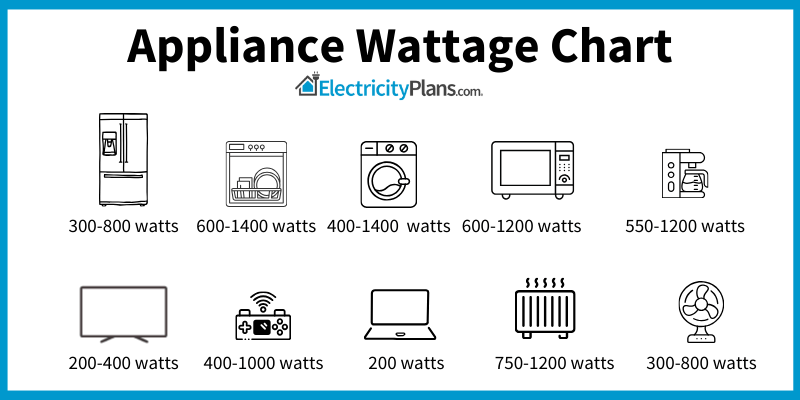
- A typical LED light bulb might use just 10-20 Watts.
- Your smartphone charger usually pulls around 5-15 Watts.
- A laptop charger often falls in the 60-100 Watt range.
See? Those are relatively tiny numbers. Now, let's look at appliances that hit the big leagues:
- Many standard microwaves run between 1000 and 1500 Watts.
- A powerful hairdryer? Often 1500 Watts or more.
- That trusty toaster oven? Easily 1000-1500 Watts.
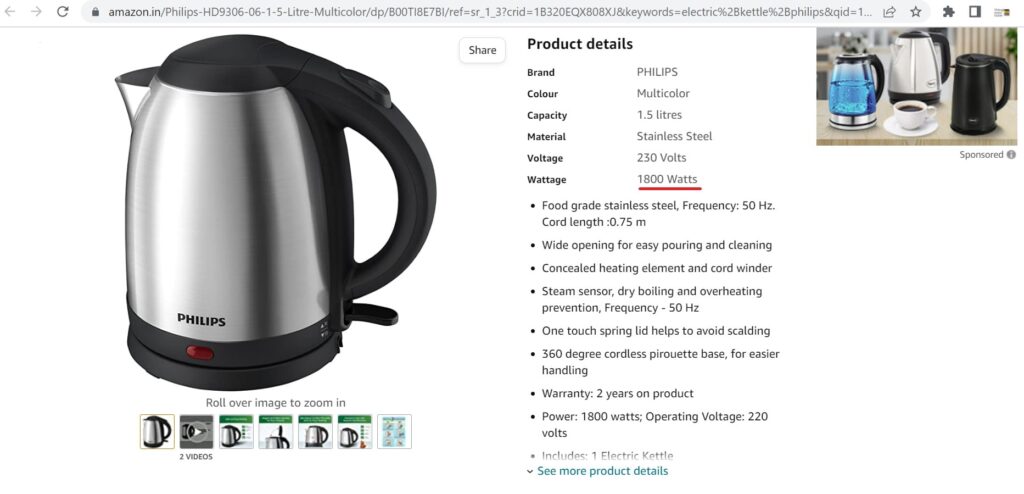
- And those portable space heaters designed to warm up a chilly room? You guessed it – usually right around 1500 Watts.
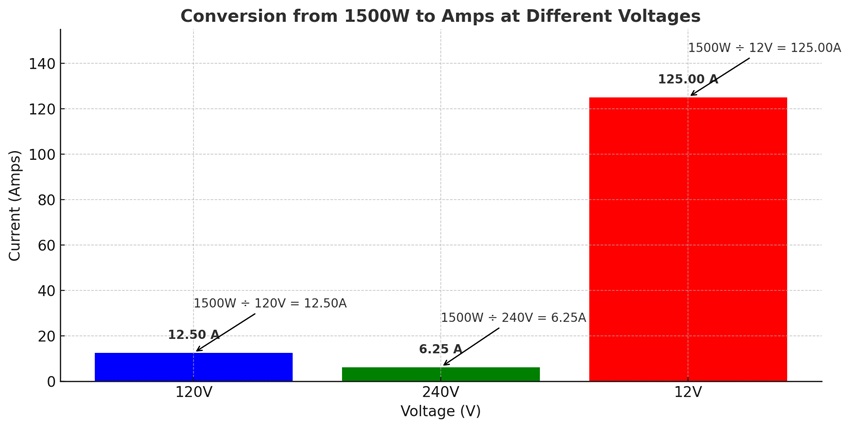
What this means practically is that 1500 Watts is considered a significant draw for a single appliance on a standard household circuit. Most household circuits in North America are designed to safely handle about 15 amps of current, which translates to roughly 1800 Watts at 120 volts. However, for continuous use, it's recommended to only load a circuit to about 80% of its capacity, bringing that safe operating limit down to around 1440 Watts. So, an appliance rated at 1500 Watts is pushing right up against that comfortable boundary!
This is why you'll often hear warnings about not running a hairdryer and a toaster oven on the same outlet (or circuit) at the same time. Doing so can easily exceed the circuit's capacity, causing the breaker to trip and temporarily cutting power – a minor inconvenience, but a clear sign you’re asking for too much from that specific circuit. Understanding that 1500 Watts is a considerable chunk of power means you can be smarter about where and when you plug in your high-demand devices, keeping your home humming along smoothly.
So, next time you see "1500W" on a label, you'll know it's not just a number. It's telling you, "Hey, I'm pretty powerful! Give me some space." And that, my friend, is a pretty cool piece of knowledge to have!