
Iron Physical Properties And Chemical Properties
Iron: we think of it as strong, sturdy, maybe a little... dull? But dig a little deeper, and you'll find iron's got more personality than your average superhero. It's not just about girders and frying pans; it's a story of transformation, a dash of romance (with oxygen!), and surprising secrets hidden within its metallic heart.
Iron's First Impression: Physical Appeal
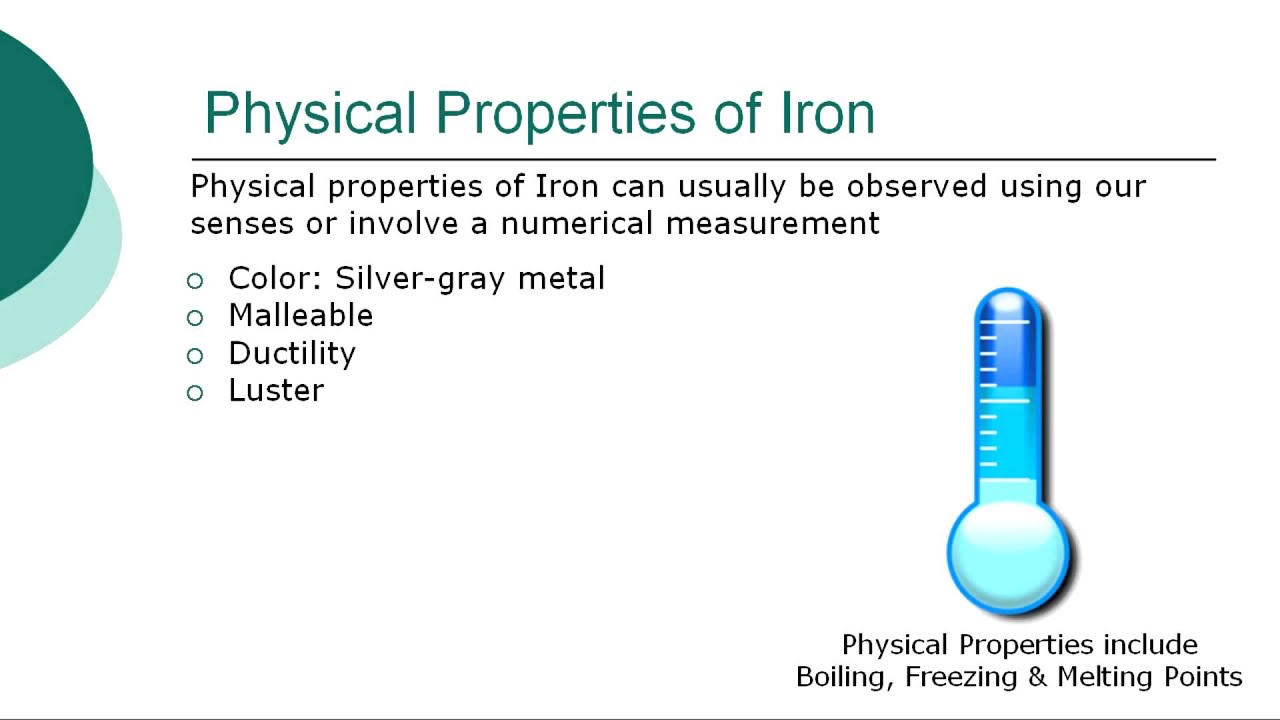
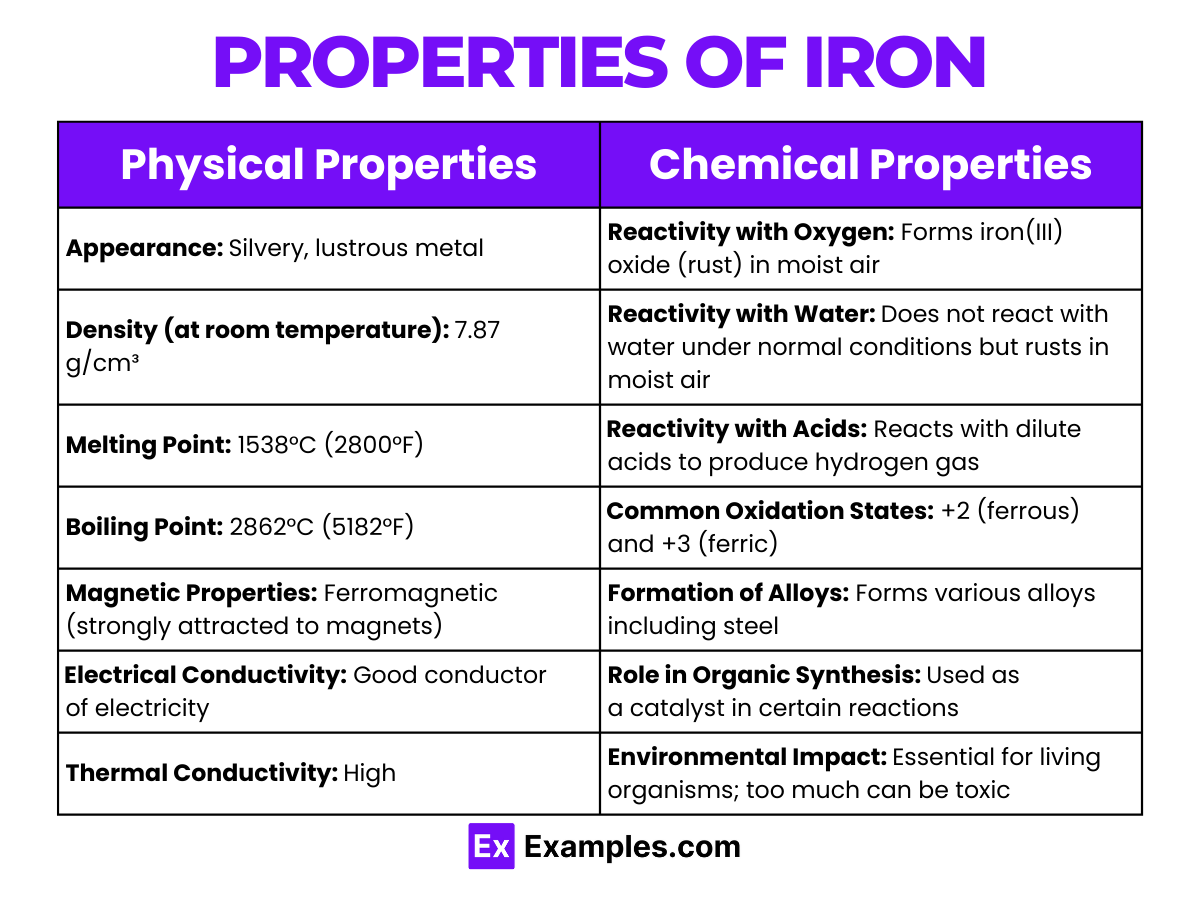
Okay, let's face it, iron isn't winning any beauty contests straight out of the box. In its pure form, it's got a grayish-silvery sheen. But that's like judging a book by its cover! Iron’s physical properties are what make it a rockstar in our world. Think about it: its malleability, meaning it can be hammered into sheets like the body panels of your car, or its ductility, the ability to be drawn into wires, like the ones powering your phone.
And let's not forget its strength! Iron is like the dependable friend who always has your back. It's tough enough to hold up skyscrapers, bridges, and even your grandma’s cast iron skillet that’s older than you are! This strength comes from its high tensile strength, meaning it can resist being pulled apart. You can even heat it up to crazy temperatures (it has a very high melting point!) to work it into new shapes, without it losing its essence.
Must Read
Here's a quirky physical property: iron is ferromagnetic. That's a fancy way of saying it's attracted to magnets. Ever played with magnets as a kid? Well, thank iron for that! This magnetic property is crucial for everything from electric motors to hard drives. Without it, well, you might be stuck using an abacus instead of your laptop.
Iron's Hidden Passions: Chemical Properties
Now, let's get to iron's love life – specifically, its passionate relationship with oxygen. We all know what happens when iron and oxygen get together: rust! It’s that reddish-brown coating that forms on iron when exposed to air and moisture. It's essentially iron and oxygen becoming one, a chemical reaction that scientists call oxidation. It might seem like a nuisance, but rust is a sign that iron is actively engaging with its environment.
Think of it like this: rust is iron's way of showing its feelings. Okay, maybe not in a heartwarming way, but it’s a visible testament to its chemical activity. But don't worry, there are ways to protect it, like applying paint to be like a bodyguard between the iron and the oxygen.
But iron isn’t just about rusting away. It's a versatile element that readily forms compounds with other elements. It's the key ingredient in hemoglobin, the protein in your red blood cells that carries oxygen throughout your body. So, in a way, iron is literally what keeps you breathing!
Without iron's chemical properties, we wouldn't be alive as we know it.Pretty profound, huh?

Iron also acts as a catalyst in many chemical reactions. A catalyst is like a matchmaker, speeding up reactions without being consumed itself. In the Haber-Bosch process, iron helps to produce ammonia, which is a key component of fertilizers. So, iron is helping feed the world, too!
Iron: More Than Meets the Eye
So, the next time you see something made of iron, don't just think of it as a cold, hard metal. Remember its physical strength, its magnetic personality, and its passionate (if sometimes destructive) relationship with oxygen. Iron is a vital element, playing a crucial role in everything from our infrastructure to our very existence. It's a story of strength, adaptability, and a little bit of rust. And that, my friends, is something to appreciate.
Iron's not just a metal; it's a story waiting to be told, a chemical romance playing out on a grand scale. And the best part? It's a story that's still being written, every time we use iron to build, to create, and to live.

