In What Direction Does Current Flow In A Circuit
Ever wondered what makes your phone charge, your lights glow, or your toaster toast? It all boils down to electricity doing its thing inside a circuit. But wait, there's a secret ingredient! It's about the direction this electricity travels. Buckle up, because things are about to get electrifyingly interesting!
The Great Current Debate: A Historical Whodunit
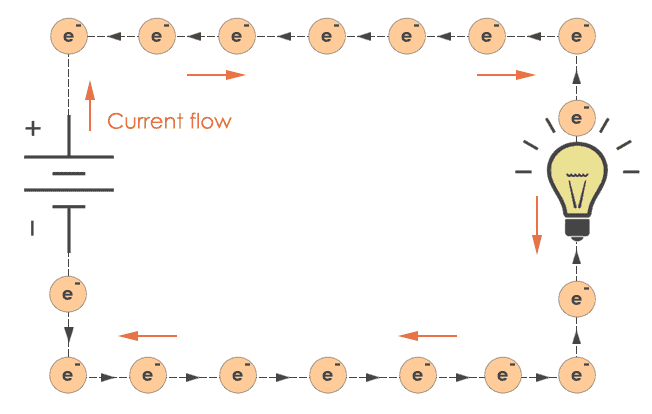
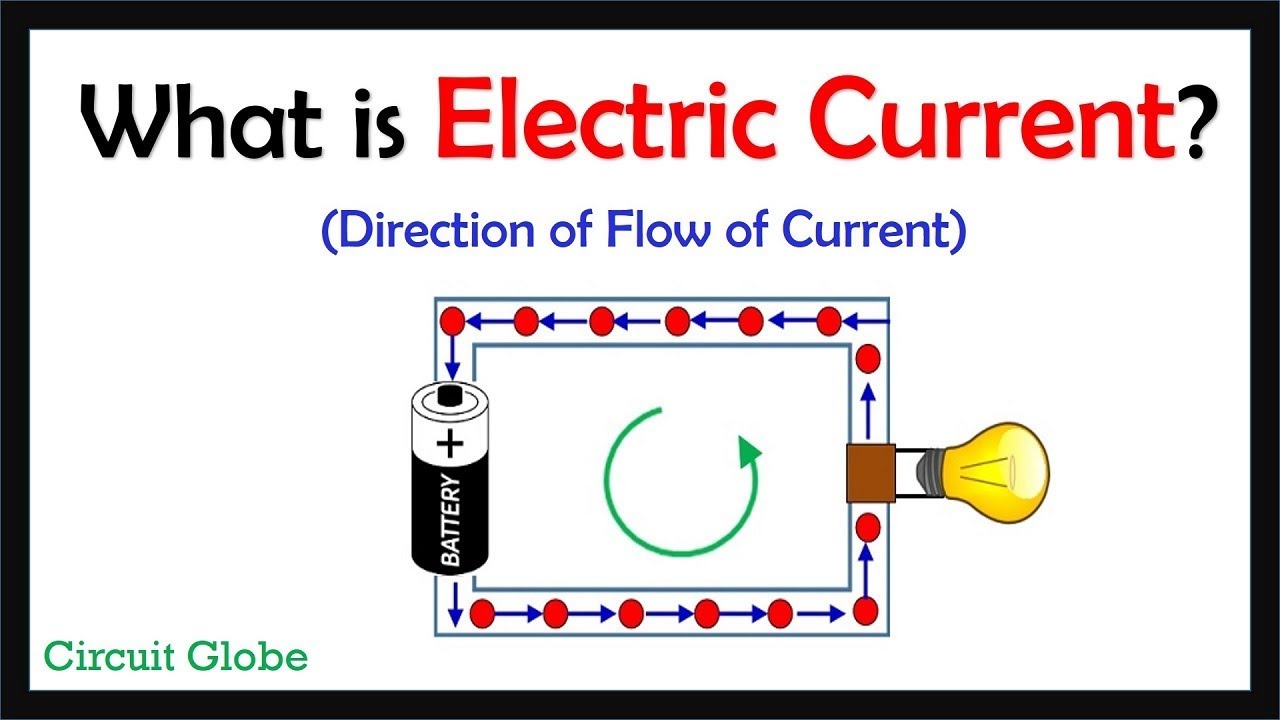
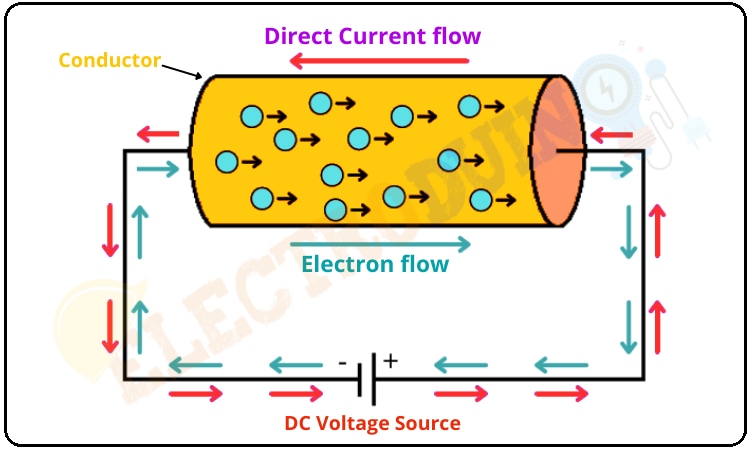
Okay, so imagine a detective novel, but instead of a missing person, we're searching for the true path of current. For years, scientists believed that electricity flowed from positive to negative. This is called conventional current. Think of it like this: positive charges are the "good guys," and they're moving away from a source of positive energy towards the more negative.
This idea was cooked up way back when people didn't even know about those tiny subatomic particles called electrons! The electron, that little rascal with a negative charge, was discovered later. Guess what? Turns out electrons are the actual workhorses doing the moving in most circuits!
Must Read
Here's where the plot thickens! Because electrons are negatively charged, they move from the negative terminal of a battery towards the positive terminal. So, technically, the real flow is from negative to positive, also know as electron flow.
Why the Fuss? It's All About Perspective!
So, why are we still talking about both? Well, changing everything would be a gigantic headache. Think about it: countless textbooks, circuit diagrams, and electrical engineering principles are based on the old "positive to negative" convention. Retooling the entire world of electrical engineering? Yikes!

Imagine trying to explain to your grandma that everything she knows about electricity is technically backwards! Plus, it's not like the direction of the current fundamentally changes how a circuit works. It's more about how we describe it. It's like saying you're driving from Los Angeles to New York versus saying you're driving from New York to Los Angeles. You're still covering the same distance!
Does It Really Matter? (Spoiler Alert: Not Really!)
In most cases, honestly, no. For many basic circuit calculations and understanding how things work on a macro level, using either convention gets you to the same answer. As long as you're consistent within your calculations, you're golden. It's like speaking two slightly different dialects of the same language.
However, in certain specialized areas like semiconductors and understanding the inner workings of transistors, knowing that electrons are the actual movers and shakers becomes more important. It's like needing to know the precise ingredients in a recipe when you're trying to bake a super complicated cake.

So, Which Way Does It Really Go?
The bottom line? Current technically flows from negative to positive (electron flow), but we often treat it as flowing from positive to negative (conventional current). It's a bit like a secret handshake within the world of electricity.
Think of it like this: imagine you're watching a parade. The grand marshal is at the front, leading the way (conventional current). But really, it's the bands, the floats, and the dancers that are actually moving forward (electron flow). Both perspectives give you a picture of what's happening in the parade!
Time to Get Your Hands Dirty (Figuratively, of Course!)
The best way to truly grasp this whole current flow conundrum is to dive in and experiment! Grab a simple circuit kit (they're super cheap and fun!), build a circuit, and see how the different components interact. You don't need to be Nikola Tesla to get started.
Don't be afraid to make mistakes. That's how we learn! Soon, you'll be the one explaining the mysteries of current flow to your friends. And who knows, you might even spark a lifelong love of electrical engineering. So, go forth and explore the electrifying world of circuits!
Who knew the direction of electricity could be so intriguing? Now you're armed with the knowledge to navigate this quirky aspect of electrical circuits. Keep exploring, keep questioning, and keep the current flowing!