
Impacts Of Nuclear Power On The Environment

Okay, let's talk nuclear power. When you think of it, what springs to mind? Probably giant cooling towers billowing steam, maybe Homer Simpson at the controls. Possibly even that scary mushroom cloud image from history class. But what about its actual impact on our planet? Prepare yourself, because it's... well, it's complicated!
First off, let's address the elephant in the room: nuclear waste. Yep, it exists. And yep, it's a bit of a headache. Picture this: You've got these spent fuel rods, buzzing with leftover energy, and you need to store them safely for, oh, only a few thousand years. That's like burying a birthday cake and telling your great-great-great-great-great-great-great-grandchildren not to touch it. Good luck with that!
Currently, most of this waste is stored in specially designed pools of water or dry storage casks. Think of it as a really, really high-security swimming pool for radioactive stuff. Scientists are constantly exploring better, safer, and dare I say, even more entertaining ways to deal with it. Things like transmutation – turning the nasty bits into less nasty bits – are being researched. It's like a radioactive alchemy show, but with less bubbling beakers and more complicated math.
Must Read
But here’s the kicker: compared to the sheer volume of waste produced by burning fossil fuels like coal, the amount of nuclear waste is relatively small. All the nuclear waste ever produced in the U.S. since the 1950s could fit on a football field, stacked about 20 feet high. Now, 20 feet of anything is a lot, but consider how much carbon dioxide, soot, and other pollutants coal plants spew into the atmosphere every single day. It's a bit of a David and Goliath situation, isn't it?
The Air We Breathe (or Don't)
That brings us to the next point: air pollution. Fossil fuels are notorious for releasing greenhouse gasses like carbon dioxide, contributing to climate change. They also pump out nasty stuff like sulfur dioxide and nitrogen oxides, which cause acid rain and respiratory problems. Nuclear power? It’s basically a clean freak. During normal operation, nuclear plants release almost zero air pollutants. Zip. Nada. Zilch. It's like the Marie Kondo of energy production, leaving behind only the bare essentials (and a little bit of steam, which is just water vapor).
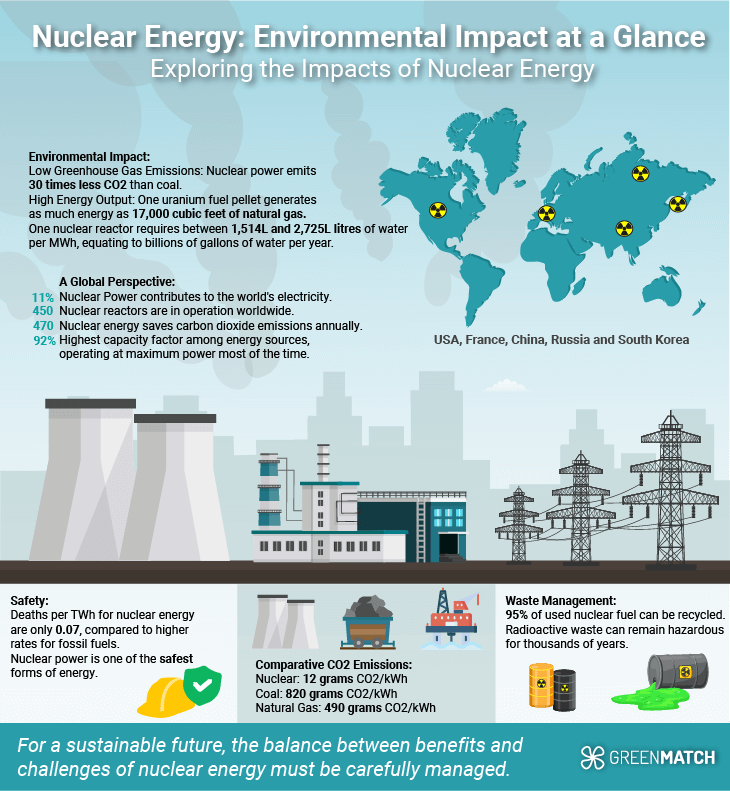
Think of it this way: if we all switched to nuclear power overnight (hypothetically, of course, because that would be a logistical nightmare), our skies would clear up dramatically. You could finally see the stars at night in cities! Okay, maybe not all the stars, but definitely more than you see now. Wouldn't that be nice?
Impact on Wildlife (Spoiler Alert: It's Not All Bad)
Now, let’s consider the critters. You might assume that anything remotely radioactive is bad news for wildlife, but the reality is often more nuanced. Remember the Chernobyl disaster? It was a horrific event, but in the decades since, the exclusion zone around the plant has become a surprising haven for wildlife. Wolves, bears, elk, and even endangered Przewalski's horses roam freely in the absence of human interference. It's like a real-life Jurassic Park, minus the velociraptors (probably).
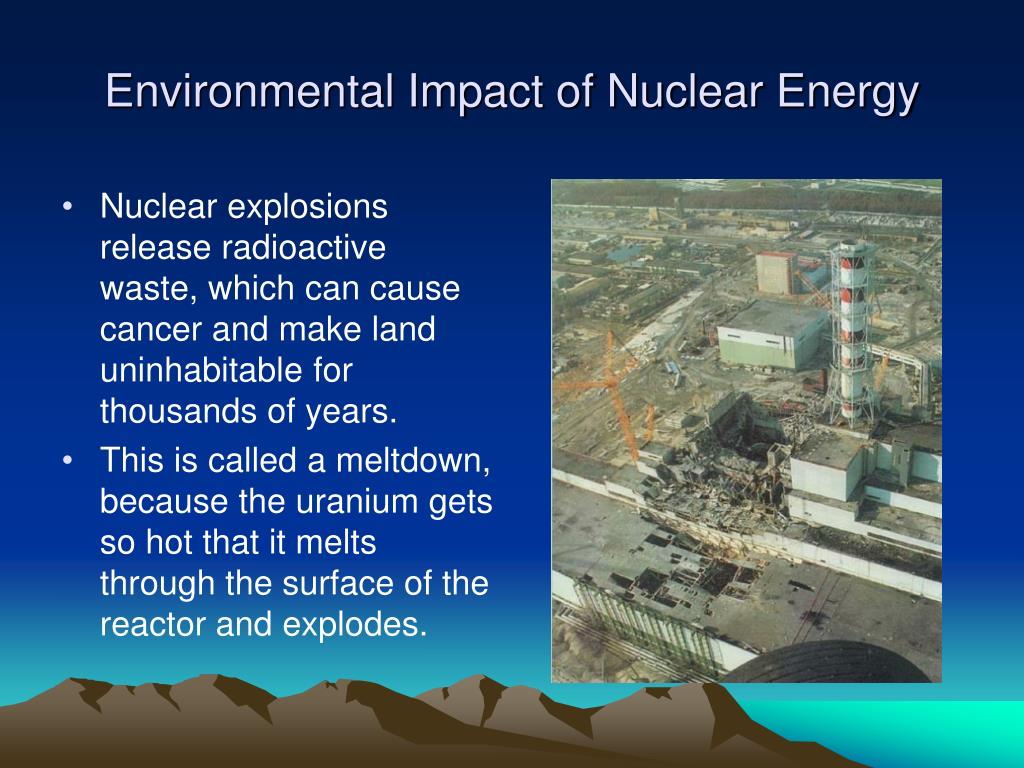
Of course, this doesn't excuse the disaster, but it does highlight an interesting point: sometimes, nature is more resilient than we give it credit for. Nuclear power plants themselves can also have some unexpected benefits. The warm water discharged from power plants (after being carefully monitored, of course) can create artificial reefs, attracting fish and other marine life. It’s like building a luxurious spa for underwater creatures!
"The environmental impact of nuclear power is a complex issue, with both challenges and potential benefits." – A Wise and Probably Very Important Scientist
Ultimately, the environmental impact of nuclear power is a balancing act. It's not a perfect solution, but it's also not the environmental boogeyman it's sometimes made out to be. It’s a tool, and like any tool, it can be used responsibly or irresponsibly. The key is to keep learning, keep innovating, and keep striving for safer and cleaner ways to power our world. And maybe, just maybe, find a good home for that long-lasting birthday cake.

