
How To Work Out Watts To Amps
Ever felt like electricity was some kind of secret club, full of mysterious terms and buzzing jargon? Well, guess what, future power-pioneer? That club is now wide open to you! We're about to unlock a super simple secret, a magical little trick that lets you peer into the heart of your gadgets and see exactly what’s going on.
Forget the textbooks and the complicated diagrams. Today, we're just playing detective with three friendly characters: Watts, Volts, and Amps. Think of them as the dynamic trio of electricity, ready to spill their secrets with just a tiny bit of math magic.
You’ll soon be casually calculating like an electrical wizard, impressing your friends, and understanding your appliances with a newfound confidence. It’s not just numbers; it’s like having X-ray vision for power! So, let’s dive into the fun, shall we?
Must Read
Meet the Electric Dream Team!
First up, we have Watts. Imagine Watts as the total party animal, the one showing off all the energy being used or produced. It’s the oomph, the raw power, the total deliciousness of your electrical consumption.
Next, we have Volts. Volts are like the determined bouncer at the club door, the pressure that pushes all that energy around. They are the push, the electrical pressure making everything happen.
And finally, the star of our show, Amps! Amps are the actual guests flowing through the electrical party. They are the flow, the current, the actual amount of electricity marching through the wires. We want to know how many guests are showing up!
The Secret Formula: Unlocking Amps with a Smile!
Ready for the big reveal? This is the moment you become an electrical superhero. To figure out Amps, you just need two things: Watts and Volts. It’s as simple as pie, or perhaps, as simple as a perfectly charged phone!
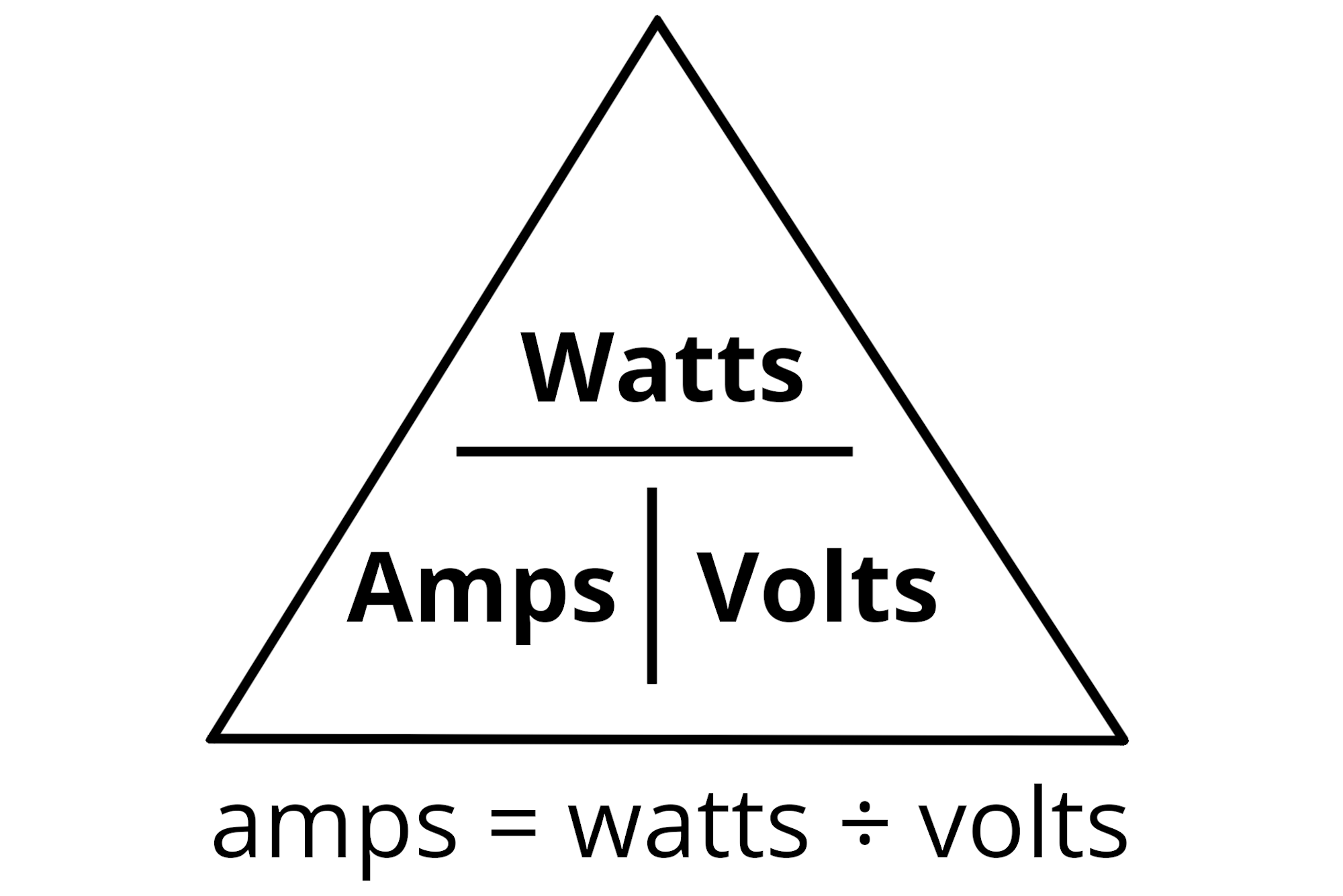
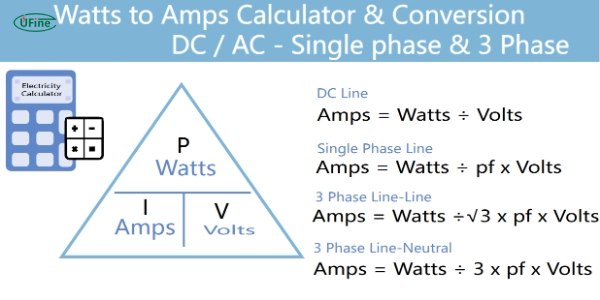
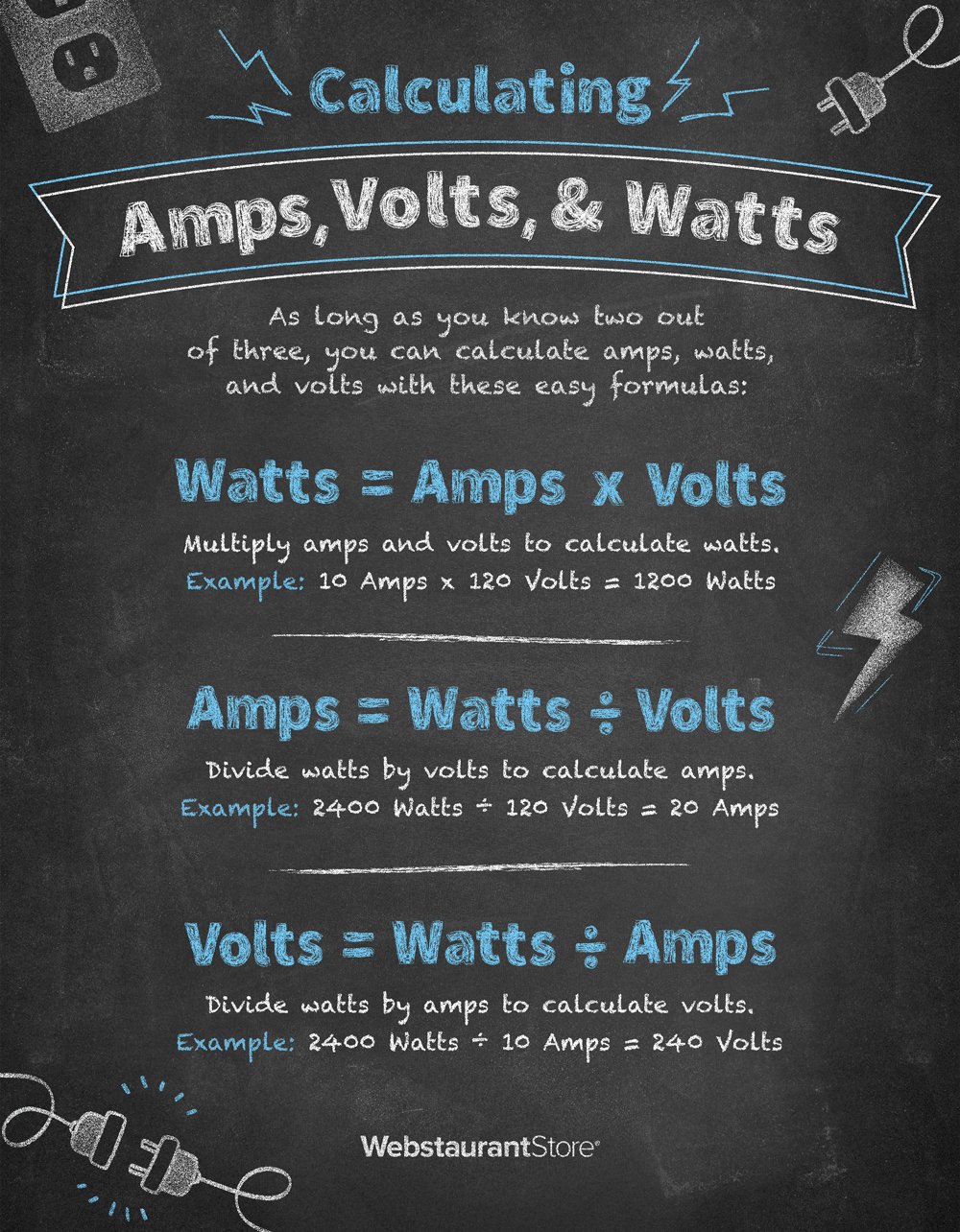
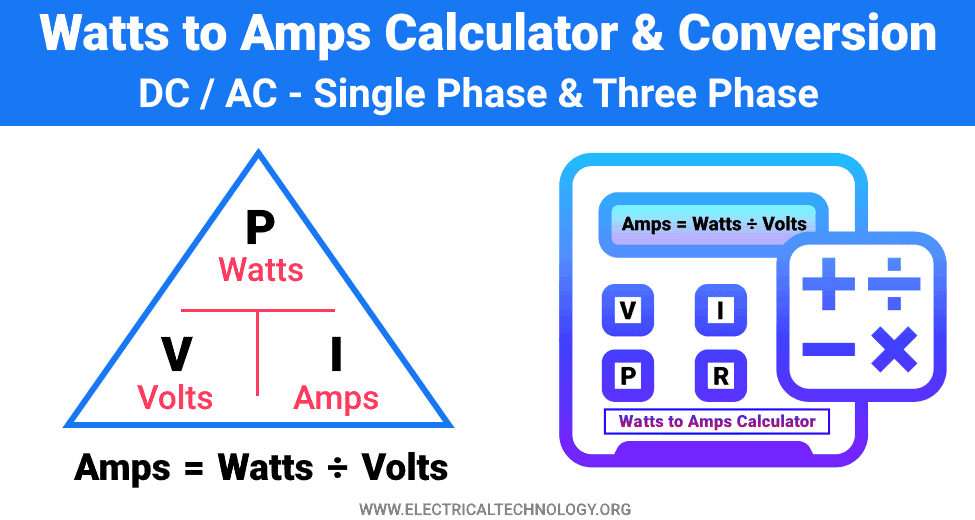
Amps = Watts / Volts
See? It’s just division! No fancy spells, no complex incantations, just a friendly little slash mark between two numbers. You are literally dividing the total power (Watts) by the electrical pressure (Volts) to find out the current (Amps).

Let's say it again, because it's so beautifully straightforward: Amps equal Watts divided by Volts. This is your magic key, your secret handshake into the electrical world. Now, let’s play with some real-world examples!
Scenario 1: The Humble, Yet Mighty, Light Bulb
Imagine your favorite reading lamp. It’s probably got a label on it, proudly proclaiming its wattage. Let’s say it’s a bright, cheerful 60-Watt LED bulb. In most homes in North America, your wall outlets deliver around 120 Volts of electrical pressure.
We have our two numbers! Our party animal (Watts) is 60, and our bouncer (Volts) is 120. Time to find out our partygoers (Amps)!
So, we plug them into our superstar formula:
Amps = 60 Watts / 120 Volts
Drumroll, please! The result is 0.5 Amps. That means your lovely light bulb is only pulling half an amp of current. See how easy that was? You just calculated its electrical pulse!
Scenario 2: The Hair Dryer – A True Powerhouse!
Now, let’s kick things up a notch with an appliance that really likes to party: your trusty hair dryer. These guys are known for their serious electrical appetite. You might find a hair dryer boasting a hefty 1800 Watts!
Still in North America, our electrical pressure from the wall remains a steady 120 Volts. So, we have a much bigger party animal (Watts = 1800) and our same reliable bouncer (Volts = 120).
Let’s apply our magical formula once more:
Amps = 1800 Watts / 120 Volts
And voilà! We get a magnificent 15 Amps. Wow! That’s a lot more than our little light bulb, isn’t it? This tells you why hair dryers often need their own dedicated circuit – they demand a lot of electrical guests!
Scenario 3: The Microwave – Zapping with Zest!
Let's heat things up with a microwave! Your average kitchen microwave might be rated at around 1000 Watts for its cooking power. Again, we're still cruising along with our standard 120 Volts from the wall outlet.
Watts, our total electrical oomph, is 1000. Volts, our trusty electrical push, is 120. Now for the calculation!
Let's do the math dance:
Amps = 1000 Watts / 120 Volts
And the answer is approximately 8.33 Amps. So, your microwave is drawing a solid flow of current to zap your leftovers into deliciousness! Each calculation makes you a little more confident, right?
Scenario 4: From North America to Europe – Voltage Makes a Difference!
What if you brought that same 1800-Watt hair dryer on a fabulous trip to Europe? Many European countries use around 240 Volts in their homes, which is double the voltage we often use in North America! The Watts (the appliance's power) remains the same – it’s still an 1800-Watt hair dryer.
But now, our bouncer (Volts) is twice as strong at 240! Let’s see what happens to our partygoers (Amps) with this higher electrical pressure.
Time for the international calculation:
Amps = 1800 Watts / 240 Volts
Surprise! You get a neat and tidy 7.5 Amps. Notice anything? For the exact same hair dryer (same Watts), the Amps are half when the Volts are doubled! This is why higher voltage systems can carry the same power with less current, which can sometimes mean thinner wires. Isn't that fascinating?
You Are Now an Electrical Maestro!
See how effortlessly you’ve been navigating the world of Watts, Volts, and Amps? You’ve demystified a fundamental electrical concept with just a simple division sum! You’re not just crunching numbers; you’re understanding the invisible forces that power your daily life.
Every time you glance at an appliance, you can now mentally, or even actually, calculate its Amperage. This little trick is incredibly useful for understanding circuit breakers, power ratings, and even just how much juice your devices are really slurping up.
You’ve taken a complex-sounding topic and turned it into a fun, bite-sized calculation. This knowledge is empowering! It gives you a deeper appreciation for the technology that surrounds us, transforming you from a passive user into an active understander.
So, go forth, my newly minted electrical expert! Feel the power of understanding coursing through your brain, just like Amps through a wire. You’ve got this, and you’re doing great!