
How To Wire An Outlet From Another Outlet Diagram

So, you're thinking about adding an outlet. Bold move! Maybe you've got a new lamp that simply must live in that one awkward corner, or perhaps your phone charger is perpetually dangling precariously from the kitchen counter. Whatever your reason, the whisper of electricity beckons.
The good news? You don't need to become a fully certified electrician overnight. The possibly even better news? The path to electrifying that desolate corner might just involve a little less hair-pulling and a little more "aha!" moments than you think.
First things first, picture this: you, Indiana Jones of home improvement, deciphering a sacred text. That text? A wiring diagram, possibly scribbled on a napkin from last Tuesday, but hey, it's a start! These diagrams, often lurking inside the outlet box of the existing outlet you're planning to tap into, hold the secrets of electrical flow.
Must Read
Now, most outlets operate on a pretty straightforward principle: electricity comes in, does its thing, and then leaves. The diagram usually illustrates this with lines representing wires – black (hot), white (neutral), and green (ground). They're like little electrical roadways, each with its specific job.
Imagine you're connecting two sections of a toy train track. The first section is already powered up. You just need to attach a new section (your new outlet!) so the little train can continue its journey. It's all about connecting the right tracks to the right tracks.

Gather Your Gear
Time to assemble your adventuring kit! You'll need wire strippers (these little guys are surprisingly therapeutic), some wire connectors (those twisty caps that look like tiny hats for wires), a new outlet, a screwdriver, and of course, a voltage tester. Think of the voltage tester as your trusty sidekick, always there to tell you if things are getting a little too…sparky.
Important! Always flip the breaker switch to OFF for the circuit you're working on before you even think about touching a wire. Consider it a safety dance. A little off-switch boogie never hurt anyone.
The Connection Dance
Okay, breaker’s off, heart's pounding just a little, time to open the existing outlet box. Inside, you'll see the existing wires connected to the existing outlet. Marvel at the organized chaos, take a deep breath, and compare what you see to your napkin-diagram. Black to black, white to white, green to green. Repeat this mantra like you're preparing for a spelling bee.
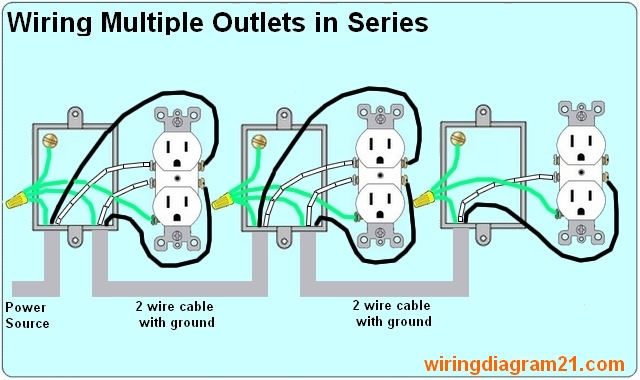
Now, using your wire strippers (remember, therapeutic!), carefully strip a bit of insulation off the ends of your new wires. Just enough to expose the copper, but not so much that it looks like a wire mohawk.
Here's where the fun begins. You're essentially creating "piggyback" connections. For each colored wire (black, white, and green), you'll connect one end of your new wire to the corresponding wire in the existing box, using those twisty wire connectors. Make sure they're snug! You don't want any loose connections, which can be like electrical gremlins causing mischief later on.

Picture the wires as friendly neighbors, all holding hands in a circle. The wire connectors are like the super-glue that keeps the circle intact.
Repeat the process for all three colors. Now you've created a brand new pathway for electricity to flow to your new outlet!
The Grand Finale
Carefully tuck all the wires back into the box (they can be a bit temperamental, like trying to fold fitted sheets), mount your new outlet securely, and screw on the faceplate. Finally, the moment of truth... Flip the breaker back on.

Plug in a lamp. Any lamp. The tackier, the better. If it lights up, congratulations! You've successfully added an outlet, and you’ve earned the right to do a little victory dance.
If it doesn't light up, don't panic! Double-check your connections, make sure the breaker is fully on, and consult your diagram again. Sometimes, all it takes is a little troubleshooting to unleash your inner electrical genius.
Adding an outlet might seem daunting at first, but with a little patience, a clear diagram, and a healthy dose of cautious optimism, you can conquer this home improvement hurdle and bask in the warm glow of your newly powered corner. You might even find yourself thinking, "What other electrical wonders can I achieve?" Just remember, safety first, and always feel free to call in a professional if you're feeling overwhelmed. After all, even Indiana Jones had a few close calls!