How To Turn Hot Water Heater Temperature Up
Ever felt that shiver of disappointment when your "hot" shower feels more like a lukewarm hug? Or maybe you're finding it takes forever to wash those greasy pans sparkling clean? The culprit might just be lurking in your basement or utility closet: your water heater. Adjusting the temperature is usually a straightforward process, but safety and efficiency are key. Let's dive in!
Before You Touch That Dial: Safety First!
Think of adjusting your water heater like mixing a potent cocktail – a dash too much of the wrong ingredient, and things can get… unpleasant. Seriously though, safety is paramount. Water heated to scalding temperatures can cause severe burns, especially for young children and the elderly. The Consumer Product Safety Commission recommends a setting of 120°F (49°C).
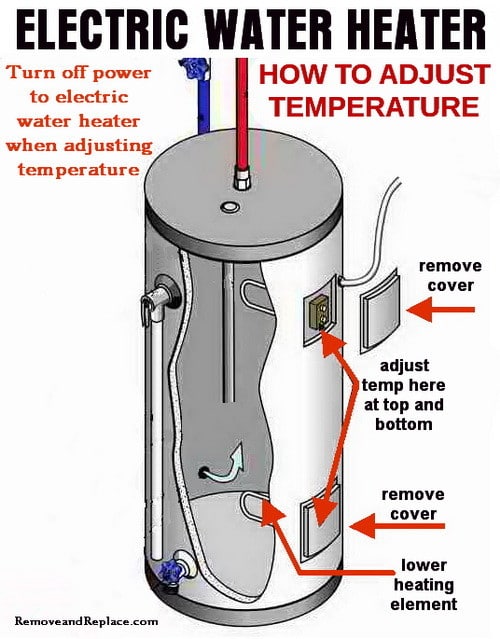
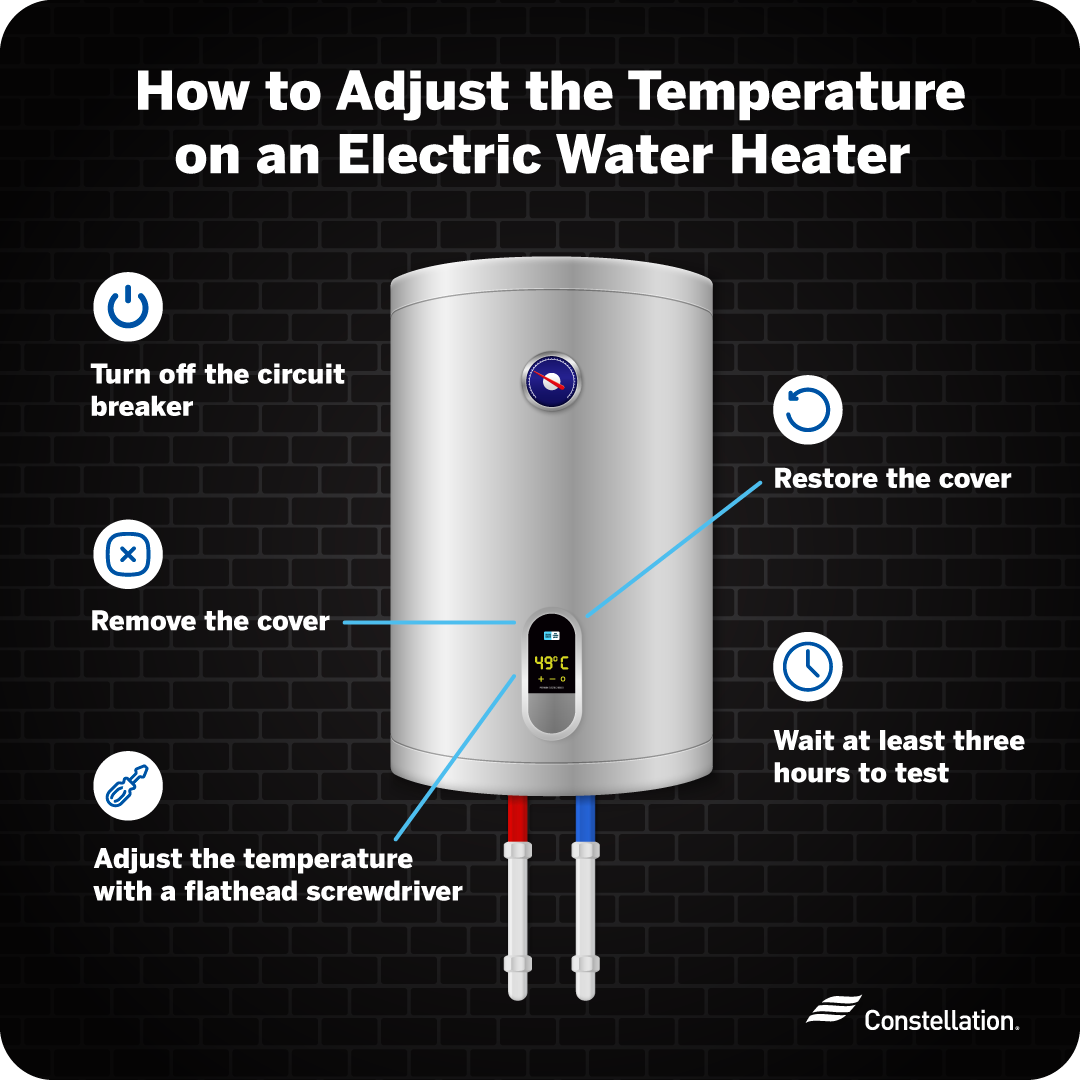
Always, always, turn off the power to the water heater before you begin. For electric heaters, locate the circuit breaker in your electrical panel and switch it off. For gas heaters, find the gas shut-off valve, usually near the heater itself, and turn it to the "off" position. It's like putting on your seatbelt before starting a road trip – a simple precaution that can prevent a major problem.
Must Read
Locating the Temperature Control
Now that we've addressed safety, let's find the controls. On most water heaters, the temperature dial is hidden behind an access panel. You might need a screwdriver to remove it. The panel is usually located near the bottom of the tank for gas heaters and behind one or two panels on the side of electric heaters. Think of it like searching for a hidden level in your favorite video game – a little exploration is required!
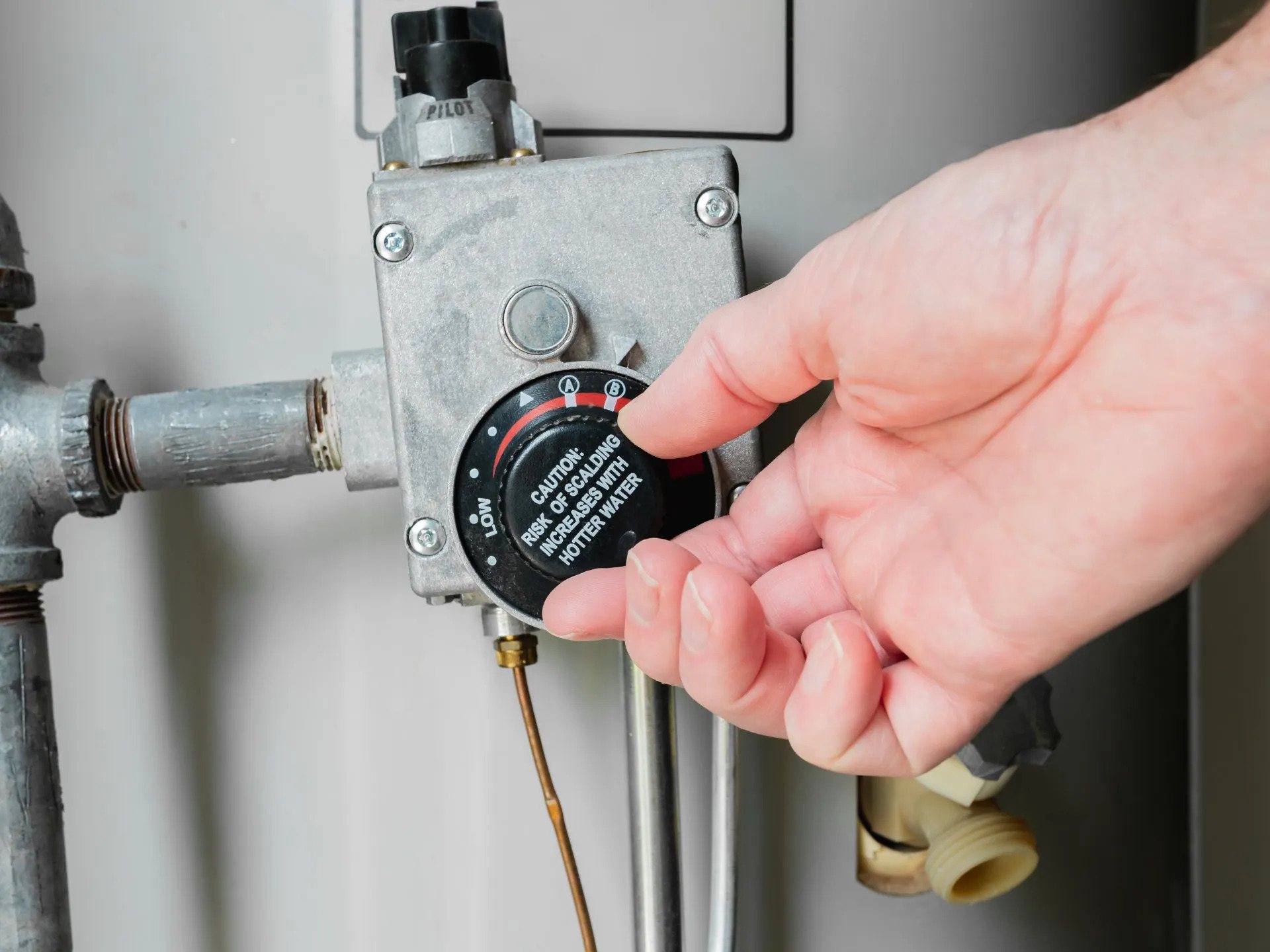
Once you've located the thermostat, you'll see a dial with temperature markings or a range. Some models use a simple "+" and "-" system. Note the current setting before you make any adjustments. This is your "undo" button in case things don't go as planned.
Making the Adjustment
With the power off, use a screwdriver or your fingers (depending on the model) to adjust the temperature setting. If your current setting is, say, 130°F, and you want to lower it to the recommended 120°F, simply turn the dial to the corresponding mark. A small adjustment can make a big difference, so resist the urge to crank it all the way up!
If you're increasing the temperature, do so in small increments – 5 to 10 degrees at a time. After each adjustment, wait a few hours, then test the water temperature at a faucet furthest from the water heater. Use a thermometer for accuracy. Remember, patience is a virtue, especially when dealing with hot water.

Turning It Back On
Once you're satisfied with the temperature setting, it's time to restore power. Turn the circuit breaker back on for electric heaters or turn the gas valve back on for gas heaters. Allow the water heater to run for several hours to heat the water to the new temperature.
Important Note: If you have a gas water heater and you turned off the gas supply, you may need to relight the pilot light. Refer to your water heater's manual for specific instructions. Some newer models have electronic ignition and don't require manual lighting.

Why 120°F? The Goldilocks Zone of Hot Water
As mentioned earlier, 120°F is the recommended temperature for a reason. It's hot enough for most household needs, including washing dishes and clothes, while minimizing the risk of scalding. It also helps save energy and prolong the life of your water heater. Think of it as the Goldilocks zone – not too hot, not too cold, but just right.
Beyond Temperature: Other Water Heater Considerations
Adjusting the temperature isn't the only way to optimize your water heater's performance. Regular maintenance is key. Flush your water heater annually to remove sediment buildup, which can reduce its efficiency and lifespan. Consider insulating your water heater to further reduce heat loss. And, of course, if you suspect a problem with your water heater, consult a qualified plumber.
Final Thoughts
Adjusting your water heater temperature might seem like a minor task, but it can have a significant impact on your comfort, safety, and energy bill. It's a reminder that even the seemingly mundane aspects of our homes can contribute to a better, more efficient, and safer daily life. Now, go forth and enjoy that perfectly warm shower!