
How To Test Air Quality At Work

Ever walked into the office on a Monday morning and felt like you just hit a wall of… something? Or found yourself staring blankly at your screen at 3 PM, wondering if your brain decided to go on vacation without you? Sometimes, it’s not just the coffee wearing off or the Monday blues. It might just be the air you’re breathing.
Yep, we're talking about air quality at work. Sounds a bit science-y, right? But trust us, it’s far less complicated than understanding your company’s new expense report system, and arguably, much more important for your everyday cheer!
Why Should You Even Care About Air Quality? (Besides The Obvious)
Think of it like this: you wouldn't drink stale, lukewarm coffee if you had a choice, would you? And you probably wouldn't keep leftovers in the fridge until they started looking like a science experiment. So why settle for stale, iffy air when it comes to your lungs and your brain?
Must Read
Good air isn't just about avoiding a stuffy nose; it's about feeling sharp, staying focused, and even boosting your mood. Bad air, on the other hand, can be a sneaky culprit behind those nagging headaches, the afternoon brain fog, and that general feeling of sluggishness that makes you want to crawl under your desk for a nap. It’s like trying to run a marathon with invisible ankle weights – you can, but why would you want to?
Your workspace is where you spend a huge chunk of your day. So, making sure the air is up to snuff isn't just a nicety; it’s a non-negotiable for your well-being and productivity. Plus, who doesn't want to feel a little more like a superhero and a little less like a zombie by lunchtime?
Your First (And Easiest!) Test: Your Senses & Your Body
Before you even think about fancy gadgets, your most powerful air quality sensors are already with you: your own senses!
-
Sniff Test: Does the office have a weird, lingering smell? Maybe it’s a bit musty, like a damp towel forgotten in a gym bag, or perhaps a strange chemical odor that shouldn't be there. Our noses are surprisingly good at detecting things that are a little... off. If it smells stale, unventilated, or just plain weird, that’s a red flag waving hello.
-
Eye Spy: Take a look around. Can you see dust motes dancing in sunbeams more than usual? Any suspicious spots on walls or ceilings that look like they're hosting an unwelcome mold party? These visual clues can tell you a lot about the air’s cleanliness and potential irritants.
-
How You Feel: This is a big one. Are your eyes feeling drier than a desert road? Do you get a headache that mysteriously fades once you step outside for lunch? Are you yawning constantly despite a good night’s sleep? These are your body’s polite (or sometimes not-so-polite) ways of telling you something isn't quite right with the atmosphere. It’s like your internal dashboard light coming on – time to check the engine!
And here's a bonus tip: talk to your colleagues! If multiple people are experiencing similar symptoms – the collective yawn-fest or the office-wide allergy flare-up – it’s a pretty strong indicator that the air quality might be affecting everyone.

Stepping Up Your Game: Simple Tools for Deeper Insight
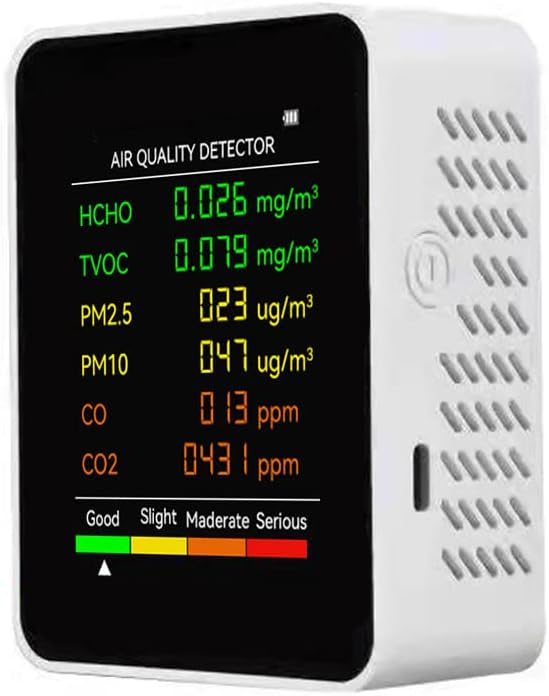
Okay, so your senses have given you some clues. Now, if you want to get a little more specific without needing a Ph.D. in atmospheric science, there are some super simple, affordable tools out there.
The CO2 Monitor: Your Ventilation Buddy
This little gadget is like a friendly traffic light for your office air. CO2 (carbon dioxide) is what we exhale. In a well-ventilated space, fresh air comes in, and old air goes out, keeping CO2 levels low. But if the office is sealed up tight, CO2 can build up, making the air feel heavy and contributing to that "brain fog."
Think of it like being in a packed elevator – eventually, it just feels a bit… stuffy, right? That’s CO2 building up. A small, portable CO2 monitor will give you a number, usually in "parts per million" (ppm). Generally, you want to aim for below 1000 ppm. Anything consistently higher than that means you might need a ventilation boost. It's a quick, easy way to tell if your office is getting enough "breaths of fresh air."
The PM2.5 Monitor: Spotting the Invisible Glitter
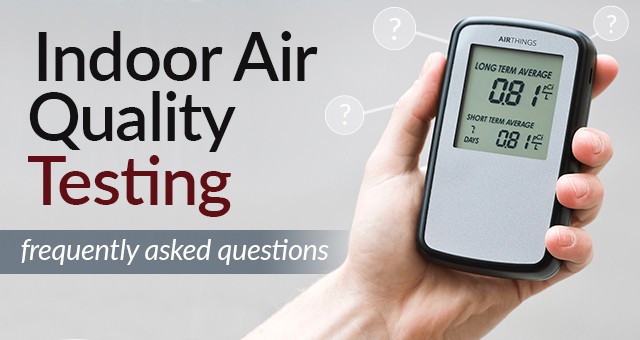
PM2.5 sounds complicated, but it just refers to tiny particulate matter – we're talking microscopic bits of dust, pollen, pet dander (if you have an office dog!), smoke, and even pollutants from outside. You can't usually see them, but they're there, floating around like invisible glitter, and you're breathing them in.
A PM2.5 monitor will give you a reading, often in micrograms per cubic meter. High numbers can irritate your respiratory system, especially if you have allergies or asthma. It’s like having a dust bunny rave in your lungs! Knowing these levels helps you understand if you need to tackle internal dust sources or if outside pollution is sneaking in.
Temperature & Humidity Sensors: The Goldilocks Zone
While not strictly about "pollutants," temperature and humidity play a huge role in how comfortable and healthy your indoor environment feels. Too hot or too cold, and you’re just plain miserable. Too humid, and you’re creating a perfect little spa for mold and dust mites. Too dry, and hello, dry skin and scratchy throat!
Most basic indoor air quality monitors will also give you temperature and humidity readings. Aim for a "Goldilocks zone": not too hot, not too cold, and humidity ideally between 40-60%. It makes a big difference to how you feel throughout the day.
So, What Next? Taking Action (The Friendly Nudge)
Found something a little off? Don't panic! You don't need to turn into an air quality crusader overnight. The first step is simply being aware.
If you're noticing consistent issues, politely bring it up with your facilities team or HR. Share your observations or the readings from your simple monitor. Often, they might not even be aware there's an issue. Sometimes, the fix can be as simple as adjusting the HVAC system, running the fans more frequently, or even just opening a window (if that's an option and the outside air is decent!).
Even small changes can lead to a big impact on everyone’s comfort and health. After all, a happier, healthier workforce is a more productive workforce – and who wouldn’t want to breathe easy, literally, while getting things done?
So, take a deep breath (hopefully, of fresh air!). You’re now an air quality detective, and your lungs will thank you for it.