
How To Test A Minerals Hardness

Okay, so you’ve just stumbled upon a really cool rock. Maybe it’s glistening, maybe it’s dull, but something about it just spoke to you. You picked it up, dusted it off, and now you’re wondering, "What is this thing?" Well, my friend, before you start dreaming of discovering the next huge diamond, one of the first, most satisfying steps in figuring out a mineral’s identity is testing its hardness.
Why Even Bother with Hardness?
I know, I know, "hardness" sounds super scientific, right? Like something only people in lab coats with tiny hammers do. But trust me, it’s one of the easiest, most accessible tests out there, and frankly, it’s pretty darn cool. Think of it as a little detective work, pitting your mystery rock against some everyday items. It’s not about how squishy or firm it is; it’s all about its ability to resist scratching. Who knew rocks had such strong personalities?
So, What's the Big Deal About Hardness?
When we talk mineral hardness, we’re usually referring to the Mohs Hardness Scale. Don't let the fancy name scare you! It's just a simple, comparative scale from 1 to 10. Think of it like a mineral popularity contest, but for scratch resistance. Talc (hello, baby powder!) is a gentle 1, practically begging to be scratched. Diamond, on the other hand, is a mighty 10 – the undisputed scratch champion. It's all about one mineral's ability to scratch another. If Mineral A scratches Mineral B, then A is harder than B. Simple, right?
Must Read
Your Everyday "Tools" for Mineral Mayhem
You don't need a fancy lab for this, trust me. Your kitchen, your pocket, even your own body holds some fantastic mineral-testing tools. Let's gather our arsenal:
Your Fingernail (approx. 2.5 on Mohs): This is your first, most readily available tool. Can your nail scratch your mystery mineral? If yes, congratulations! You’ve got yourself a pretty soft mineral, maybe something like gypsum or talc. If your nail feels like it's trying to scratch concrete, well, let's move on!

A Copper Penny (approx. 3.5 on Mohs): Dig out that old penny from your couch cushions! A copper penny is a step up. If your fingernail failed, try the penny. Does it leave a distinct scratch? You’re narrowing it down, detective!
A Steel Nail or a Pocket Knife (approx. 5.5 on Mohs): Now we're getting serious. Most everyday steel items like a common nail, the blade of a utility knife, or even a sturdy paperclip (though less reliable) fall into this range. This will scratch many common minerals like calcite.

A Piece of Glass (approx. 5.5-6 on Mohs): This is a super handy one! Grab an old glass jar, a piece of window glass, or even the bottom of a drinking glass (be careful!). If your mineral can scratch the glass, it's harder than 5.5-6. This is a big leap in identification!
A Steel File (approx. 6.5 on Mohs): For the truly stubborn rocks, a steel file is your next best friend. If your mineral can laugh in the face of a steel file, you're dealing with something pretty tough.

A Piece of Quartz (7 on Mohs): If you happen to have a known piece of quartz lying around (and let's be real, many of us rock hounds do!), it's the gold standard for testing anything softer than itself. Quartz is super common and a fantastic benchmark.
Quick, super important side note: Always, always, always try to scratch an inconspicuous part of your mineral. Like, the back, or a tiny edge. You don't want to ruin your potentially magnificent specimen, do you? Think of it as gently prodding, not defacing!
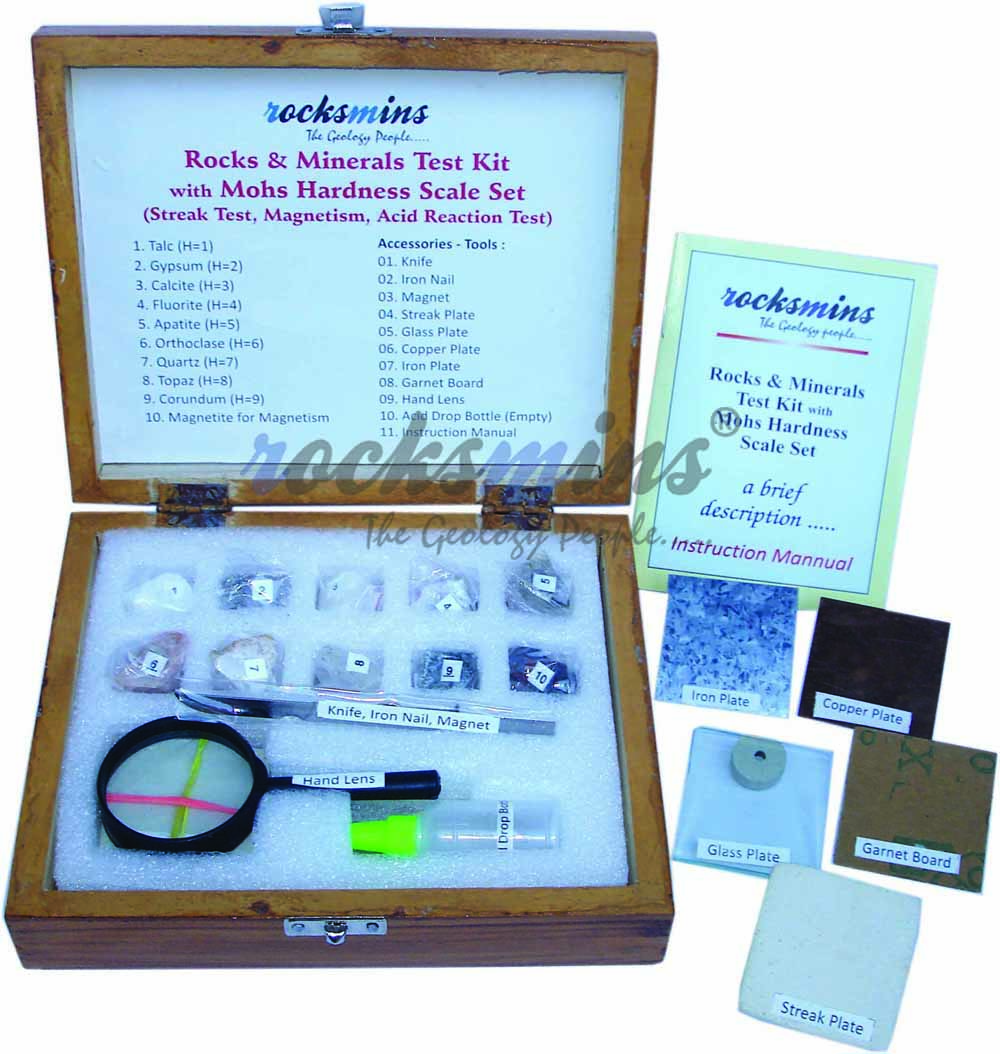
The Grand Scratch-Off! (The Actual Test)
Okay, you've got your mystery mineral and your motley crew of scratch-testing tools. Here’s the play-by-play:
- Find a good spot: Look for a clean, flat, and ideally, hidden surface on your mineral.
- Apply pressure: Take your chosen testing tool (start with your fingernail!). Press it firmly against the mineral and try to drag it across the surface. Don’t be shy, but don't go full Hulk either. It’s a firm scratch, not an attempt to break it.
- Wipe and examine: This is crucial! After you try to scratch, wipe away any powder that might have formed. Sometimes, it looks like a scratch, but it’s just powder from your softer testing tool rubbing off on the harder mineral. If you wipe it away and there's no actual groove, then no scratch occurred!
- Interpret the results:
- If it scratches: Hooray! Your mineral is softer than the tool you just used. Time to try a softer tool to get a more precise reading.
- If it doesn't scratch (and you wiped away any residue): Excellent! Your mineral is harder than the tool. Now, grab a harder tool from your collection and try again.
- If your tool gets scratched: Whoa! That means your mineral is harder than your testing tool! Give yourself a pat on the back; you might have something pretty robust!
- Repeat and narrow it down: Keep going up or down the scale until you find a tool that just barely scratches it, and one that doesn't. That range will give you a great idea of its Mohs hardness. For example, if a penny scratches it, but your fingernail doesn't, it's somewhere between 2.5 and 3.5. Ta-da!
A Few Friendly Reminders
Always do this on a stable surface. And maybe, just maybe, wear some glasses if you’re particularly clumsy with glass, because nobody wants a tiny shard in their eye, right? (Though honestly, it's usually not that dramatic.)
The beauty of this test is how quickly you can narrow down what your mineral might be. It’s like a mini-mystery solved right in your living room! So go forth, my friend, grab your rocks, grab your penny, and start scratching. Happy rockhounding!