How To Tell If Oil Pump Is Bad Without Gauge

Alright, folks, let's talk about your car's heart – the engine! And what keeps that heart pumpin' strong? The oil pump, of course! Now, ideally, you'd have a fancy oil pressure gauge staring you in the face, telling you everything's A-OK. But let's be real, not everyone's got that luxury, and sometimes those gauges lie anyway (like that scale in your bathroom after Thanksgiving dinner!). So, how do you tell if your oil pump is throwing a tantrum without any fancy gadgets?
Listen Up! (Literally!)
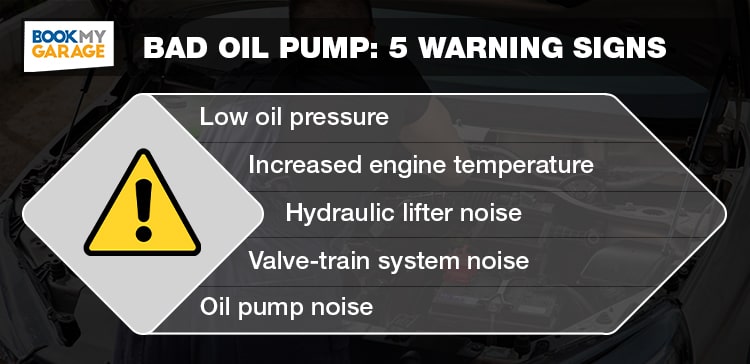
Your ears are your friends! Your car is usually communicating with you. Think of your car like a chatty friend who's always got something to say – sometimes it’s a compliment ("Vroom! Lookin' good!"), sometimes it’s a complaint ("Ugh, I need gas!"). The engine makes so many noises. One noise you do not want to hear is a sound like a bag of marbles rattling around under the hood, especially when you first start the engine. This could be your engine screaming "SOS! I need oil!" It's a sound that says, "Hey, buddy, the oil ain't gettin' where it needs to go!" It usually lasts a few seconds. But repeated occurrences, or an extended duration, are a huge red flag!
The Dreaded Ticking Time Bomb
Okay, maybe not a literal ticking time bomb, but a persistent ticking or tapping sound, especially at higher RPMs, can be a sign of lifter failure due to low oil pressure. Imagine tiny little hammers inside your engine, desperate for a cushion of oil but getting nothing but hard knocks. Ouch! This is especially true if the ticking gets louder as you accelerate. It is like your engine is telling you "I am not getting the love that I need."
Must Read
Check the Obvious Culprits
Before you go blaming the oil pump for everything, let's rule out the easy stuff. Is your oil level actually good? I know, I know, it sounds basic, but you'd be surprised! Pull out that dipstick (when the engine's cool, of course – you don't want to brand yourself with hot oil!), wipe it clean, stick it back in, and pull it out again. Is the oil level between the "min" and "max" marks? If not, you’ve found your first problem.
Another thing: what’s the oil condition? Is it thick, black sludge? It should be relatively clean (depending on how long it's been since your last oil change, of course). If it looks like something you'd find at the bottom of a swamp, it's time for an oil change! Clogged oil can make a perfectly good oil pump struggle. Think of it like trying to drink a milkshake through a coffee stirrer.

The Warning Lights Are There For a Reason!
We are not talking about the check engine light. We all know it can be a mystery. But the oil pressure warning light on your dashboard is more straightforward. It is usually red and looks like an oil can. And if that light is on, it's not just there for decoration! Usually this is worst-case scenario. It's yelling, "STOP! Danger! No oil pressure!" Continuing to drive with that light on is like playing Russian roulette with your engine. You are asking for trouble.
Performance Problems That Shout "Low Oil!"
Sometimes, a bad oil pump won't just make noises – it'll affect how your car drives. Do you feel a lack of power, especially when accelerating? Is your engine running hotter than usual? These symptoms can stem from internal engine damage caused by low oil pressure. If parts aren't getting the lubrication they need, they create more friction and heat, which means your engine has to work harder to do the same job. It is like trying to run a marathon with a sprained ankle. It's not going to be pretty!

Also, keep an eye on your fuel economy. If you find yourself filling up the tank more often than usual without a change in driving habits, it could be because your engine isn't running as efficiently as it should due to the internal wear and tear from not enough oil. Think of it as your car saying, "I'm working harder, so I need more snacks!"
When in Doubt, Ask a Pro!
Look, diagnosing car problems can be tricky. We have explored ways to tell without a gauge. But if you're unsure, it's always best to consult a trusted mechanic. They have the tools and experience to pinpoint the problem and get you back on the road safely. Ignoring these symptoms can lead to major (and expensive!) engine damage. So, listen to your car, check those fluids, and don't be afraid to seek professional help when needed. A healthy oil pump means a healthy engine, and a healthy engine means many more miles of happy driving!