
How To Stop Fire Alarm From Beeping Low Battery
Picture this: It’s 3 AM. You’re deep in the land of nod, dreaming of kittens or maybe just silence, when suddenly— BEEP!
Your eyes snap open. What was that? You try to convince yourself it was part of the dream, a phantom noise. Just as you’re drifting back off, BEEP! There it is again. Louder this time. More insistent. You groan, pulling the pillow over your head, knowing full well this is the start of an epic battle against an invisible, sonic enemy.
You stumble out of bed, muttering under your breath, trying to pinpoint the source of the infernal noise. Is it the kitchen? The hallway? Your imagination? You tiptoe around, straining your ears in the pitch black, only to realize the sound seems to be coming from everywhere and nowhere at the same time. Welcome to the infuriating, sleep-depriving world of the low-battery fire alarm chirp. Been there? Oh, I know you have. We all have.
Must Read
But fear not, fellow sleep-deprived warrior! Today, we're going to arm you with the knowledge to silence that tiny tyrant once and for all. Because, let’s be real, a healthy home needs working smoke alarms, but a healthy human needs their beauty sleep!
The Culprit: Low Battery!
First things first, let's get curious. Why does it chirp? Well, my friend, that annoying little sound is actually a cry for help. It’s your smoke alarm telling you, in the most obnoxious way possible, that its internal battery is running low. Think of it as a safety feature with a terrible sense of timing. It’s designed to alert you that it won't be able to do its job properly in a real emergency if the power fails. And it does this by beeping roughly every 30 to 60 seconds until you do something about it. Smart, right? And utterly maddening at 3 AM.
The good news? It’s usually not a real fire. The bad news? You still have to deal with it.
Step 1: Locate the Beeping Bandit (It's Harder Than You Think)
This is often the most challenging part, especially in a two-story house or an open-plan living space. That sound just echoes! Here’s my trick: Stand still and listen carefully. Walk slowly, room by room, trying to triangulate the source. Sometimes closing doors can help isolate it. It's usually the one directly above your head when you least expect it, isn't it?
Don't be surprised if you spend five minutes staring up at the kitchen ceiling, only to realize it's actually coming from the hallway a few feet away. These things are masters of auditory misdirection!
Step 2: Grab Your Gear (And Maybe a Friend)
Okay, you’ve pinpointed the offending noisemaker. Now, let’s gather our tools. Safety first, people!
- A sturdy step stool or ladder: Please, for the love of all that is holy, do not stand on a wobbly chair or a stack of phone books. Your face hitting the floor is not part of the solution.
- New batteries: This is critical. Most smoke alarms use a 9-volt battery, but some newer ones might take AA or AAA. Check your specific model before you start. Having the right ones on hand will save you a midnight trip to the gas station. Trust me on this one.
- A small flathead or Phillips screwdriver: Some models have a tiny screw that holds the battery compartment shut. Don’t assume it just pops open.
- A calm mindset: Easier said than done when you've been woken up by an incessant beep, but try to channel your inner zen master.
Step 3: The Moment of Truth - Disarming the Beast
Alright, ladder in place? New batteries at the ready? Deep breath. Let's do this!

Carefully climb your ladder. Most smoke alarms are attached to the ceiling by twisting the unit counter-clockwise, or they might have clips you squeeze. Once you've got it off the base, you'll see the battery compartment.
Open it up: You might need that screwdriver now. Pop it open and locate the old battery.
Remove the old battery: Disconnect it. This is usually where the chirping stops, and a collective sigh of relief can be heard across the neighbourhood (or just in your house).
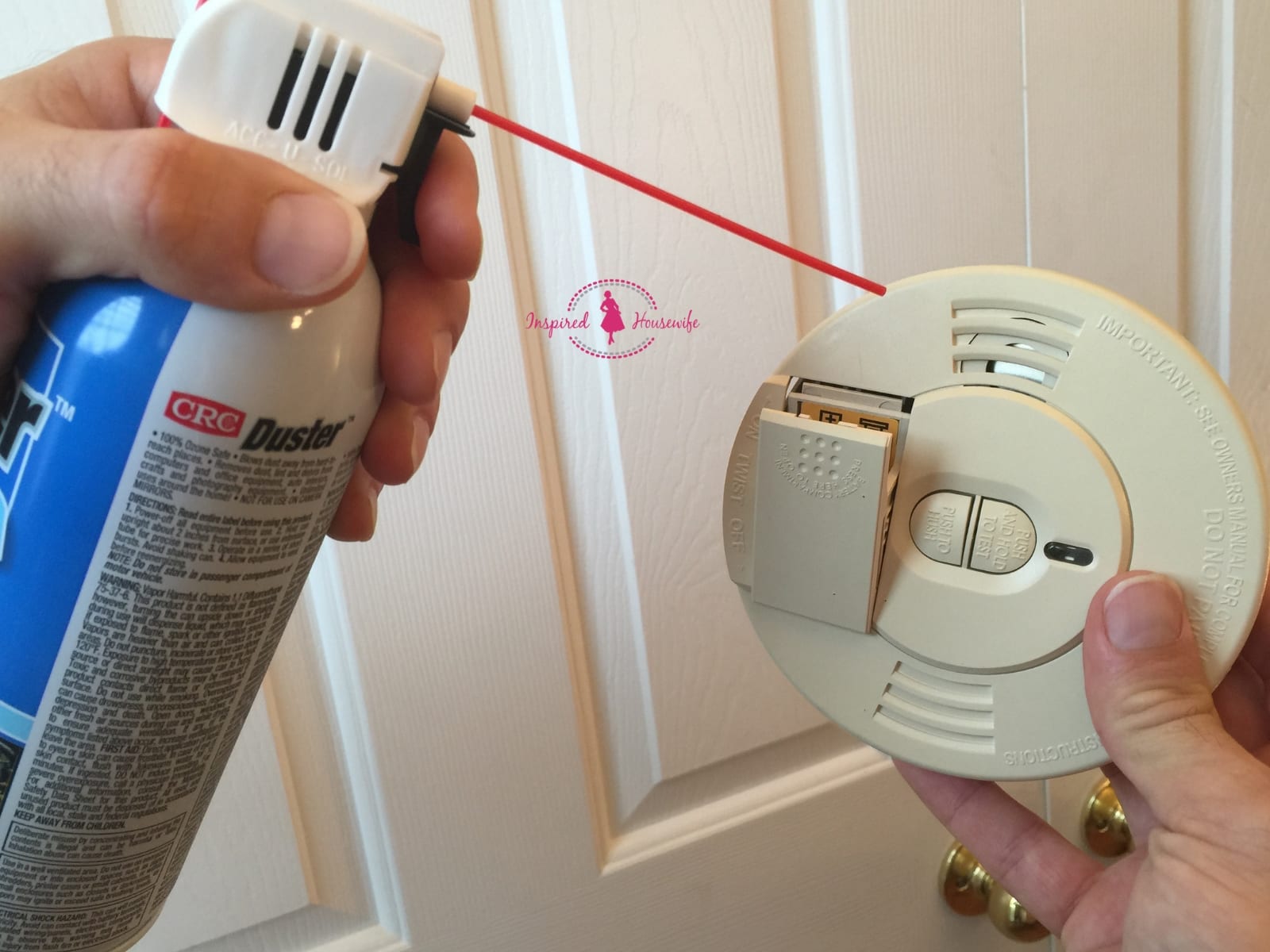
Give it a quick clean: While you’re up there, a quick wipe with a damp cloth (not soaking wet, obviously!) and a vacuum of any dust from the vents is a good idea. Dust can interfere with its sensors.
Insert the new battery: Make sure you get the polarity right (+ to + and - to -). It only fits one way, so don't force it.
Test it: Before you reattach it, most smoke alarms have a "test" button. Press and hold it. It will emit a LOUD, ear-splitting shriek for a few seconds. This is good! It means it's working. Brace yourself, it's not pleasant, but it's important.
Reattach the alarm: Twist or clip it back onto its base on the ceiling. Give it a gentle tug to make sure it's secure.

And just like that, you've won! Victory never felt so quiet.
What if it's Still Beeping? (The Plot Thickens!)
Okay, so you've changed the battery, and it's still chirping. Don't throw the whole unit out the window just yet! Here are a few other things to consider:
- Is it actually the smoke alarm? Seriously, sometimes it's a carbon monoxide detector, a security system sensor, or even a different smoke alarm in another room that sounds eerily similar. Double-check.
- Hardwired alarms: If your alarm is hardwired into your home’s electrical system, it likely has a backup battery. If that battery dies, it will chirp. But sometimes, an intermittent chirp could also mean an issue with the main power connection. Check your circuit breaker.
- The "End of Life" beep: Did you know smoke alarms expire? Most have a lifespan of about 7-10 years. After this, they start chirping to let you know it's time for a replacement – even with a fresh battery. Look for a manufacturing date on the back. If it's old, it's time for a new one, my friend.
- Reset button: Some alarms have a reset button you might need to press after changing the battery. Consult your manual if you still have it. (Who keeps manuals these days, right? Google is your friend!)
- Call in the pros: If you’ve tried everything and it’s still acting up, it might be time to call an electrician or a fire safety professional. Better safe than sorry!
A Few Pro Tips for the Future You
To avoid future 3 AM wake-up calls, adopt these habits:
- Change batteries twice a year: A common recommendation is to do it when you change your clocks for Daylight Saving Time. "Spring forward, change batteries. Fall back, change batteries." Easy to remember!
- Keep spare batteries on hand: Nothing worse than realizing you don't have the right battery when you need it most.
- Check expiration dates: Make a note of when your detectors need replacing.
There you have it. You've faced the low-battery beep monster, and you've emerged victorious! Not only have you reclaimed your peace and quiet, but you've also ensured your home is safer. Give yourself a pat on the back. Now, go enjoy that uninterrupted sleep you so richly deserve. You've earned it!