
How To Stick Weld For Beginners

Alright, so you've seen someone lay down a bead, sparks flying like a Fourth of July celebration in miniature, and thought, "Hey, I could do that!" Or maybe your trusty lawnmower decided to split a seam, and the thought of actually fixing it yourself with fire and metal sounds pretty darn cool. Welcome to the wonderful, gritty, and surprisingly zen world of stick welding for beginners.
Stick welding, or SMAW (Shielded Metal Arc Welding, if you're into acronyms that sound like a secret government agency), is basically the grumpy, resilient granddad of welding processes. It's not fancy, it's not delicate, but it gets the job done. Think of it as the duct tape of the metal world, but way more permanent and satisfying. You don't need a gas bottle, just power, a machine, and some rods. Perfect for outdoor projects where the wind laughs at your fancy gas shield.
First things first: Don't become a crispy critter.
Before you even think about touching metal, let's talk safety. This isn't just about looking cool; it's about not looking like a sunburnt racoon who lost a fight with a firecracker. You need a welding helmet (auto-darkening is like magic, trust me), heavy-duty gloves (the thicker, the better), and a long-sleeved jacket or shirt made of non-flammable material. Denim works. Synthetics? Not so much, unless you enjoy smelling like a melted Barbie doll. No shorts, no sandals. Think "ready for a barbecue gone slightly apocalyptic."
Must Read
The arc flash is intense – seriously, it's like staring directly at the sun's evil twin. Even a brief glimpse without protection can give you "welder's flash," which feels like a cat scratching sandpaper across your eyeballs for a day or two. Not fun. So, gear up, always.
The Machine and the Rod: Your New Best Friends
Your stick welder is usually a pretty simple box. Plug it in, clamp the ground to your workpiece (make sure it's good contact, like a firm handshake), and put a rod in the stinger (that's the fancy name for the electrode holder). The rod itself is a metal core with a special coating. This coating melts and creates a protective gas shield around your weld, which is super important because it keeps out all the bad stuff that weakens your weld. There are different types of rods, but for starters, a general-purpose E6013 or E7018 is your buddy. Think of E6013 as the easy-going friend, and E7018 as the strong, silent type.
The Spark, The Stick, The Swear Word
Alright, the moment of truth: striking an arc. This is where most beginners either feel like a wizard or a total klutz. It's a lot like trying to strike an old-school match: scratch it against the metal. Or, if you prefer, gently tap it. The goal is to get a spark going and then pull the rod back slightly, creating a small gap. Too close, and the rod will "stick" to the metal, like a toddler clinging to your leg. Too far, and the arc dies. When it sticks, just wiggle it a bit, or unclamp it from the stinger. Don't worry, it happens to everyone. Your first few dozen attempts might involve more sticking than actual welding. Embrace the comedy.
When you finally get that beautiful, hissing arc, it's like you've just unlocked a secret power. A bright, noisy, spatter-generating power. The spatter, by the way, is just molten metal fireworks. Think of it as glitter after a very enthusiastic kids' party – it gets everywhere, but it's part of the fun.

Reading the Puddle: Your Crystal Ball
Once you have an arc, your main job is to watch the puddle. This is the magical molten pool of metal forming right under your rod. It’s your crystal ball, your tea leaves, your GPS. You need to keep the arc length (that gap between the rod and the metal) consistent, and move at a steady pace. Too fast, and you get a thin, weak bead. Too slow, and you get a big, gloopy mess, or you burn through. Think of it like drawing a line with syrup on a hot pan – you want an even stream, not drips or thin scrapes.
Your travel speed, travel angle (how much you tilt the rod in the direction of travel), and work angle (how much you tilt it from side to side across the joint) all play a role. For starters, keep the rod almost perpendicular to the metal, maybe just a slight lean in the direction you’re going, and focus on moving steadily. Think of it like coloring in a really important line. Consistent pressure, consistent speed.
Practice Makes... Less Ugly
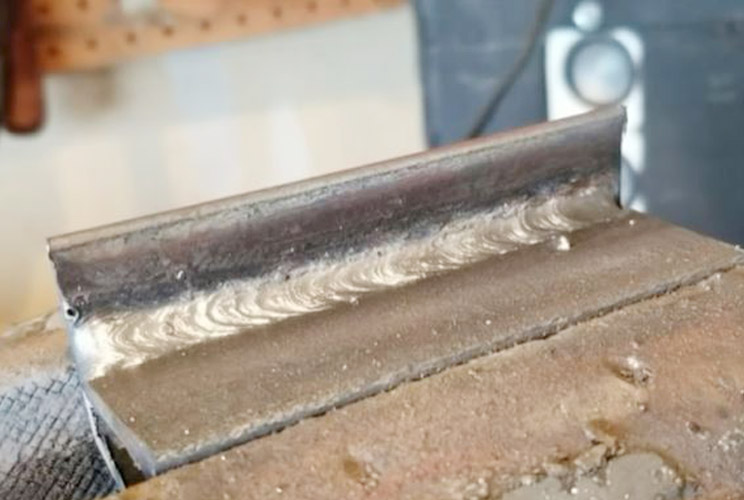
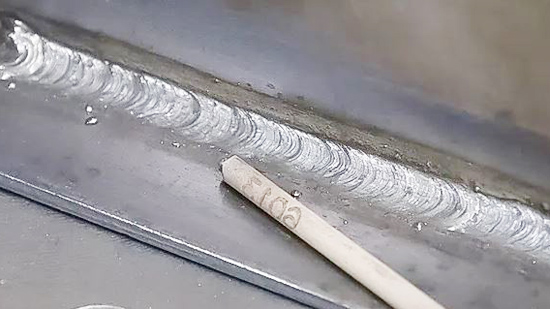
Your first welds will look like worm tracks. Or maybe a pigeon took a particularly aggressive dump on your metal. This is normal. Mine certainly did. Everyone's did. The key is to keep practicing. Grab some scrap metal, make some straight lines. Try overlapping them. Play with the amperage (your heat setting) – too high, and it's like trying to cook with a flamethrower; too low, and it's like trying to cook with a candle. You'll hear the difference: a good arc sounds like sizzling bacon, or a bumblebee that's had too much coffee. A bad arc sounds spluttery or angry.
After each "weld" (and I use that term loosely for the first few hundred), grab your chipping hammer and wire brush. Chip off the slag (that crusty stuff protecting your weld). This is the reveal! Sometimes it's glorious, sometimes it's still a pigeon poop masterpiece. But each attempt teaches you something. You're building muscle memory, training your eye to read that puddle. It’s like learning to ride a bike – lots of wobbling, a few falls, but eventually, you’re cruising.
Stick welding is incredibly rewarding. There’s something primal and deeply satisfying about joining two pieces of metal with your own hands, sparks flying, creating something strong and functional. So grab your gear, find some scrap, and don't be afraid to make some gloriously ugly welds. You're not just fixing things; you're becoming a metal whisperer. Go forth and weld!
