Ever stood in a room, looked up at the ceiling fan, and thought, "Something just isn't right here"? Maybe it's a tiny little whirler doing its best in a vast cavern. Or perhaps it's a colossal wind turbine trying to fit into a cozy nook. Getting the size just right feels like a secret handshake only architects know. But what if I told you most of those rules are… well, a bit stuffy? Let's throw out the rulebook and have some fun.
Forget the Ruler, Trust Your Gut!
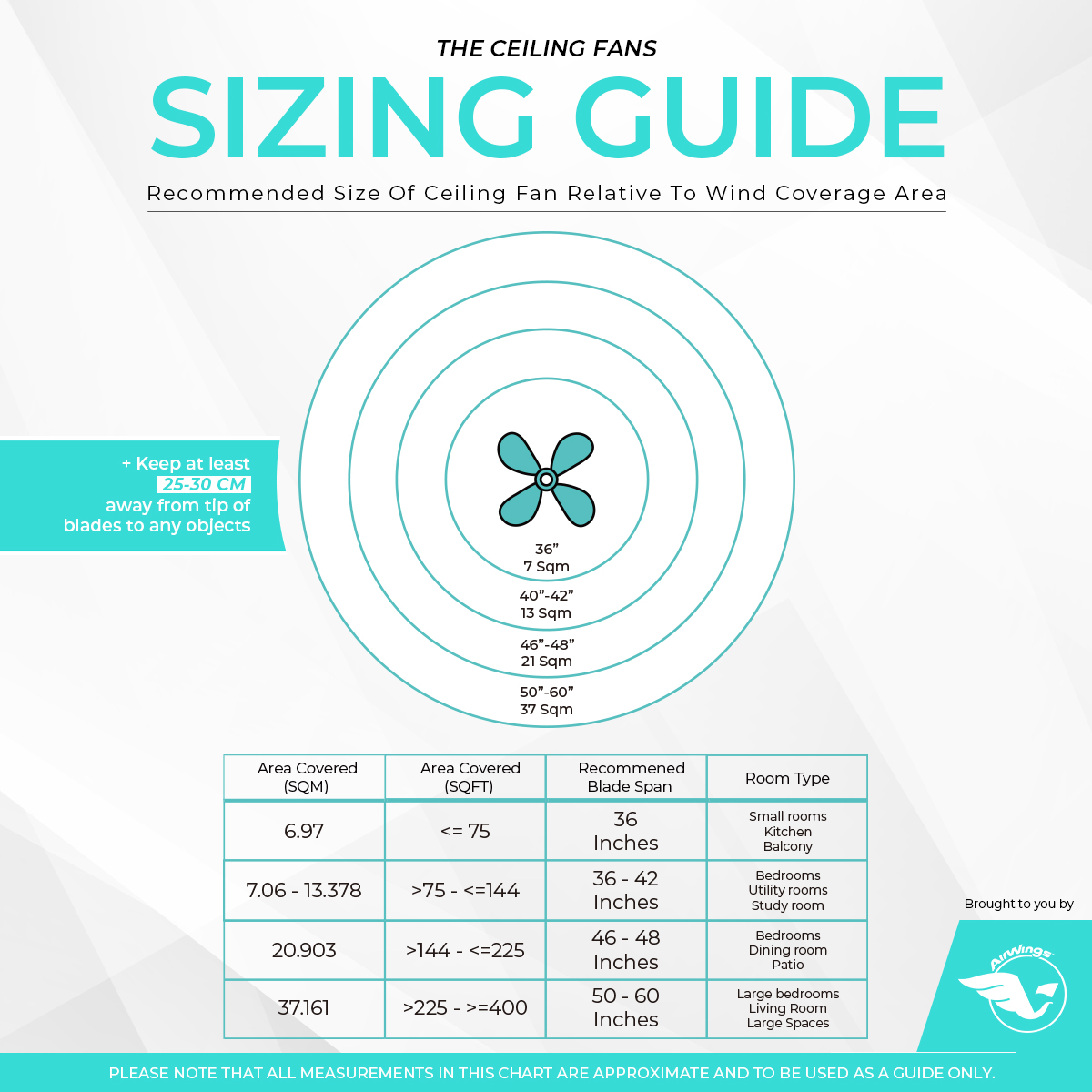
The internet is full of charts. "If your room is X square feet, you need a fan with Y blade span." Blah, blah, blah. Honestly, who measures their living room down to the last square inch before buying a fan? Most of us eye it up, think "looks about right," and then agonize later. My unofficial, totally unscientific, yet utterly brilliant advice? Go with your gut. It’s your room, your breeze, your rules!
Let's be real, those detailed sizing guides often feel like a pop quiz you never studied for. I say, let your inner decorator be your guide, not some dusty old chart.
Here’s my first truly unpopular opinion: small rooms can rock a big fan. Yes, you heard me. Forget the advice to match your fan's scale to your diminutive space. Imagine a quaint little office, maybe a sunroom, with a surprisingly beefy fan overhead. It’s not just moving air; it’s making a statement. It’s saying, "I may be small, but I mean business!" Plus, that extra breeze on a hot day? Pure bliss. Why settle for a polite waft when you can have a powerful, refreshing gust?
A big fan in a small room gives a delightful sense of drama. It feels intentional, bold, and surprisingly effective. Think of it as a tiny car with a huge engine. Unexpected, but oh so satisfying. The air practically dances around you. You're not just cooling the room; you're creating an entire atmosphere.
Ceiling Fan Room Size Chart Ceiling Fan Size Guide – ThreeSixty Fans
Mid-Sized Rooms: The Goldilocks Conundrum (Sort Of)
Alright, so for your average-sized bedroom or living room, the traditional guides actually get pretty close to what feels "right." This is where a 44-inch to 52-inch fan generally slots in perfectly. It’s not too small to be ineffective, and not so huge it feels like a helicopter landing pad. But even here, don't be afraid to nudge the boundaries. Want a slightly bigger fan for more airflow? Go for it! Prefer a slightly smaller, more discreet look? That’s fine too! It’s about your comfort and your aesthetic, not some arbitrary measurement.
This is the zone where most people play it safe, and honestly, that's okay. But remember, "safe" doesn't mean you can't add a little flair.
Ceiling Fan Room Size Chart Ceiling Fan Size Guide – ThreeSixty Fans
Grand Spaces and The Gentle Giant
Now, for truly large rooms – open-plan living areas, vaulted family rooms, spacious master suites – a big fan is simply a necessity. This isn’t rocket science; it’s just physics. A small fan in a huge room will feel like a hummingbird trying to cool a forest fire. Here, the challenge isn't about breaking rules, but embracing the majesty. Look for those impressive 60-inch or even larger industrial-style fans. They fill the space, draw the eye, and actually do their job.
Sometimes, two fans are better than one. Especially in very long rooms, multiple fans create an even distribution of air. Think of it as an aerial ballet, where each fan contributes to a synchronized breeze. It’s functional, but it can also be a truly stunning design element.
Ceiling Fan Size For Hdb Living Room | Cabinets Matttroy
It's Not Just About Airflow, It's About Flair!
Let’s talk style. A ceiling fan isn’t just an appliance; it’s part of your decor. The size of the fan greatly impacts the visual balance of the room. A beautiful, oversized fan can be a stunning focal point, like a piece of art that also cools you down. A sleek, minimalist fan can blend in, offering subtle comfort without stealing the show.
Sometimes, the perfect fan isn't about CFM (Cubic Feet per Minute); it's about "Ooh, that looks cool!" Aesthetics are half the battle, maybe more.
Room Size Ceiling Fan Chart | Portal.posgradount.edu.pe
Consider the blade material, the finish, the light kit (or lack thereof). Does it match your furniture? Does it complement your ceiling? These visual cues are just as important as the actual air movement. A fan that looks amazing but is "technically" too big or too small might still be the right fan for you.
A Little Word on Heights (But Don't Sweat It)
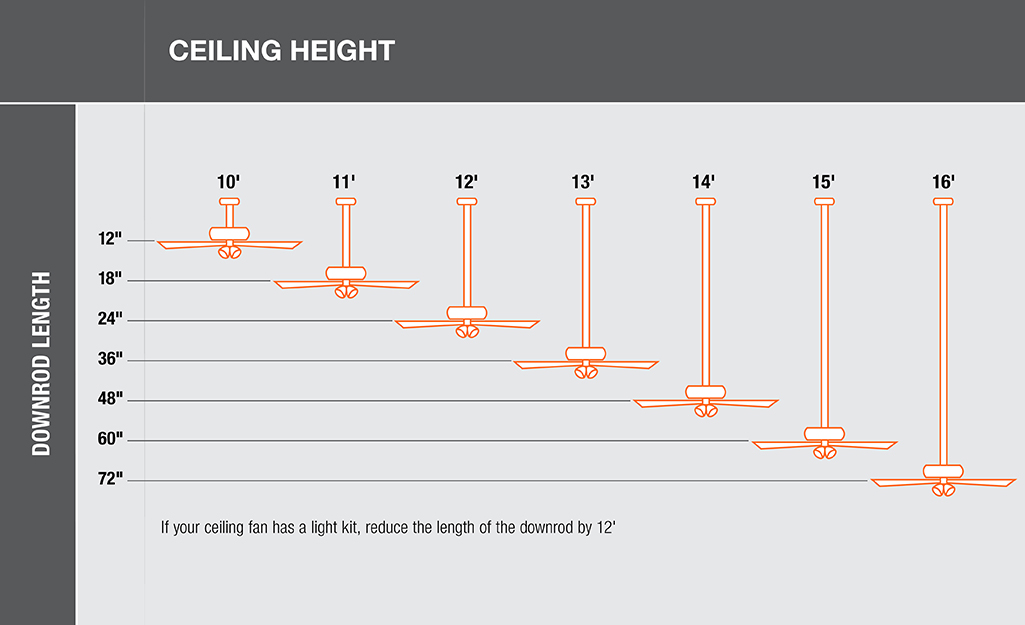
One rule you really shouldn't completely ignore? Ceiling height. You generally want at least 7 feet of clearance from the floor to the fan blades. No one wants to bonk their head on a rapidly spinning blade! If you have super low ceilings, look for a "hugger" or "flush mount" fan. If your ceilings are cathedral-high, you’ll need a longer downrod to bring the fan into the habitable zone. But again, this is more about safety and practicality than strict sizing dogma.
Your Room, Your Rules, Your Breeze
So, when you're fan shopping, take a deep breath. Glance at the sizing charts if you must, but don't let them dictate your destiny. Imagine the fan in your room. Does it feel right? Does it look good? Will it create the kind of breeze you crave, whether it’s a gentle caress or a full-on gale? Trust your instincts, embrace your personal style, and choose the fan that makes you happy. After all, it's your space, and you deserve a fan that fits your vibe, not just your square footage.