
How To Set Thermostat For Heater

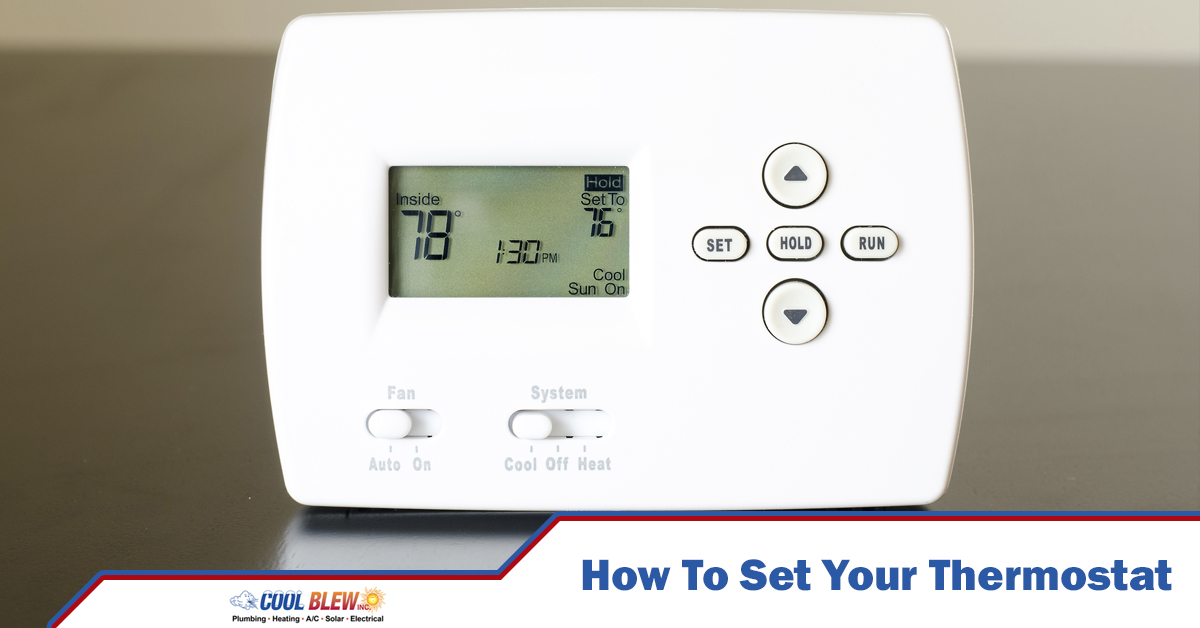
Alright, friend, let's talk about the unsung hero of winter, the little wall-widget that stands between you and a thousand chattering teeth: your thermostat! Forget complex manuals and baffling buttons. We're about to turn you into a thermostat whisperer, a maestro of warmth, a wizard of wonderful coziness, with just a few simple tips.
First things first, find your thermostat. It’s usually a small box on an inside wall, sometimes fancy with a screen, sometimes wonderfully old-school with a slider. No matter its personality, its mission is the same: to make your home feel like a giant, loving hug. And you, my friend, are about to become its chief hug-distributor.
The Big Question: Up or Down?
Most thermostats have a very friendly pair of buttons: an up arrow and a down arrow. Or maybe a dial that goes from "cold" to "toasty." Your job is to tell it what temperature you’d like the air around you to be. It’s not asking for your life story, just a number! Higher numbers mean warmer, lower numbers mean cooler. Simple, right?
Must Read
Now, let's get into the nitty-gritty of feeling absolutely fantastic.
Finding Your Personal Sweet Spot During the Day
During the day, when you're bustling around, making snacks, or having a magnificent dance party in your living room, you want your home to be comfortable without making you feel like you're baking in a desert oven. For most humans, the ideal daytime comfort zone often hovers around 68-72 degrees Fahrenheit (or 20-22 degrees Celsius). Think of it as the perfect temperature where you might still wear a light sweater but aren't tempted to don a parka indoors.

Don't fall into the trap of cranking it up to 90 degrees just to "heat things up faster!" Your heater is not a microwave. It heats at the same speed no matter how high you set it. All you’ll do is overshoot your comfort zone and then you'll be peeling off layers faster than a banana in a hurry!
So, aim for that sweet spot. If you're a bit chilly, nudge it up a degree. If you're starting to sweat doing nothing, nudge it down a degree. It’s all about listening to your body, not trying to turn your home into a tropical rainforest.
The Sleepy Time Secret: Cozy & Cool
When it’s time to hit the hay and drift off to dreamland, guess what? Most of us actually sleep better in a slightly cooler environment. Think of that moment when you pull a cozy blanket up to your chin – perfection! If your bedroom is an inferno, you're more likely to toss and turn. For a fantastic night's sleep, many experts suggest lowering your thermostat to somewhere between 60-67 degrees Fahrenheit (16-19 degrees Celsius).
This isn't just about sleeping like a baby; it’s also a smart move for your wallet. Why pay to heat an empty house to a scorching temperature while you're tucked under a duvet? Let your blankets do some of the heavy lifting. Your heater will thank you, and your energy bill will give you a little wink!
Think of it as creating a personal sleep cocoon. You're warm under the covers, but the air around you is crisp and refreshing. It's truly the best of both worlds.

Away We Go: The "Not Quite Off" Rule
Planning a grand adventure out of the house for a few hours, or even a whole day? Don't just blast your thermostat to "off." Why? Because letting your house get Arctic cold means your heater will have to work extra, extra hard to bring it back to a comfortable temperature when you return. It's like trying to warm up a giant ice cube!
Instead, gently lower it a few degrees. If your daytime setting is 70, try setting it to around 60-65 degrees Fahrenheit while you're out. This keeps the chill at bay, prevents pipes from getting too cold (especially in seriously frigid weather), and makes it much easier for your heater to bounce back to your preferred warmth when you walk through the door. It’s all about being kind to your heater and smart about energy.

The Golden Rule: Set It and Forget It (Mostly!)
Resist the urge to constantly fiddle! Your thermostat is not a fidget spinner. Once you find your ideal daytime and nighttime settings, try to leave them be. Most modern thermostats have a little "delay" built-in, meaning they don't immediately react to every tiny temperature change. This prevents your heater from constantly cycling on and off, which is good for its lifespan and your energy bill.
If you have a programmable thermostat, oh happy day! You can literally set it to adjust temperatures automatically throughout the day and night. Wake up to warmth, lower it while you're at work, raise it just before you get home, and cool it down for sleep. It’s like having a tiny, temperature-savvy robot managing your comfort!
You're a Heating Hero!
See? It's not rocket science; it's just about a little thoughtful interaction with your trusty wall companion. By understanding these simple principles – the sweet spot, the sleepy spot, and the "not quite off" rule – you're well on your way to a winter filled with delightful warmth, cozy moments, and maybe even a few extra dollars in your pocket. Go forth, command your thermostat, and bask in the glorious glow of perfect indoor comfort!