
How To Repair My Air Conditioner

Oh hey there, friend! So, your AC decided to take a permanent siesta right when the temps decided to hit "surface of the sun" levels, huh? Ugh. Been there, felt that. It’s like your house suddenly becomes a giant, very expensive sauna. Before you panic-dial every HVAC company in a 50-mile radius (and trust me, their call-out fees in a heatwave are something else!), let’s chat. Grab another coffee (or iced tea, because, you know, heat), and let's see if we can tackle some of this ourselves.
First Things First: Don't Panic! (But Maybe Sweat a Little)
Okay, first, a quick disclaimer: I’m not an HVAC wizard. I'm just a regular person who's had her fair share of AC woes and learned a few things the hard way (and sometimes the surprisingly easy way!). We’re talking about electricity and heavy machinery here, so if something feels beyond your comfort zone, or if you’re unsure, please, please, please call a pro. Your safety is way more important than a cool breeze. Got it? Good. Deep breaths. Let's do this.
The Super Basic Stuff (AKA "Is It Even Plugged In?")
Seriously, sometimes it's the simplest things. We're going for the low-hanging fruit first, okay?
Must Read
1. Check Your Thermostat: The Brain of the Operation
This is where we start. Is it on? Is it set to "Cool" and not "Heat" or "Fan Only"? (Don't laugh, it happens!) Is the fan set to "Auto" or "On"? "Auto" is usually your go-to. And, this is a big one: when was the last time you changed the batteries? Most thermostats run on AA or AAA batteries. A dead battery can make your entire system look like it's kicked the bucket when it's just feeling a bit drained.
2. The Mighty Breaker: Did it Trip?
Head to your electrical panel. That big gray box, usually in the garage or a utility closet. Look for the breakers labeled "AC," "Furnace," or "HVAC." Sometimes, especially on really hot days when your AC is working overtime, a breaker might trip to prevent an overload. If you see one that’s flipped to the "off" position (or sometimes halfway), gently flip it all the way off, then firmly back to "on." Give it a few minutes to see if your AC wakes up. If it trips again immediately? Stop right there. That's a definite "call a pro" signal.

3. Filters, Filters, Filters: Your AC's Lungs
Oh my goodness, if I could shout this from the rooftops, I would. A clogged air filter is the number one enemy of a happy AC system. It chokes off airflow, makes your unit work harder (and less efficiently!), and can even cause it to freeze up. Go check yours right now. Seriously. It’s usually in the return air vent (a big vent in your ceiling or wall) or in the air handler unit itself. If it looks like a matted carpet or you can't see light through it, it's time for a replacement. A clean filter is like a breath of fresh air for your AC – literally!
4. Outdoor Unit Check: Give it Some Space!
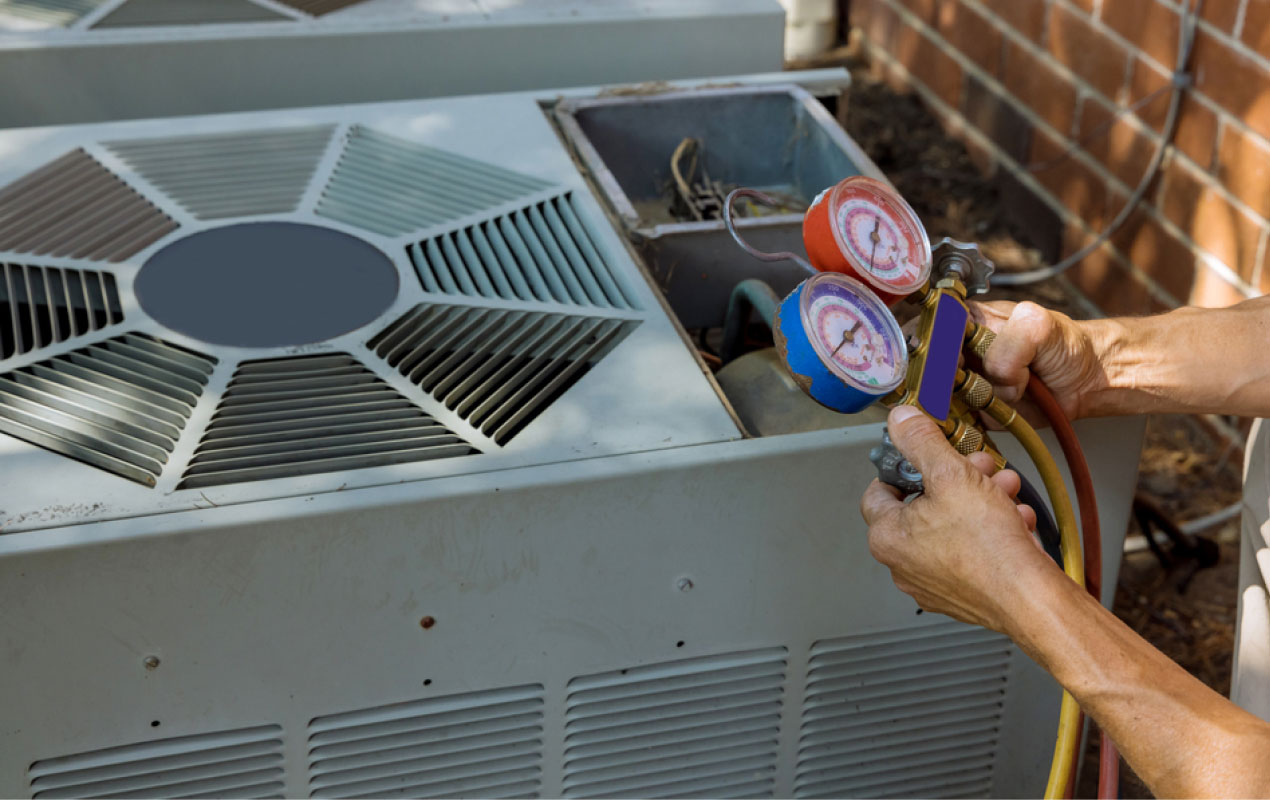
Head outside to your condenser unit – that big noisy box. Is it surrounded by overgrown bushes, leaves, or a rogue trampoline? Your outdoor unit needs to breathe to dissipate heat effectively. Clear away any debris, leaves, grass clippings, or anything else that’s within at least two feet of the unit. Give it a good rinse with a garden hose (make sure the power is OFF at the breaker first!) to clear out any gunk stuck to the fins. Just don't blast it, a gentle spray is fine.
Okay, Let's Get a Little Deeper (But Still Keep it Casual)
If the easy stuff didn't work, we can explore a couple more common culprits, but remember those safety warnings!
5. The Pesky Drain Line: A Clog No One Wants
Your AC produces condensation, which drains away through a PVC pipe, usually coming out near your outdoor unit or in a utility sink. Sometimes, algae or sludge builds up and clogs this line. When it clogs, a safety float switch can activate, shutting down your system to prevent water damage. Look for a small, clear or white PVC pipe. You might see standing water around it. You can try to clear it by gently sucking it out with a wet/dry vac (a shop vac, not your fancy Dyson!) from the outside end, or pouring a cup of distilled vinegar (not bleach!) into the clean-out port (if you have one) near the indoor unit. Give it 30 minutes to work its magic.
6. The Capacitor: A Zappy Situation (Proceed with Caution!)
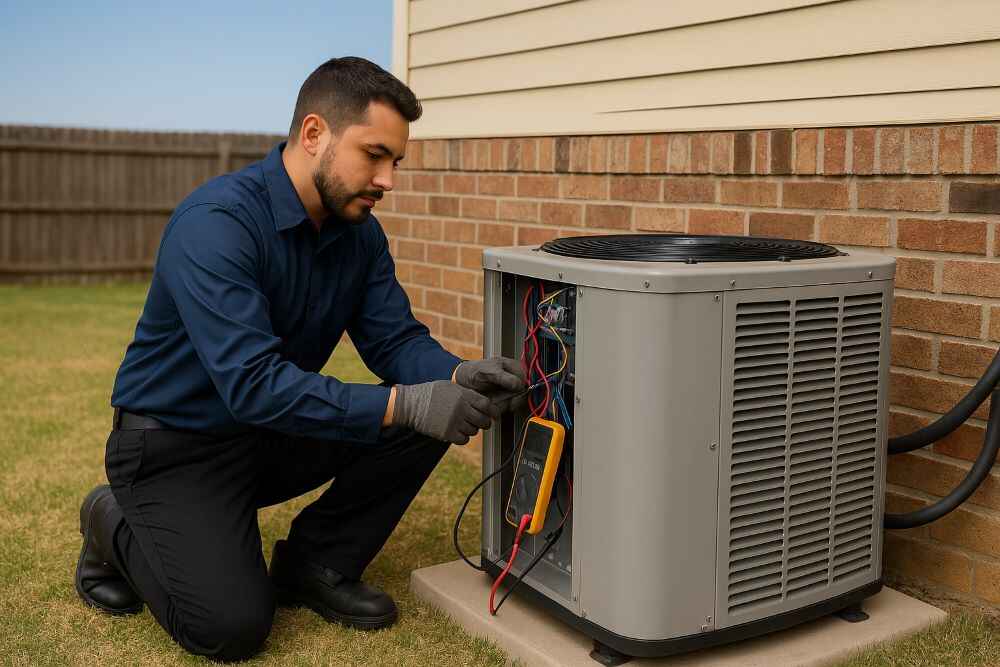
Okay, this one is getting into slightly more advanced DIY, and it can be dangerous if you don't know what you're doing. The capacitor in your outdoor unit is like a battery that gives your fan and compressor a jolt to start. If it fails, your fan might hum but not spin, or the compressor won't kick on. If you're comfortable, with the power OFF at the breaker and double-checked with a multimeter, you can visually inspect it. A bad capacitor often looks swollen, bulging, or might be leaking fluid. But please, if you're not experienced with electrical work, call a professional for this one. Capacitors can store a lethal electrical charge even when the power is off! Seriously, don't mess with this if you're not confident.
When to Wave the White Flag (And Call in the Cavalry)
Look, there's no shame in calling a pro. Sometimes, the problem is bigger than a DIY fix, and that's perfectly okay! You've done your due diligence. Call the experts if:
- You hear grinding, banging, or screeching noises. That usually means something is seriously wrong with a motor or compressor.
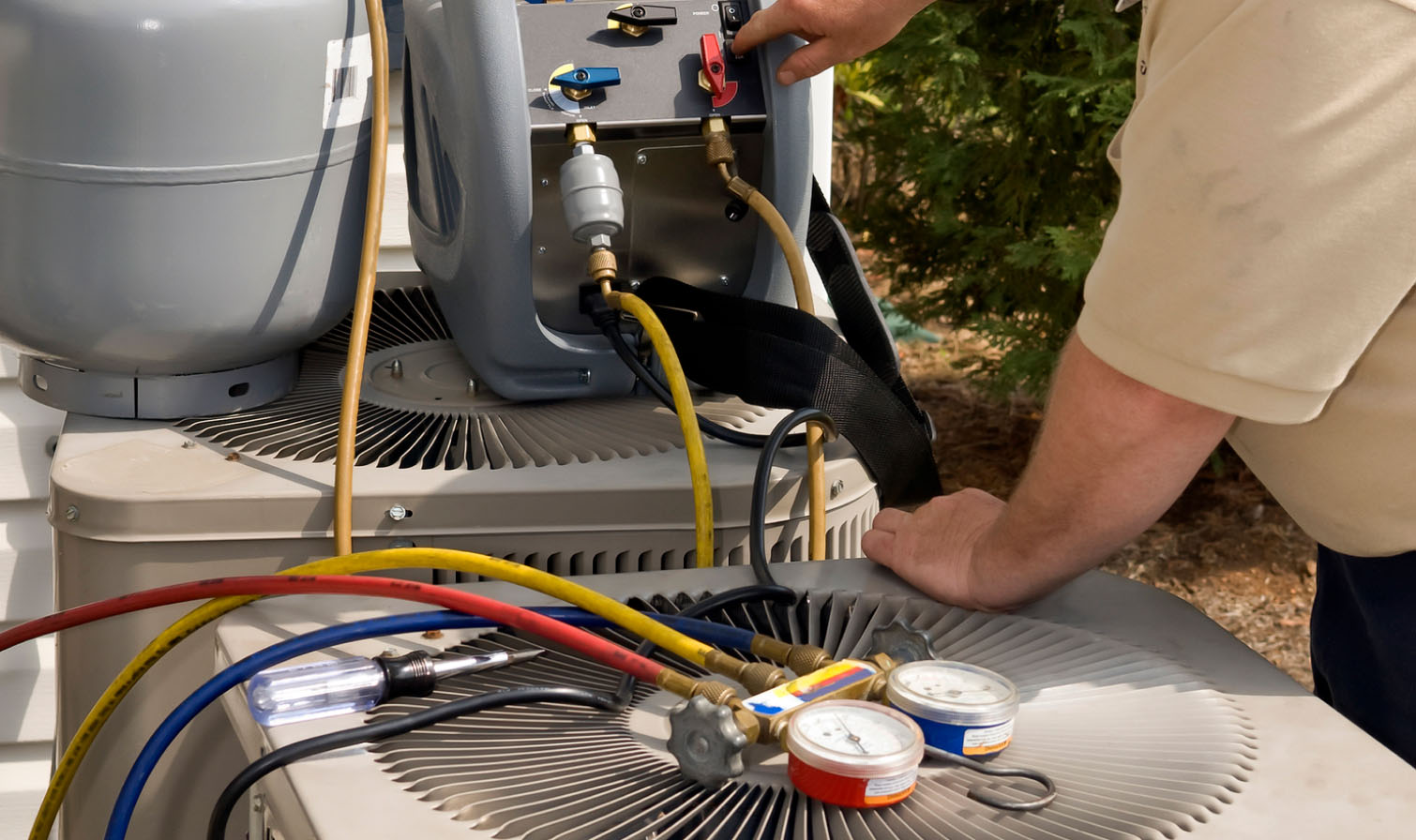
- The unit is running, but it's blowing warm air. This could indicate a refrigerant leak (which you absolutely should not try to fix yourself) or a major component failure.
- Your breaker keeps tripping immediately after you reset it.
- You've checked everything above, and it's still just... dead.
- You're uncomfortable or unsure about any step.
Knowing your limits is a superpower, my friend. Seriously.
A Little Prevention Goes a Long Way, Right?
A quick parting thought: regular maintenance can save you a lot of headache (and sweat!) down the road. Change your filters regularly (every 1-3 months, depending on your household), keep that outdoor unit clear, and consider an annual professional tune-up. It's like a check-up for your AC – catches small issues before they become big, expensive ones.
So, there you have it. Hopefully, one of these tips has saved you a service call and brought some blessed cool air back into your life. If not, at least you’ve eliminated the easy stuff, and you can tell the technician exactly what you’ve already checked. Either way, you're a rockstar for even attempting it! Now, go forth and be cool!